
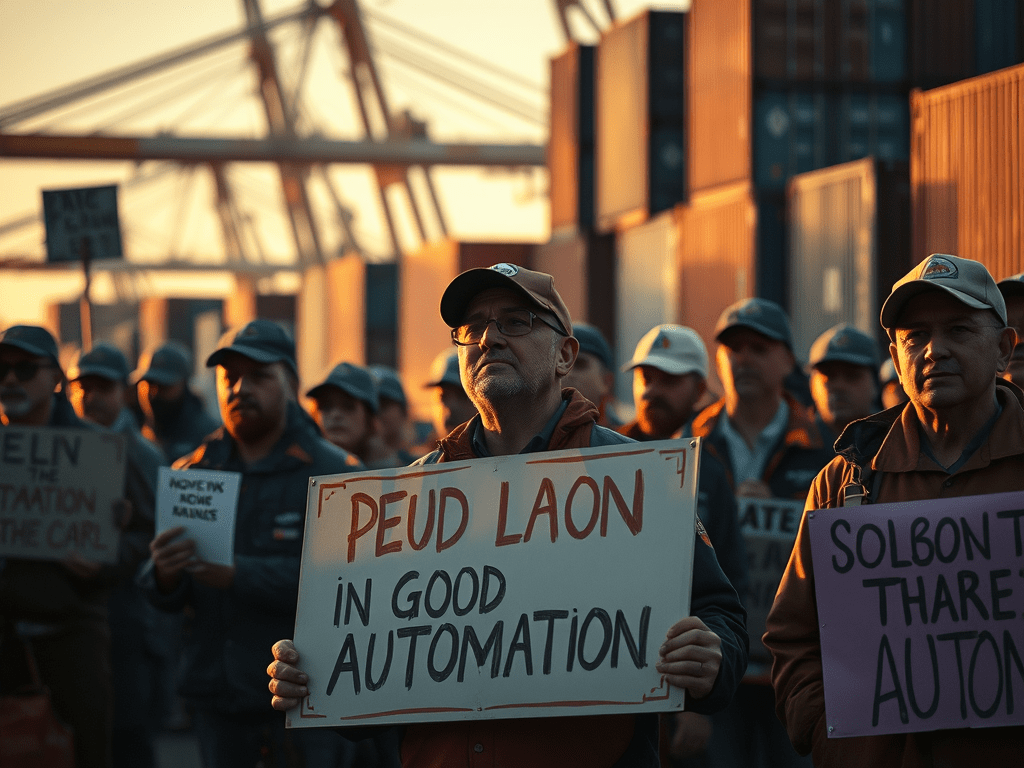
A recent strike by 45,000 dockworkers on the U.S. East Coast and Gulf Coast has brought the complex issue of automation to the forefront of labor disputes. The strike, which caused significant disruptions in ocean shipping, ended after three days with a tentative deal on wages. However, the root cause of the unrest—automation in ports—remains unresolved. As port workers and operators agreed to extend their contract until January 15, 2025, talks about automation continue to simmer beneath the surface.
Automation: A Threat or a Necessity?
Automation is increasingly being implemented in ports worldwide as a means for companies to improve efficiency and profitability. Automated systems, such as gate operations and container handling, are viewed by companies as necessary for meeting the growing demand for faster, more efficient cargo processing. However, this shift toward automation is not without its critics. For unions like the International Longshoremen’s Association (ILA) and the International Longshore and Warehouse Union (ILWU), automation represents a threat to job security, livelihoods, and the stability of families and communities that rely on the jobs ports provide.
One prominent case illustrating this tension occurred in Mobile, Alabama, where an automated gate system at APM Terminals sparked a dispute. The ILA claimed that this system violated their contract, further intensifying the debate over how and where automation should be implemented. This type of conflict is becoming increasingly common as port operators push for automation while unions stand firm in their resistance.
A Broader Global Issue
The tension surrounding automation is not confined to U.S. shores. In Canada, automation-related labor disputes have surfaced as well, particularly at the Port of Vancouver, where Dubai Ports World Canada introduced automation unilaterally, causing friction with port workers. The international nature of these disputes underscores the widespread implications of automation for global trade and the working class.
Europe: A Different Approach
Interestingly, while automation has caused significant strife in North American ports, the situation is somewhat different in Europe. Port workers’ unions in Europe have successfully negotiated safeguards to prevent job losses due to automation, creating a model that contrasts sharply with the approach in North America. In Europe, unions have worked with port operators to strike a balance, allowing for technological advancement while also protecting workers’ rights.
This stark difference in approach highlights the importance of negotiation and mutual agreement when implementing automation, rather than the unilateral introduction of new systems, which often leads to unrest.
Implications for Global Trade
The ripple effects of automation-related labor disputes extend far beyond the ports themselves. Disruptions at major ports on both the East and West Coasts of the U.S. have caused significant delays in the flow of goods, affecting supply chains and international trade. With automation continuing to be a point of contention, the global trade community is closely watching how these disputes unfold, as any disruption can send shockwaves through the interconnected world of commerce.
The Road Ahead
The recent resolution of the U.S. port strike has provided a temporary reprieve, but the underlying issues remain. The coming months will be crucial as talks continue between port operators and unions regarding the future role of automation. Will North America follow Europe’s lead in negotiating protections for workers, or will we see more strikes and disruptions as both sides grapple with this technological shift?
Only time will tell, but one thing is clear: the automation debate is far from over, and its impact on global trade will continue to be felt for years to come.




 Glottis Limited
Leave a comment