
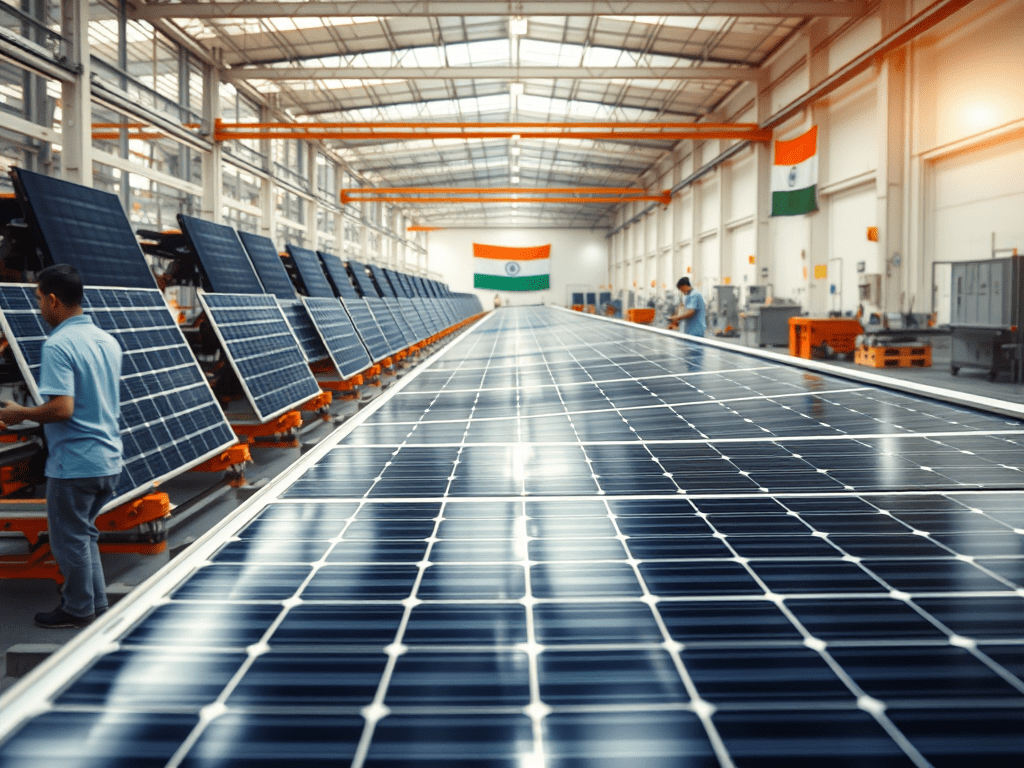
India is on track to become a significant player in the global solar module export market, with projections indicating that by 2029, the country could emerge as a leading exporter. This promising trajectory is fueled by several factors, including increased domestic production, supportive government policies, and rising global demand for clean energy, particularly in developing nations. Despite facing stiff competition from China, India’s solar module industry is gearing up for a substantial leap in the global market.
1. The Rise of India’s Solar Module Production
India has rapidly scaled its solar module manufacturing capabilities over recent years, aiming to both meet domestic demand and create a surplus for export. By 2029, the country is expected to reach a production capacity of 125 GW, a significant surplus over the projected domestic requirement of 38-42 GW. This excess capacity positions India to supply modules to the global market, offering a reliable alternative source of solar technology for countries aiming to diversify their energy imports.
2. Government Incentives and Policies
Recognizing the potential of the solar sector, the Indian government has introduced a series of incentives and policies designed to bolster solar module exports. Key initiatives include the Production-Linked Incentive (PLI) scheme, which encourages manufacturers to expand capacity and improve technology. Tax benefits, subsidies, and access to low-cost financing are also part of the policy framework, making it easier for manufacturers to scale up production and tap into international markets.
3. Opportunities in Global Demand
Global demand for solar energy has been surging, driven by an increasing need for renewable energy solutions, especially in developing countries seeking sustainable and cost-effective energy alternatives. India, with its burgeoning manufacturing base and competitive pricing, is well-positioned to meet this demand. Developing nations are eager for solar technology that supports energy independence and economic growth, creating a substantial opportunity for Indian solar module exports.
4. Competition and Challenges
However, India’s ascent in the global solar market is not without obstacles. China currently dominates the solar module industry and maintains a strong foothold in many international markets. Indian manufacturers face challenges from China’s advanced production capabilities, cost efficiencies, and established global distribution networks. Additionally, certain countries impose high import duties, making it harder for Indian products to compete on price alone.
5. Anti-China Sentiment as a Catalyst
Geopolitical tensions and a growing anti-China sentiment in various regions present a potential advantage for Indian manufacturers. Many countries are actively seeking to reduce their dependence on Chinese imports, particularly in critical sectors like renewable energy. This shift could benefit India, as international markets look to diversify their solar module sources. Indian companies are poised to attract buyers by promoting the quality and competitiveness of their products, along with the country’s favorable trade relationships.
6. India’s Emerging Role as a Solar Powerhouse
India’s solar industry is set for remarkable growth, driven by an expansion in manufacturing capabilities and government support. As the global solar market continues to grow, India’s commitment to renewable energy positions it as a viable alternative to traditional solar exporters. With a surplus capacity and a clear export strategy, the country has the potential to become an emerging leader in the solar module market, contributing significantly to the global shift toward clean energy.
Conclusion
India’s journey to becoming a global exporter of solar modules is backed by an impressive alignment of policy, production capacity, and market opportunity. By 2029, India aims not only to meet its domestic solar needs but also to become a vital supplier for the world, particularly for developing nations striving to enhance their renewable energy capacity. With strong government backing, resilient manufacturing growth, and increasing international demand, India is positioning itself as a key player in the global clean energy landscape.
#IndiaSolar2029 #RenewableEnergy #SolarExports #GreenIndia #SolarPower #MakeInIndia #CleanEnergy #GlobalSolarLeader #SustainableFuture #IndianManufacturing #SolarModules #GreenEconomy #IndiaEnergy #Glottisganesha #Glottis




 Glottis Limited
Leave a comment