
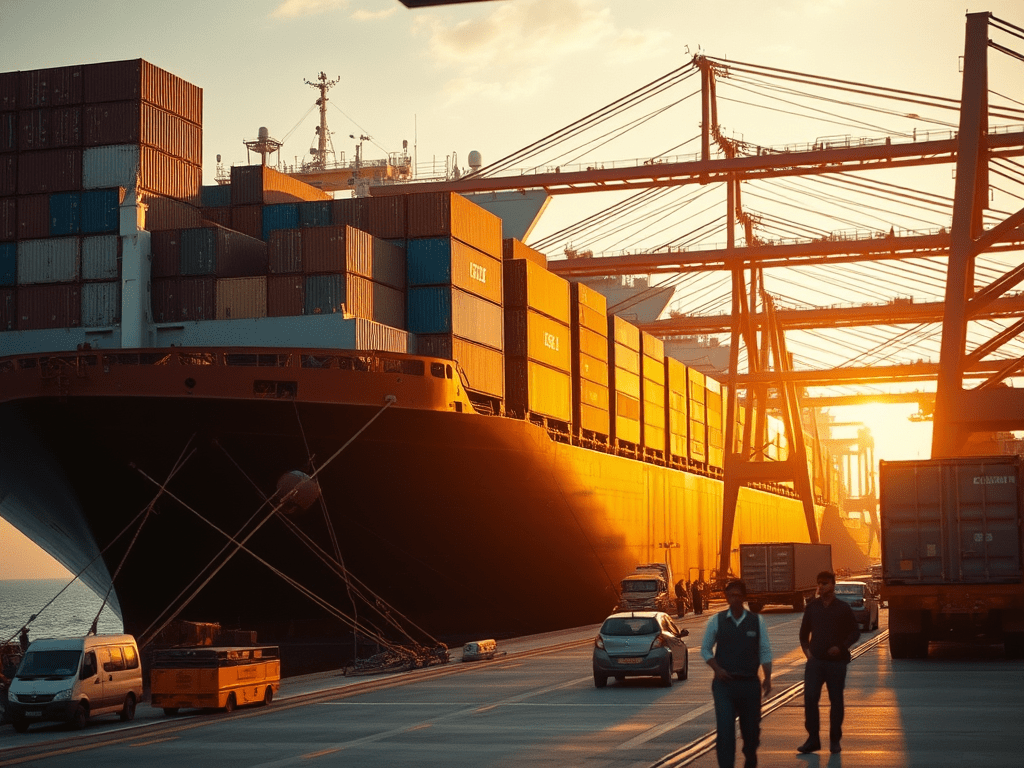
The Indian freight and shipping industry is facing a rapidly evolving landscape, influenced by sliding ocean freight rates, strategic alliances, and changing trade dynamics. Several key trends and external pressures are shaping the industry’s current state, with potential implications for stakeholders across the supply chain.
Key Developments Impacting the Freight Industry
- Freight Rates on Major Ocean Trades Out of India Continue to Slide
- India-US East Coast: Significant decreases in freight rates have been reported, with lower demand and excess capacity impacting carrier profitability.
- India-Europe Routes: Similar trends are seen, where a softening global economy has led to shrinking demand and falling rates.
- New Gemini Alliance Between Maersk and Hapag-Lloyd
- Expected Impact: The alliance, beginning in early February, is anticipated to shake up market share dynamics in the shipping industry, potentially leading to route optimization, enhanced services, and greater bargaining power with customers.
- Strengthening Ocean Rates to Africa
- Cause: Abolition or reduction of export taxes on agricultural products like rice has triggered a volume surge in shipments from Indian ports to Africa, pushing up ocean rates on this route.
- Outbound Merchandise Trade Rebounds
- Data: After a 9% decline in August, India’s outbound merchandise trade rebounded by 0.5% year-on-year in the last month.
- Cyclone Dana’s Looming Threat
- Details: Cyclone Dana is expected to make landfall on India’s east coast and Bangladesh’s south coast by Thursday, raising concerns about port operations and logistics disruptions.
- FIEO Calls for Trade Finance Relief
- Exporter Concerns: The Federation of Indian Export Organisations (FIEO) is urging the government to extend trade finance relief to mitigate challenges arising from global trade disruptions and fluctuating demand.
- Apparel Industry Gains from Bangladesh’s Struggles
- Context: The apparel industry in India is gaining global market share due to ongoing strife in Bangladesh, particularly in the garment sector.
- Transatlantic Strikes Impact US East Coast Congestion
- Details: Strikes and labor issues on the transatlantic trade lane have contributed to higher rates and congestion at US East Coast ports.
- Pressure to Re-Regulate Coastal Shipping
- Issue: Declines in container shipping volumes are prompting calls for India to re-regulate its coastal shipping policies to revive the sector.
Key Data Summary
| Key Area | Details | Impact on Freight Industry |
|---|---|---|
| Freight Rate Decline | India-US East Coast and India-Europe routes | Lower costs for shippers, pressure on carrier profits |
| Gemini Alliance (Maersk & Hapag-Lloyd) | New market dynamics from February | Potentially more competitive services, but fewer choices |
| Ocean Rates to Africa | Strengthened by export tax cuts on agriculture | Higher logistics costs for exporters, but improved demand |
| Trade Rebound | Merchandise trade up 0.5% YoY after a 9% drop in August | Signs of resilience but risks from crude and metal price volatility |
| Cyclone Dana | Incoming impact on east coast ports | Potential shipping delays and infrastructure damage |
| Trade Finance Relief | FIEO urging government action | Better liquidity for exporters to manage shipping costs |
| Apparel Industry Growth | Gaining market share from Bangladesh | Increased demand for textile logistics services |
| US East Coast Congestion | Transatlantic strikes affecting supply chains | Higher costs and delays for Indian exporters |
| Coastal Shipping Re-regulation | Pressure to revive declining sector | Improved efficiency and reduced logistics costs domestically |
Conclusion
The Indian freight industry is navigating complex shifts in market dynamics. With sliding rates on major routes, the formation of new alliances, and trade recovery alongside continued challenges, the sector must adapt to remain competitive. Whether through policy reform or strategic market positioning, stakeholders in the logistics space must prepare for both short-term volatility and long-term growth opportunities in an increasingly interconnected global trade environment.


 Glottis Limited
Leave a comment