
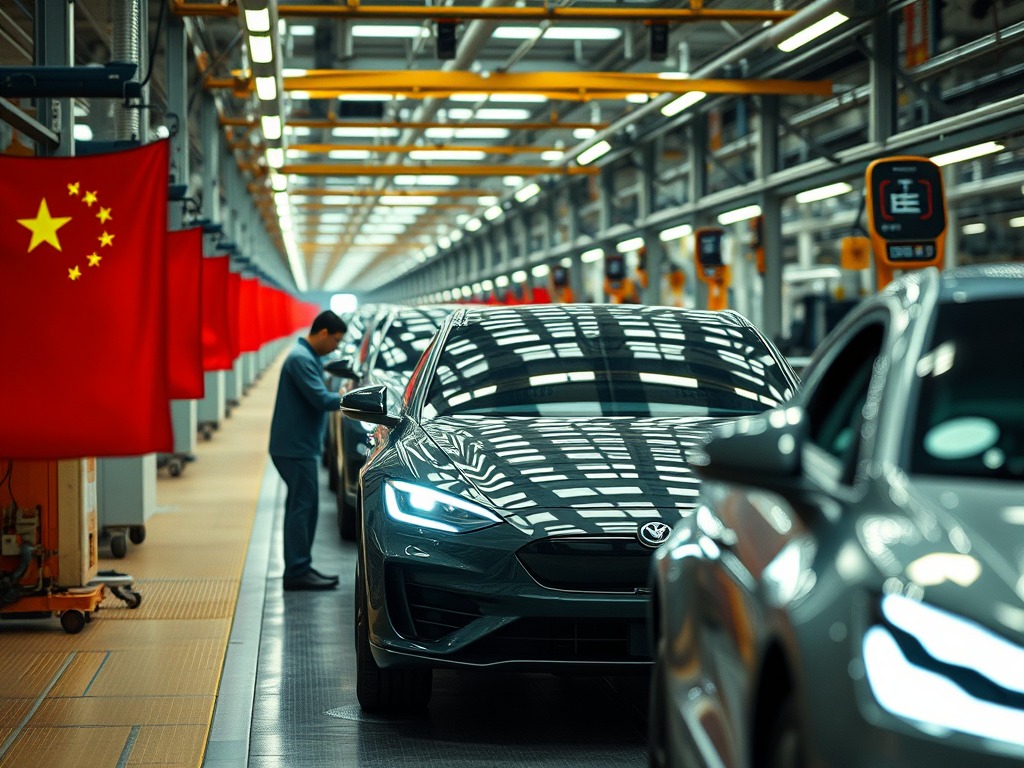
China has taken decisive steps. These measures aim to counteract recent European Union (EU) tariffs on Chinese-built electric vehicles (EVs). The tariffs reach up to 45.3%. In response, the Chinese government has advised its automakers. They should stop investing significantly in EU countries that supported the new tariffs. They should also consider different markets.
Key Developments and Investment Strategy
| Key Point | Details |
|---|---|
| Investment Halt | China has instructed its automakers to pause investments in EU countries that supported the new EV tariffs. |
| EU Tariffs | The EU implemented tariffs as high as 45.3% on Chinese EVs following a year-long investigation. |
| Support and Opposition | The EU decision saw mixed responses. Countries like France, Poland, and Italy supported the tariffs. Germany and four others opposed. Twelve member states abstained. |
| Strategic Investments | Chinese companies are encouraged to focus their investments in EU countries. These countries either opposed or abstained from the vote. This includes BYD, SAIC, and Geely. |
| Market Dependency | Europe is a major market for Chinese EVs, comprising over 40% of China’s EV exports in 2023. A slowdown in exports could worsen overcapacity in China’s EV industry. |
| Relocation and New Plants | Cautious expansions are underway, such as BYD’s factory project in Hungary and SAIC’s plans to establish a European manufacturing site. |
| Collective Negotiations | Chinese authorities advise against individual investment talks and favor collective negotiations with EU governments. |
| Previous Warnings | China has cautioned its companies about investments in India. It has also done the same for investments in Turkey. This reflects a broader trend in careful investment strategies in international markets. |
Implications of EU Tariffs and Investment Adjustments
The EU’s decision to impose tariffs on Chinese EVs has led to an investment reshuffling. China looks to respond strategically. Ten EU nations backed the tariffs. They cited competition concerns. Germany and others expressed reservations about the impact on EV supply chains. They also worried about consumer costs. The Chinese government’s response suggests that it strengthen relationships with EU members opposed to the tariffs. It also plans to emphasize investments in these regions.
Market Dependency and Capacity Concerns
Europe is critical to China’s EV export market, contributing over 40% of Chinese EV exports in 2023. A reduction in EV sales to Europe could intensify the overcapacity problem in China’s domestic automotive industry. This situation may potentially lead to oversupply and price adjustments within China.
Strategic Moves in European Expansion
China’s state-backed advice to its automotive companies to consider the stance of individual EU nations is already influencing investment plans. Companies like BYD and SAIC are progressing with cautious investments in Europe. BYD’s ongoing project in Hungary and SAIC’s site scouting highlight a focus on regions less affected by the tariffs.
Collective Negotiations to Strengthen Leverage
As part of its response, China has recommended collective negotiations over individual deals to keep leverage. This approach underscores a strategy of unified bargaining power as Chinese companies navigate changing policies in international markets.
Broader Context and Future Considerations
This strategic pivot in investment signifies a change in China’s international business approach. It responds to policy changes in other countries. The situation underscores how international policy is becoming increasingly interconnected. Investment and trade relationships are also intertwining more, especially in the green technology and EV markets. As China re-evaluates its presence in Europe, it will closely monitor how these decisions impact the Chinese automotive landscape. These decisions will also affect the EU automotive landscape.




 Glottis Limited
Leave a comment