
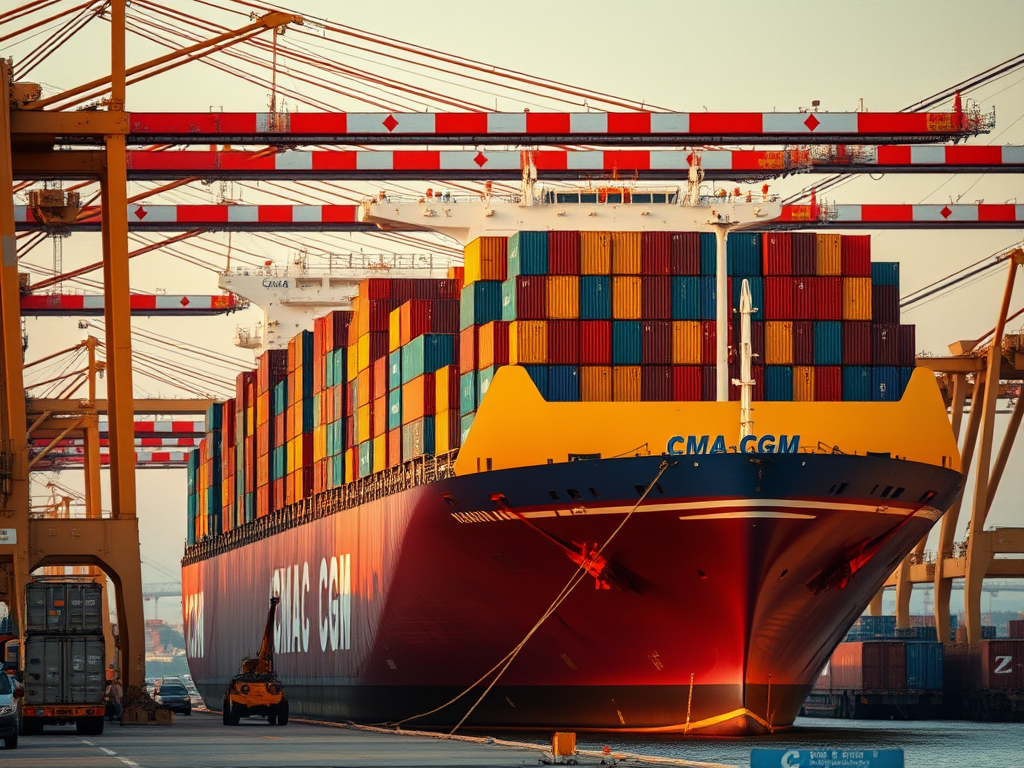
With container volumes slipping on Indian trade lanes, major container lines are implementing innovative strategies to attract volumes and optimize vessel utilization. Notable among these is French carrier CMA CGM, which has introduced discount vouchers for customers booking shipments on its “SpotOn” service. This move highlights a strategic shift that mirrors e-commerce platforms’ use of incentives, such as Amazon’s gift card approach, designed to drive sales.
CMA CGM recently rolled out a $300 discount per TEU for bookings from India to Australia through its spot window, an industry source in Mumbai reported. According to a sales executive from a leading freight forwarder, this incentive strategy varies across trades, primarily based on vessel utilization rates, which helps to attract additional volume without directly reducing spot rates. “Instead of aligning spot rates with market trends, CMA CGM’s voucher strategy helps attract more freight while maintaining rate integrity,” the executive explained.
Market Dynamics: Falling Spot Rates and Rising Capacity
A significant downward trend in spot rates on India’s primary headhaul trade routes, especially to Europe and the US, has underscored the ongoing cargo crunch. For example, rates from West India to North Europe have plummeted from approximately $5,000 per TEU in August to around $2,000 per TEU in recent weeks. Industry insiders suggest that these sharp declines stem from both the softer demand and a surge in carrier capacity adjustments.
Part of this capacity surge is due to carriers’ efforts to navigate around the Cape of Good Hope, bypassing the Suez Canal to avoid congestion and geopolitical risks. This route change, combined with new service additions introduced in anticipation of sustained export growth from India, has further exacerbated the overcapacity challenge. Amid these dynamics, even alliance members have been observed undercutting one another on booking rates, contributing to increasingly competitive pricing on Indian trades.
Export Pressures Amid Global Geopolitical Tensions
In addition to rate adjustments, Indian exports have faced headwinds from global geopolitical shifts. Tensions between Israel and Iran have created logistical challenges, particularly for Indian trade routes traversing the Red Sea. The Federation of Indian Export Organisations (FIEO) has raised concerns about the impact of such tensions on export volumes to key destinations, including Europe, Africa, the Gulf, and the CIS region. FIEO President Ashwani Kumar noted that the rising risk factors on Red Sea routes have placed added pressure on already struggling exports.
Kumar also highlighted the domestic economic challenges exporters face, especially concerning high credit costs. To alleviate this, the Indian government is reportedly considering an enhanced interest subvention scheme. Kumar expressed hope for sustained support through the interest equalization scheme, with an extended horizon of five years to provide exporters with predictable financial support.
Modest Recovery Offers Hope
Despite these pressures, recent trade data provided a glimmer of optimism for India’s exporters. Following a steep 9% decline in August, national goods exports in September showed a modest rebound, rising by 0.5% year-on-year. Though the increase was marginal, FIEO expressed cautious optimism, interpreting the uptick as an encouraging sign amid the broader global economic slowdown.
In response to this complex environment, container lines serving Indian trades may continue to experiment with innovative strategies, like CMA CGM’s voucher initiative, to boost volume and mitigate the impacts of sliding spot rates and excess capacity. However, as the market remains volatile, carriers and exporters alike will need to remain flexible, adapting quickly to evolving trade dynamics and economic policies on both domestic and international fronts.




 Glottis Limited
Leave a comment