
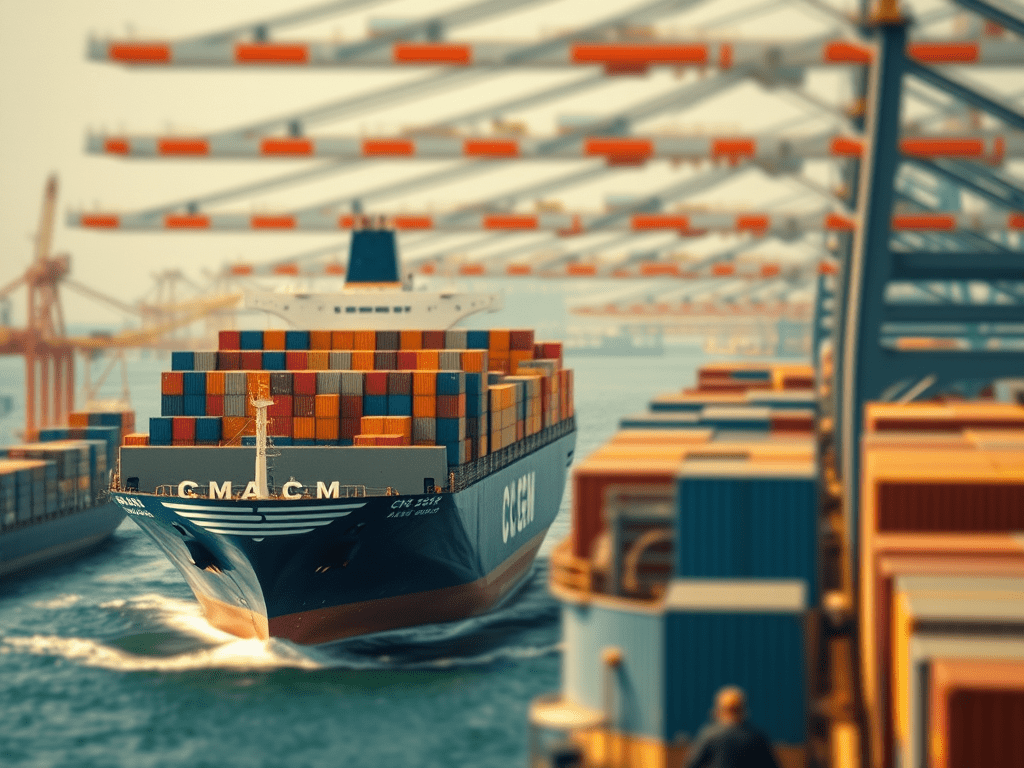
CMA CGM has announced the resumption of its traditional Suez Canal route for the Indamex service. This is an important development for the global shipping industry. This strategic shift marks a crucial response to disruptions that arose during the Red Sea crisis of late 2023. Here’s a breakdown of what this means for the shipping landscape. It also impacts transit days for crucial trade routes.
Key Changes and Strategic Benefits
- Route Adjustment: The Indamex service connects West India with North America. It will once again use the Suez Canal. This change bypasses earlier detours made necessary due to geopolitical disturbances. This resumption not only restores normalcy but also enhances efficiency in trade lanes crucial to global commerce.
- Service Expansion: The route will include stops at Jeddah in Saudi Arabia. It will also stop at Damietta in Egypt and Tanger Med in Morocco. These stops reinforce connections between major ports in Asia, the Middle East, and North America.
- Voyage Optimization: The revised Suez Canal route is expected to reduce the round-trip duration from 12 weeks to 11 weeks. This efficiency boost results from both optimized transit times and the need for one less vessel in the rotation.
- Operational Efficiency: The restructured schedule is anticipated to save significant time, costs, and resources. This change benefits shippers and improves the reliability of deliveries.
- Transshipment Plans: Lebanese cargo will be managed through transshipment at the Damietta hub. This occurs despite the Indamex service not directly calling at Lebanon. This reflects a strategic use of regional hubs to keep service coverage.
- Vessel Deployment: The Indamex and BEX2 services will predominantly use CMA CGM vessels. There are minor contributions from alliance partners like Cosco, OOCL, and Evergreen. This setup indicates a well-coordinated fleet management strategy.
Key Data in Table Format
| Aspect | Details |
|---|---|
| Route Resumption | Suez Canal, reinstated after Red Sea crisis |
| Key Ports | Jeddah, Damietta, Tanger Med |
| Service Start Date | November 13, 2024 (CMA CGM Pellas from Port Qasim) |
| Voyage Duration Reduction | 12 weeks to 11 weeks |
| Fleet Requirement | Reduced from 12 vessels to 11 vessels |
| Transshipment Hub | Damietta (for Lebanese cargo) |
| Vessel Utilization | Primarily CMA CGM tonnage; partners: Cosco, OOCL, Evergreen |
Importance of Reduced Transit Days
Reducing voyage time from 12 weeks to 11 weeks has several critical benefits:
- Enhanced Efficiency: A one-week reduction in transit times enhances the supply chain’s responsiveness, crucial for time-sensitive goods.
- Cost Savings: Fewer vessels required in rotation translate to operational cost savings. These savings are passed on to customers through more competitive rates.
- Market Competitiveness: Faster transit times give CMA CGM a strategic edge over competitors, ensuring prompt deliveries and reducing lead times.
- Environmental Impact: Fewer vessels operating for shorter durations can help reduce emissions, aligning with sustainability goals in maritime logistics.
CMA CGM has made strategic decisions to streamline the Indamex service. These decisions show a proactive approach to optimizing global trade routes. They also enhance service reliability. For stakeholders, this signifies a positive shift towards more efficient and effective logistics operations.


 Glottis Limited
Leave a comment