
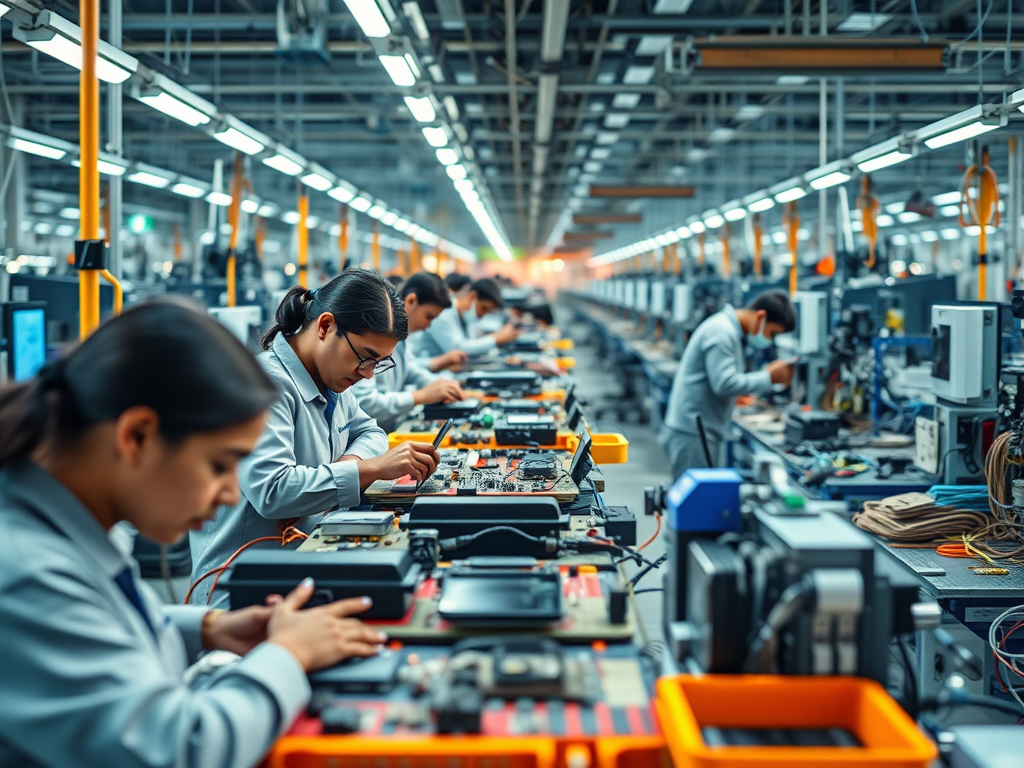
Foxconn, a global leader in electronics manufacturing, is making significant strides in India as part of its strategy to reduce reliance on China and expand its global footprint. With investments exceeding $1.4 billion as of August 2024, the company is cementing its role as a critical player in India’s burgeoning electronics manufacturing ecosystem. Here’s an in-depth look at Foxconn’s journey, challenges, and future in India.
Scaling Investments in India
Foxconn’s commitment to India is evident from its increasing investments in mobile assembly and other high-growth sectors. The company’s economic contribution in the country has grown to over $10 billion, reflecting its pivotal role in the electronics manufacturing boom fueled by Apple’s rising demand.
Diversification Beyond Smartphones
While Foxconn’s initial operations in India centered on smartphone assembly, the company is now broadening its portfolio. Its expansion includes:
- Information and Communication Technology (ICT): Developing advanced computing systems and infrastructure.
- Electric Vehicles (EVs): Manufacturing EV components to support India’s green mobility ambitions.
- Digital Health: Focusing on wearables and medical devices, catering to the growing global health-tech market.
- Semiconductors: Investing in chip packaging, including a collaboration with HCL to establish a semiconductor facility.
This diversification aligns with Foxconn’s strategic 3+3 growth model, targeting three industries (EVs, digital health, robotics) and three technologies (AI, semiconductors, next-generation communication).
Establishing New Facilities
Foxconn is making headlines with major infrastructure projects in India. Key developments include:
- AirPods Production Unit: A state-of-the-art facility near Hyderabad dedicated to manufacturing AirPods, strengthening its partnership with Apple.
- Semiconductor Facility: A joint venture with HCL to boost India’s semiconductor capabilities, a crucial step toward self-reliance in electronics.
Additionally, several Indian states are competing to host a “Foxconn City” – a massive industrial park akin to its large-scale facilities in China. These proposals include offers of substantial land and incentives to attract the investment giant.
Alignment with Government Initiatives
Foxconn’s plans are perfectly in tune with the Indian government’s “Make in India” initiative. The program promotes foreign investments and local manufacturing through policy incentives and infrastructure development. By fostering local production, workforce development, and sustainability, Foxconn has become a model for global companies eyeing India as a manufacturing hub.
Challenges Along the Way
Despite its successes, Foxconn’s journey in India has not been without hurdles. The company has faced:
- Labor Discrimination Reports: Allegations of unequal treatment among workers.
- Workplace Safety Concerns: Incidents such as food poisoning and workplace conditions have drawn criticism.
Addressing these issues will be vital for Foxconn to sustain its growth and maintain a positive reputation in India.
Future Outlook
Foxconn’s India expansion reflects a broader shift in global manufacturing dynamics. With Apple’s “China plus one” strategy, analysts predict a higher proportion of iPhones and other electronics will be manufactured in India. This aligns with India’s aspiration to become a global electronics manufacturing hub.
Conclusion
Foxconn’s growing footprint in India represents a pivotal moment for the global electronics industry. Its strategic investments, diversification efforts, and alignment with government initiatives demonstrate a long-term commitment to the region. While challenges remain, Foxconn’s approach to leveraging India’s manufacturing potential could redefine the electronics supply chain, ensuring mutual benefits for both the company and its host nation.




 Glottis Limited
Leave a comment