
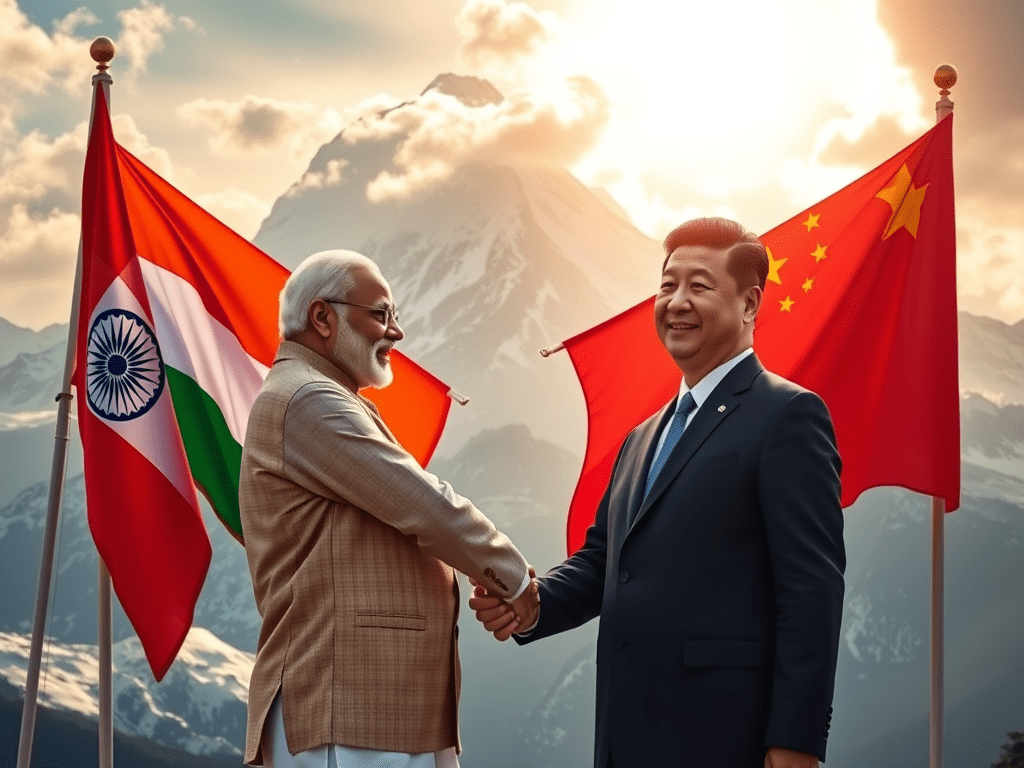
India and China, two of the world’s largest economies and most populous nations, have experienced a complex relationship marked by both cooperation and conflict. Recent developments, however, indicate a positive shift towards diplomatic engagement, military de-escalation, and economic collaboration. This article explores the key aspects of the evolving ties between the two nations.
Key Developments in India-China Relations
1. Improved Diplomatic Engagement
India and China have been consistently engaging in diplomatic talks to resolve tensions that have strained relations in recent years. These discussions aim to restore normalcy and explore areas of mutual interest.
2. Military Disengagement at the LAC
A significant development has been the ongoing military disengagement at disputed locations along the Line of Actual Control (LAC). Both nations have agreed to reduce their military presence in sensitive areas, indicating a move towards stability.
3. Resumption of Kailash Mansarovar Pilgrimage
In a symbolic gesture of goodwill, both countries have agreed to resume the Kailash Mansarovar pilgrimage in the summer of 2025. This pilgrimage, halted due to border tensions, is a significant religious and cultural event for Indian pilgrims.
4. Restoration of Direct Air Services
Direct air services between India and China are set to be restored, enhancing business, tourism, and cultural exchanges between the two nations.
5. Historical Context
India-China relations deteriorated significantly following the Galwan Valley clash in 2020 and the Doklam standoff in 2017. These events led to heightened military tensions and restrictions on trade and people-to-people interactions. The recent developments mark a departure from the hostilities of the past.
6. Recognition of Economic Ties
China is increasingly recognizing the importance of friendly relations with India, particularly as it seeks economic opportunities in the Indian market. Trade between the two countries has remained significant despite past tensions, and further normalization could lead to greater economic integration.
7. Impact of U.S. Politics
The changing political landscape in the United States, particularly Donald Trump’s return to the presidency, has influenced China’s foreign policy. With the possibility of increased pressure from the U.S., China is looking to stabilize its relations with India as a strategic move.
8. High-Level Meetings Between Leaders
A key milestone in recent diplomatic efforts was a meeting between Indian Prime Minister Narendra Modi and Chinese President Xi Jinping. The leaders discussed ways to normalize relations and foster cooperation across various sectors.
9. Ongoing Diplomatic Dialogues
India’s Foreign Secretary Vikram Misri recently visited China to hold discussions with Chinese officials, further reinforcing the commitment from both sides to maintain a constructive dialogue.
Summary of Key Developments
| Aspect | Recent Developments |
|---|---|
| Diplomatic Engagement | Regular high-level meetings and discussions. |
| Military Disengagement | De-escalation at disputed LAC locations. |
| Pilgrimage Resumption | Kailash Mansarovar Yatra to resume in 2025. |
| Direct Air Services | Flights between India and China to restart. |
| Historical Conflicts | Galwan clash (2020), Doklam standoff (2017). |
| Economic Considerations | China seeking trade stability with India. |
| Impact of U.S. Politics | Trump’s return influencing China’s approach. |
| High-Level Meetings | Modi-Xi meeting to normalize relations. |
| Ongoing Diplomacy | India’s Foreign Secretary’s visit to China. |
Conclusion
The recent thaw in India-China relations signals a shift towards strategic cooperation despite past tensions. While challenges remain, the renewed dialogue, military de-escalation, and economic considerations indicate that both countries are willing to work towards a more stable and constructive relationship in the coming years.


 Glottis Limited
Leave a comment