
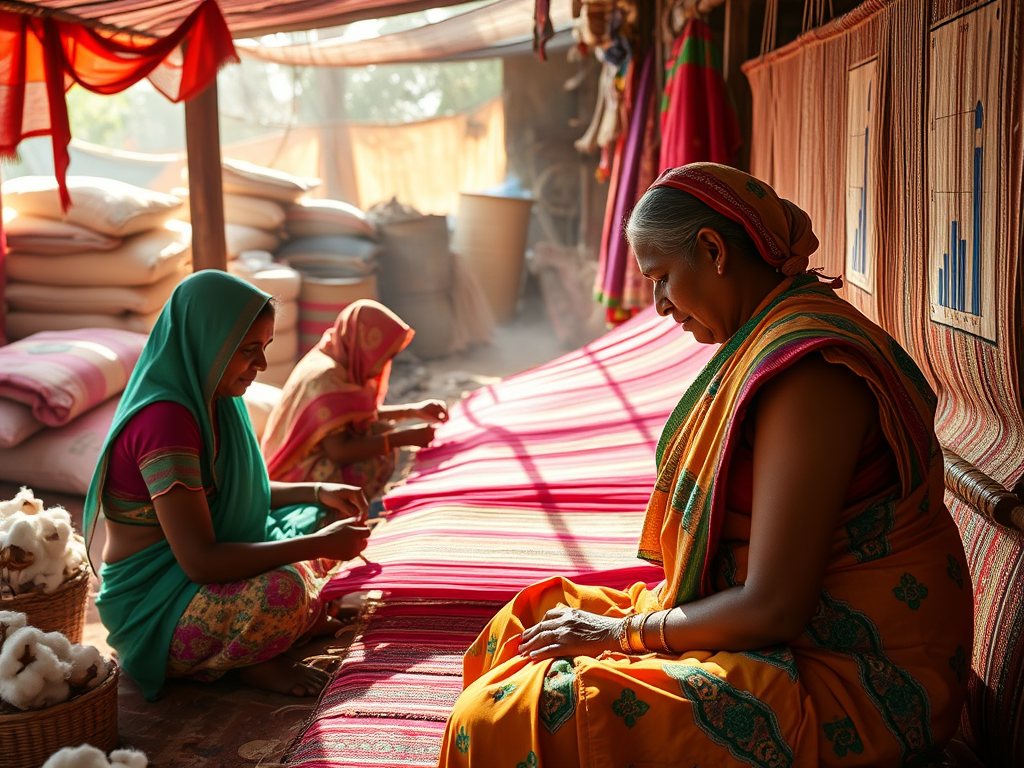
The Indian textile sector continues to experience a strong demand outlook, driven by evolving global trade dynamics, rising costs in competing countries, and government support. However, challenges such as high domestic cotton prices and capacity constraints remain key concerns.
Key Data & Market Performance
| Factor | Key Data (2024-25) |
|---|---|
| Revenue Growth | 11% YoY |
| EBITDA Growth | 11% YoY |
| Profit After Tax (PAT) Growth | 28% YoY |
| Cotton Price (India) | ₹54,000-₹55,000/candy (USD 0.80/lb) |
| Cotton Price (Global) | USD 0.67-0.68/lb |
| Cotton Production Forecast (CAI) | 30.17 million bales |
| Cotton Production Forecast (CICR) | 32.0 million bales |
| Budget Allocation for Textiles | ₹52.7 billion (↑ from ₹44.2 billion) |
Key Global Factors Driving Demand
Opportunities for Growth
- Shifting Sourcing Preferences:
- Rising labor costs in Vietnam and political instability in Bangladesh are pushing global buyers toward India.
- U.S.-China Trade War:
- Potential U.S. tariff hikes on Chinese textiles could redirect orders to Indian manufacturers.
- Sustainability Demand:
- Global preference for sustainable and high-quality textiles benefits India, which is strengthening its eco-friendly production.
Challenges Hindering Growth
- High Domestic Cotton Prices:
- Indian cotton remains costlier than global prices, impacting competitiveness.
- Capacity Constraints:
- Limited garment manufacturing capacity restricts the sector’s ability to meet rising demand.
- Global Price Volatility:
- Fluctuations in international cotton prices create uncertainty in input costs and margins.
Conclusion
The Indian textile sector stands at a pivotal moment, with strong global demand creating new opportunities. However, to sustain long-term growth, the industry must address high input costs, enhance manufacturing capacity, and leverage government initiatives effectively. Adapting to global trends will be key to maintaining competitiveness in the international market.




 Glottis Limited
Leave a comment