
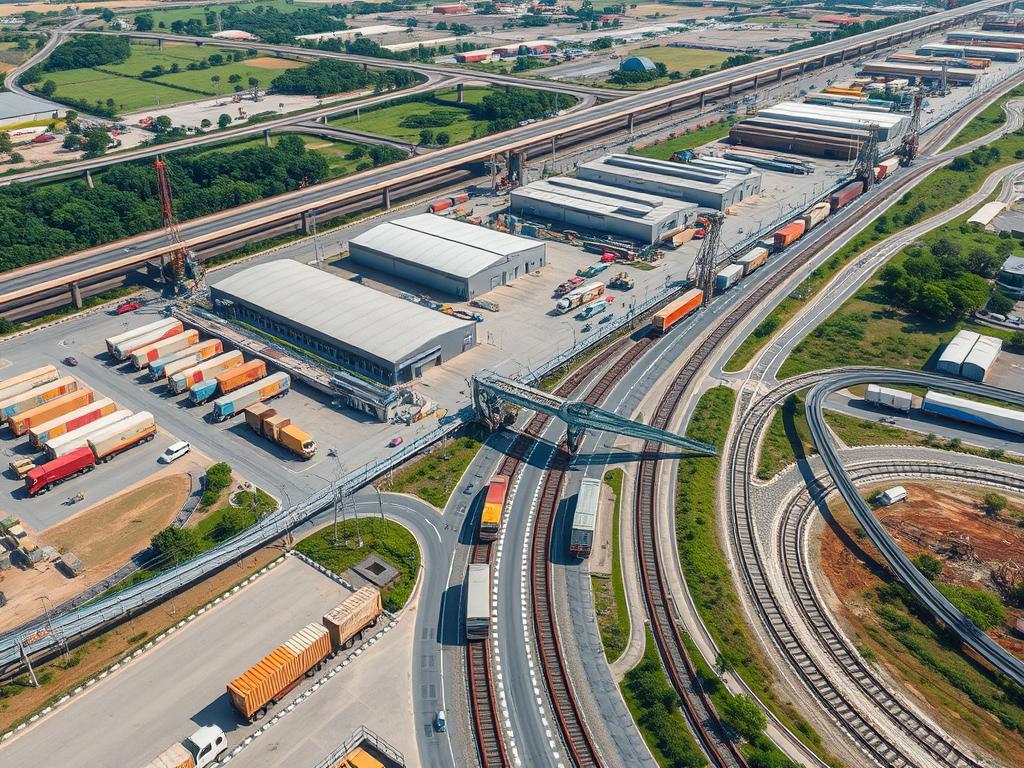
India’s vision of becoming a $5 trillion economy is closely linked to its ability to develop efficient logistics infrastructure. Logistics parks are at the core of this transformation, enhancing trade efficiency, reducing costs, and integrating multimodal transportation.
Infrastructure Transformation
India has significantly upgraded its logistics infrastructure, improving connectivity and reducing transit times. The key areas of development include:
Key Infrastructure Growth Metrics
| Sector | 2014 | 2024 | Growth |
|---|---|---|---|
| National Highway Network | 91,287 km | 146,195 km | ~60% increase |
| Electrified Railways (Broad-Gauge) | – | 97% | Significant cost reduction |
| Operational Airports | 74 | 159 | More planned under UDAN |
The Role of Logistics Parks in Economic Growth
Logistics parks integrate warehousing, cargo handling, and transport networks, optimizing supply chains across industries. Their impact is evident in various sectors:
Impact on Industries
| Industry | Key Benefits |
| Manufacturing | Reduced logistics costs and better supply chain management |
| E-Commerce | Improved last-mile delivery and warehouse efficiencies |
| Pharmaceuticals | Enhanced cold-chain logistics for perishable goods |
| Agriculture | Faster market access and reduced wastage |
Key Benefits of Logistics Parks
1. Enhanced Supply Chain Efficiency
- Centralized Operations: Integrated warehousing and cargo handling streamline supply chains.
- Improved Last-Mile Delivery: Strategically located parks enable quicker and more reliable deliveries.
2. Cost Reduction
- Lower Logistics Costs: Consolidation of logistics operations reduces overall expenses.
- Freight Optimization: Better cargo consolidation leads to lower transportation costs.
3. Expedited Customs Clearance
- Streamlined EXIM Operations: Faster clearance processes reduce delays in import-export activities.
4. Multimodal Transport Integration
- Efficient Modal Shifts: Logistics parks support seamless transitions between road, rail, air, and sea transport.
- Dedicated Freight Corridors: Enhancements in freight corridors significantly cut cargo transit times.
5. Technological Implementation
- AI and Automation: Smart technologies improve tracking, inventory management, and operational efficiency.
- RFID and IoT: Advanced tracking ensures better logistics monitoring.
6. Boosting Regional Connectivity
- Infrastructure Development: Logistics parks create better linkages to markets and resources, improving regional accessibility.
7. Global Competitiveness
- Trade Participation: By reducing logistics costs and transit times, Indian exports become more competitive globally.
8. Economic and Employment Growth
- Job Creation: Expansion of logistics parks generates employment across multiple sectors.
- Economic Contribution: Supports India’s broader economic objectives by improving trade and industrial output.
Logistics Cost Reduction Target
Currently, logistics costs in India account for 14% of GDP. The National Logistics Policy (NLP) aims to reduce this to 8% by 2030, enhancing India’s global trade competitiveness.
| Parameter | 2024 | 2030 Target |
| Logistics Cost as % of GDP | 14% | 8% |
| Expected Cost Savings | $180 Billion+ | – |
Conclusion
Logistics parks are playing a transformative role in India’s economic growth. By improving supply chain efficiency, reducing costs, integrating multimodal transport, and supporting key industries, they serve as a foundation for achieving India’s ambitious $5 trillion economy goal. With continuous investment in infrastructure and technology, India is set to become a major player in global trade and logistics.




 Glottis Limited
Leave a comment