
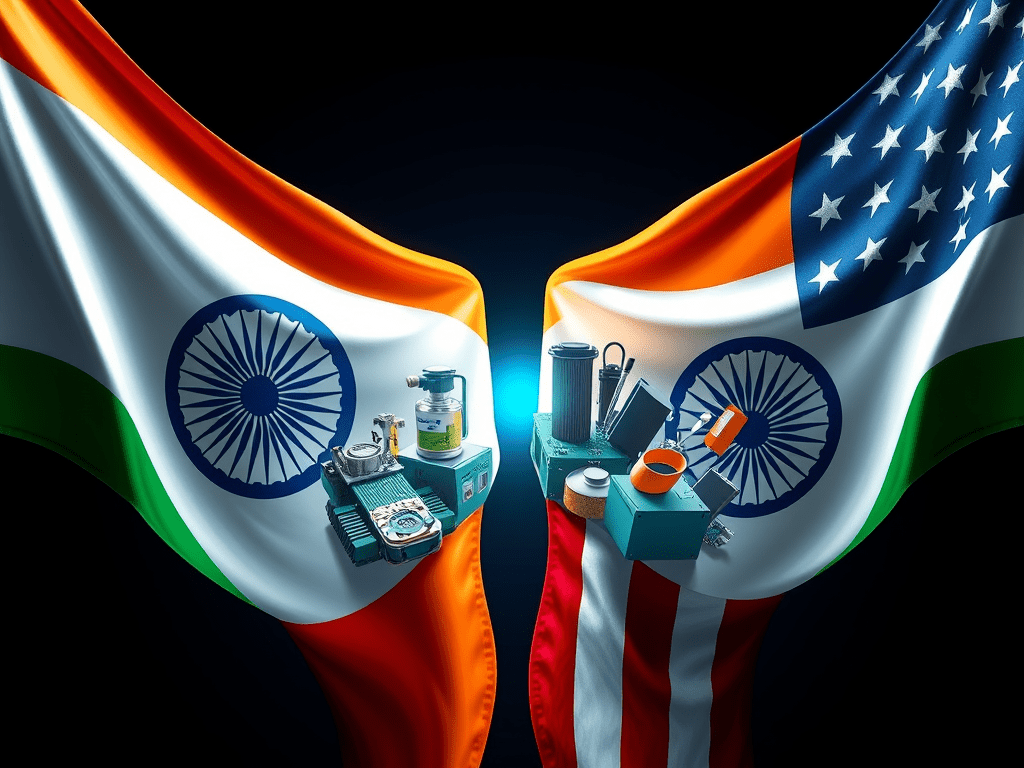
As India and the U.S. explore pathways to deepen trade relations, the Global Trade Research Initiative (GTRI) has issued a cautionary advisory: avoid a comprehensive Free Trade Agreement (FTA) and instead pursue a selective Zero-to-Zero tariff deal covering industrial goods. This approach aims to boost bilateral trade while safeguarding critical domestic sectors.
📌 What is a Zero-to-Zero Tariff Deal?
A Zero-to-Zero tariff deal refers to a trade pact where both countries agree to eliminate tariffs on a specified range of products—typically industrial goods—ensuring zero customs duty on both ends. It excludes sensitive sectors like agriculture, pharmaceuticals, and e-commerce, shielding them from potential disruption.
🔍 Key GTRI Recommendations at a Glance
| Area of Focus | Recommendation / Concern | Implication |
|---|---|---|
| Comprehensive FTA | Avoid full-scale FTA with the U.S. | Prevents asymmetric trade-offs that could harm sensitive Indian sectors. |
| Trade Strategy | Opt for “Zero-to-Zero” tariff deal on 90% of industrial goods | Encourages balanced industrial trade without opening vulnerable sectors. |
| Agriculture | Protect MSP system and food security | Avoid influx of GM foods and protect farmer livelihoods. |
| Pharma & Healthcare | Resist U.S. patent rules in FTA | Prevents monopolistic pricing and ensures access to affordable generics. |
| Retail & E-commerce | Avoid unregulated entry of U.S. giants | Protects small domestic retailers from being overrun. |
| Automotive Sector | Don’t reduce tariffs on U.S. cars | Shields domestic auto manufacturers and jobs. |
| Trade History | India’s past trade concessions weren’t reciprocated | Encourages a cautious, mutually beneficial strategy. |
| Preferred Trade Partners | Focus on EU, UK, Canada, ASEAN, Japan, S. Korea | Diversifies trade relationships beyond the U.S. |
| Strategic Alliances | Collaborate with China and Russia on value chains | Supports Make in India and export-driven manufacturing. |
🌐 Why a Full FTA with the U.S. May Be Risky
GTRI outlines that a comprehensive FTA may come at the cost of:
- Weakening of food security, especially if India allows large-scale imports of subsidized or genetically modified agricultural products.
- Higher medicine prices, due to prolonged patent protections being pushed by U.S. pharma lobbyists.
- Job losses, particularly in automotive and retail, due to tariff cuts on U.S. vehicles and liberal e-commerce norms.
✅ Strategic Pivot: Advantages of Zero-to-Zero Tariff Deal
| Feature | Explanation |
|---|---|
| Narrow Scope | Covers only industrial goods, minimizing political resistance. |
| Quick Bilateral Gains | Enables faster mutual access to manufacturing markets. |
| Protective Flexibility | Sensitive sectors can be excluded entirely. |
| Economic Boost | Increases trade volumes in capital goods and technology-intensive products. |
| No Legal Overreach | Doesn’t impose regulatory changes or affect domestic standards. |
🌍 Looking Forward: A Multi-Pronged Trade Strategy for India
GTRI urges India to focus on selective bilateralism—targeted agreements with economic allies that do not compromise sovereignty or key sectors. Additionally, India must:
- Leverage the PLI scheme and Make in India for value-added exports.
- Develop joint manufacturing ecosystems with nations like China and Russia.
- Strengthen logistics and infrastructure to make Indian exports globally competitive.
📣 Conclusion: Pragmatism Over Prestige
While a full-scale FTA may look like a diplomatic win, GTRI stresses that trade realism is far more vital. A Zero-to-Zero tariff deal offers a middle path—one that promotes industrial growth, protects livelihoods, and avoids the pitfalls of wide-ranging concessions.
India’s next chapter in global trade should be one of strategic autonomy, not dependency.




 Glottis Limited
Leave a comment