
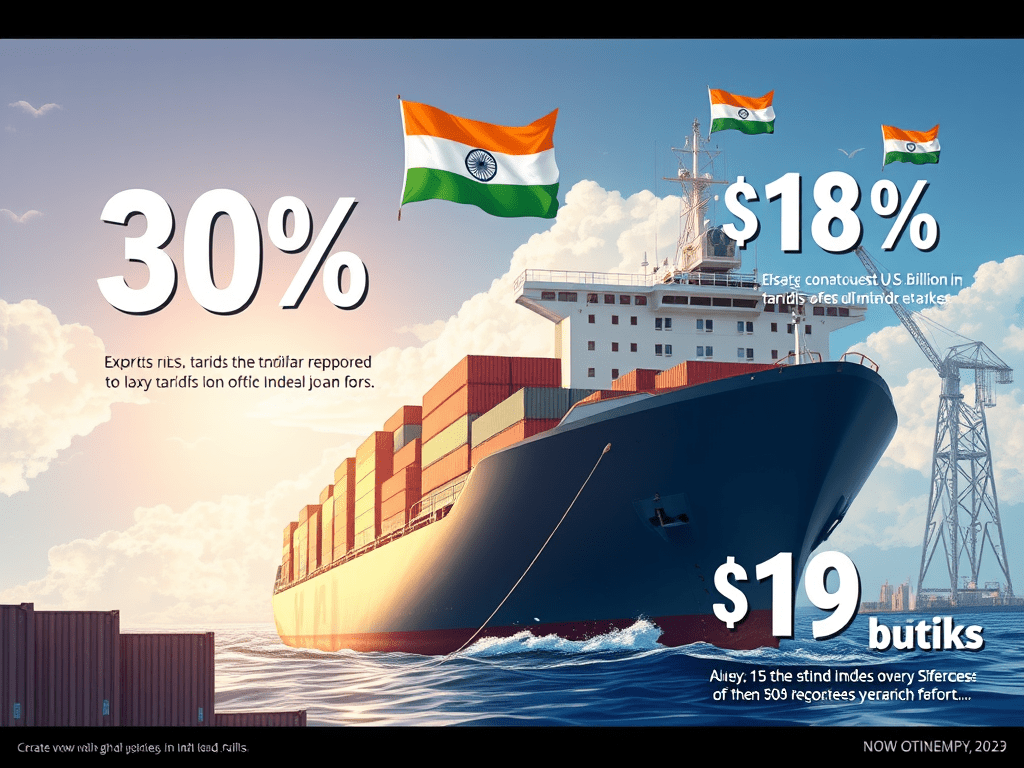
India’s trade dynamics with the United States have come under renewed pressure as a significant portion of its exports now face steep tariff rates. Recent analysis highlights the economic strain that these duties are imposing on Indian exporters, especially as U.S. trade policy continues to reflect protectionist measures introduced during former President Donald Trump’s administration.
Tariff Exposure Grows for Indian Exports
As of 2025, nearly 30% of India’s exports to the U.S. are subject to tariffs exceeding 15%, putting billions of dollars in trade at risk. A large portion of this is driven by ongoing regulatory changes, including the flat 10% duty implemented in 2024 on imports from all countries, which was followed by additional product-specific hikes.
One of the most concerning developments is the sharp rise in the number of Indian products facing tariffs above 30%, marking a significant jump from previous years. This year alone, $458 million worth of goods are likely to fall into this heavily taxed bracket.
Historic and Economic Context
In 2024, the U.S. imposed over 10% tariffs on $4.7 billion worth of Indian goods, spanning 3,451 product categories. That move was seen as an early sign of a more aggressive trade posture, which has continued into 2025 with a wider net of elevated duties.
The current regulatory climate has left $19 billion worth of Indian exports vulnerable, even after accounting for product exemptions. These trends highlight the need for both policy reassessment and strategic trade realignments by Indian exporters.
Key Tariff Data: India–U.S. Trade Snapshot (2024–2025)
| Tariff Metric | Details |
|---|---|
| General Duty Rate | Flat 10% duty imposed on imports from all nations since 2024. |
| Exports Facing >15% Tariffs | 30% of Indian exports to the U.S. are subject to duties above 15%. |
| High-Duty Products (30%+) | $458 million worth of Indian goods likely to face tariffs over 30%. |
| 2024 Affected Goods | $4.7 billion worth of exports (3,451 categories) faced tariffs >10%. |
| Total Exports at Risk | $19 billion in Indian exports exposed to elevated tariff rates. |
Conclusion
The evolving tariff landscape between India and the United States is reshaping trade strategies on both ends. While the U.S. continues to enforce tariff barriers aimed at protecting domestic industries, Indian exporters are navigating increased costs and potential losses. As the situation unfolds, ongoing dialogue and strategic diversification will be key to mitigating risks and preserving long-standing trade relationships.




 Glottis Limited
Leave a comment