
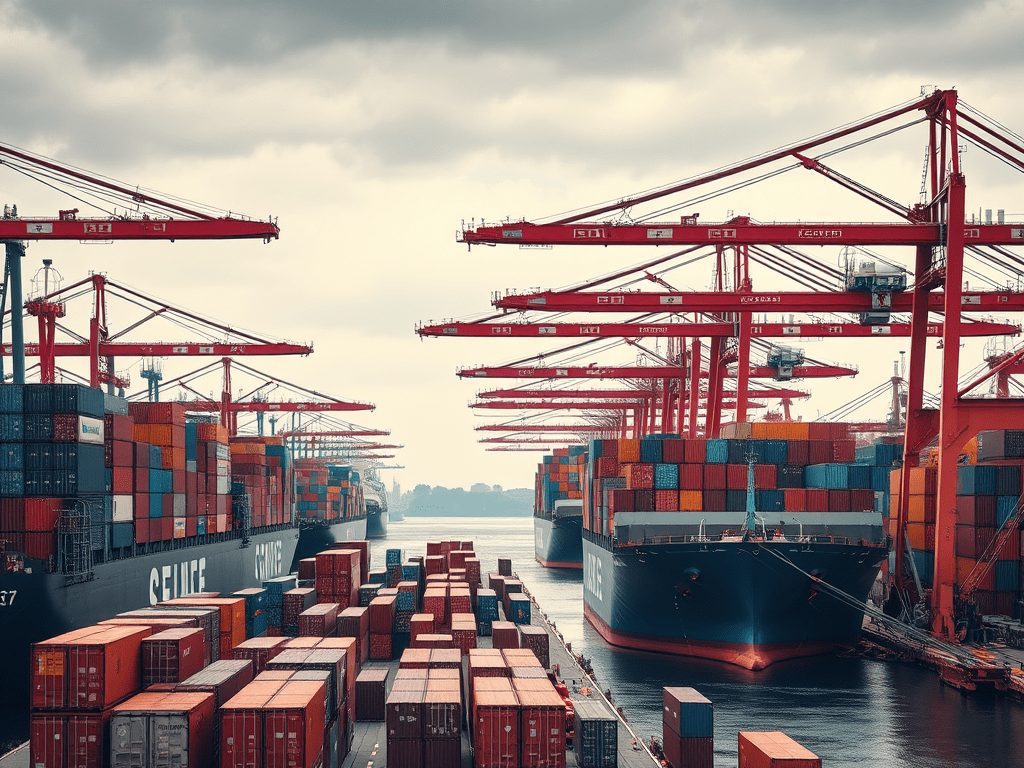
The intensifying trade standoff between the United States and China is casting a long shadow over the global container shipping industry. As reciprocal tariffs continue to define the relationship between the world’s two largest economies, the ripple effects are being felt across transpacific shipping lanes, port activity, and global trade sentiment.
Container Shipping Takes a Hit
One of the most immediate and visible impacts of the U.S. tariff policies has been the decline in container shipping volumes, especially along transpacific routes. Bookings from China have plunged, and the slump is spreading to other parts of Asia. This decline is prompting shipping lines to cancel scheduled voyages, compounding the uncertainty in an already fragile market.
The Policy Impact
President Donald Trump’s tariff strategy—framed as a reciprocal response to perceived trade imbalances—has created a complex environment for exporters. For Chinese manufacturers, the imposition of higher tariffs on a wide range of goods has led to reduced U.S. demand, directly affecting shipping logistics and vessel utilization.
Despite some efforts at tariff concessions, market sentiment remains low. Industry insiders believe that without a structural resolution to the trade standoff, container volumes are unlikely to recover in the near term.
Data Snapshot: Key Impacts of U.S. Tariff Policies
| Category | Impact |
|---|---|
| Container Shipping Bookings | ↓ 30-60% in China, ↓ 10-20% in other parts of Asia |
| Port Throughput in China | ↓ 6.1% (Week of April 7–13) |
| Market Sentiment | Weak; tariff concessions not enough to drive recovery |
| Blank Sailings | Increased significantly; voyages cancelled due to low cargo volume |
| Short-Term Cargo Demand | Expected to drop further ahead of May Labour Day holiday |
Looking Ahead
The short-term outlook remains bleak, with the Labour Day holiday in May likely to further dampen demand. Additional blank sailings may become necessary, increasing the financial pressure on shipping lines and freight forwarders.
Unless trade relations improve substantially, the container shipping sector—especially in the Asia-Pacific corridor—will likely continue to face volatility, reduced capacity utilization, and revenue losses.



 Glottis Limited
Leave a comment