
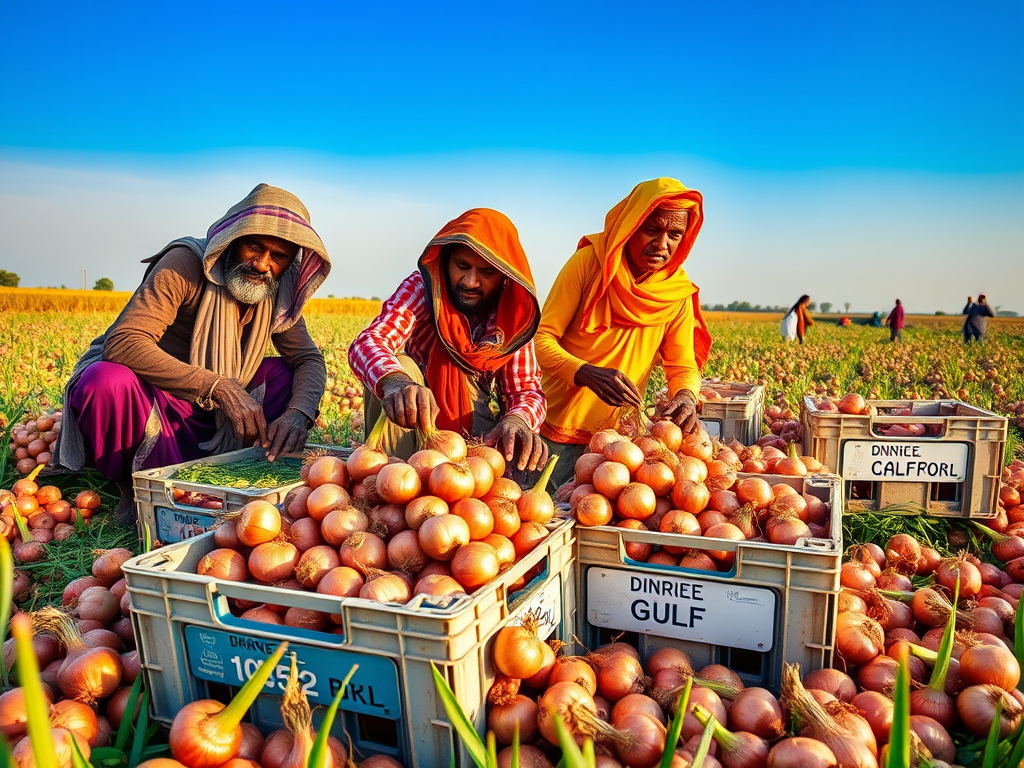
In a significant leap for India’s agri-export ecosystem, onion farmers from Maharashtra have begun directly exporting their produce to the Gulf region, marking a shift away from traditional supply chains dominated by traders and commission agents. This innovative step, spearheaded by MahaFPC (Maharashtra Farmer Producer Companies), aims to maximize farmer incomes, ensure product quality, and open up long-term export opportunities for a wider variety of fruits and vegetables.
A New Chapter in Onion Exports
Traditionally, Indian farmers have relied on intermediaries for exports, often receiving a fraction of the final selling price. This direct export initiative allows farmer producer companies (FPCs) to transact with foreign buyers, ensuring that a larger share of the final price flows back to the producers.
This season, the program has already recorded its first shipment of 30 tonnes, with a target of 2,000 tonnes of onions to be exported.
Key Data and Implications
| Focus Area | Key Data/Details | Implications |
|---|---|---|
| Initiative | Direct onion exports by Maharashtra farmers to Gulf region | Cuts out middlemen, improves farmer income |
| Export Volume | Target: 2,000 tonnes (initial shipment: 30 tonnes) | Opens new avenues for volume scaling and consistent exports |
| Facilitating Body | MahaFPC | Acts as a logistical, marketing, and training backbone |
| Participating FPCs | 10 FPCs from Nashik, Dharashiv, Ahilyangar, Pune | Marks the first-ever direct export venture for these grassroots collectives |
| Quality Criteria | Onion size: 55–60 mm | Enforces grading standards, incentivizes improved agricultural practices |
| Storage Capacity | 19,000-tonne storage infrastructure by MahaFPC | Ensures proper handling, staging, and quality control |
| Training for Farmers | Packing, sorting, grading for export compliance | Builds long-term export readiness and professionalism in farming |
| Target Markets | Gulf countries, Sri Lanka, Malaysia (Bangladesh temporarily banned imports) | Access to growing international demand for Indian onions |
| Future Expansion | Plan to include Devgad mangoes and other produce | Encourages crop diversification and year-round export revenue |
| Value Addition | Bypassing commission agents and traders | Increases farmer share in the export value chain |
International Demand and Market Outlook
Maharashtra onions are particularly favored in Middle Eastern kitchens, and the Gulf countries remain the top buyers, followed by Sri Lanka and Malaysia. Although Bangladesh, a key market, has temporarily banned Indian onion imports until June due to domestic supply concerns, long-term prospects remain strong across the region.
Primary Export Markets:
- Gulf Region (UAE, Oman, Saudi Arabia, etc.)
- Sri Lanka
- Malaysia
- Bangladesh (currently on hold until June)
Empowering Farmers: Training, Storage, and Autonomy
A critical part of this success is the training provided to farmers. Export markets demand consistency in quality, packaging, and traceability, which the participating FPCs are actively developing through skill-building programs.
Additionally, the 19,000-tonne storage infrastructure provided by MahaFPC plays a key role in extending shelf life and stabilizing prices, particularly important in export logistics.
Looking Ahead: A Model for Other Crops
This initiative is expected to serve as a template for future direct exports of fruits and vegetables, starting with premium products like Devgad mangoes. By building a farmer-first export ecosystem, Maharashtra is not only unlocking better prices for its growers, but also raising the standards for Indian agricultural exports as a whole.
Conclusion
The direct export model led by MahaFPC is a transformational shift in how Indian agriculture interfaces with global markets. With the right support structures in place—storage, training, and quality assurance—Maharashtra’s farmers are poised to become key players in international agri-trade.
This model could soon serve as a blueprint for inclusive, sustainable, and farmer-led growth in India’s agricultural export sector.




 Glottis Limited
Leave a comment