
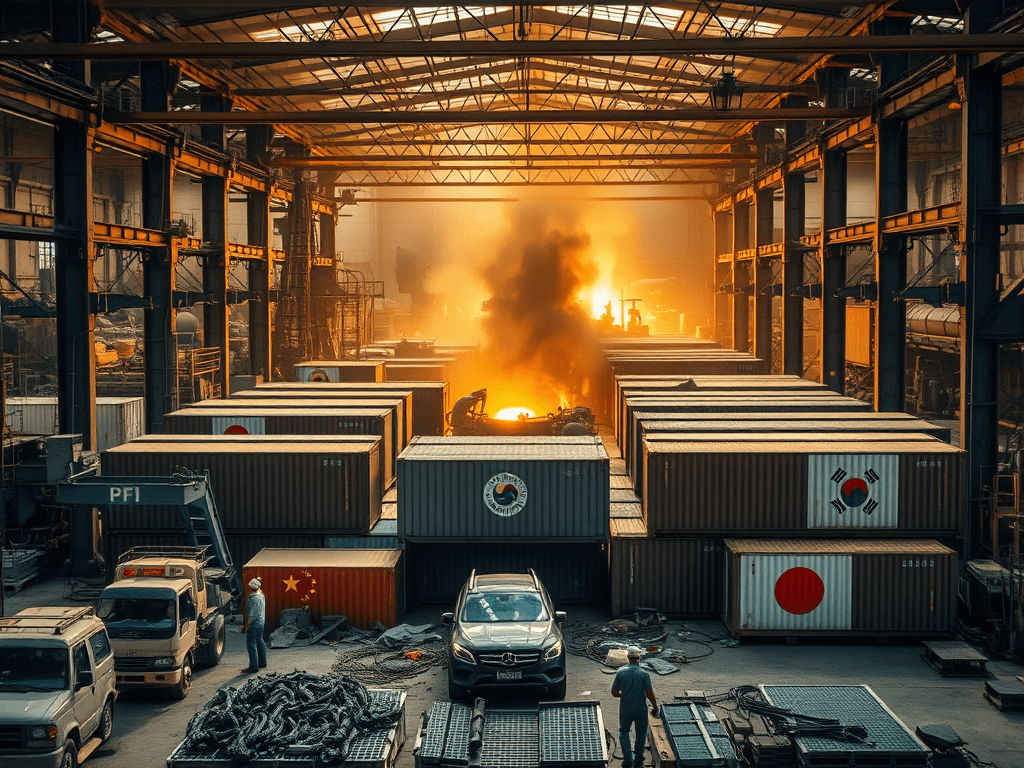
India has announced a temporary 12% safeguard duty on imported steel, a decisive step aimed at protecting its domestic steel industry from the flood of cheaper foreign alternatives, particularly from China, South Korea, and Japan. The decision comes as Indian steel producers raise alarms over diminishing competitiveness and mounting pressure on small-scale mills.
Understanding the Safeguard Duty
The safeguard duty, recommended by the Directorate General of Trade Remedies (DGTR), is a trade defense measure invoked in response to a sharp increase in steel imports that threatens domestic production. The Ministry of Finance is expected to act swiftly to implement the duty, which will remain in force for 200 days.
Key Highlights and Impact Overview
| Aspect | Details |
|---|---|
| Tariff Rate | 12% safeguard duty on finished steel imports |
| Duration | Temporary, for 200 days |
| Primary Objective | To protect Indian steelmakers from low-cost imports and support employment in small-scale mills |
| Triggered By | Investigation by DGTR following industry complaints |
| Import Surge | FY 2024/25 imports hit 9.5 million metric tons, a nine-year high |
| India’s Trade Status | Net importer of finished steel for second consecutive year |
| Major Affected Countries | China, South Korea, and Japan—account for 78% of India’s finished steel imports |
| Domestic Industry Concerns | Raised by leading producers like JSW Steel, Tata Steel, and Steel Authority of India |
| Expected Government Action | Ministry of Finance to finalize and enforce the tariff promptly |
Why the Tariff Was Necessary
The Indian steel industry has faced increasing competition from a growing wave of low-cost imports, which has placed severe pressure on domestic pricing and capacity utilization. Small- and medium-sized steel mills, often key employers in regional economies, are among the worst hit.
Notably, China has emerged as the primary exporter of low-priced steel to India, followed closely by South Korea and Japan. With nearly four-fifths of India’s imports originating from these three nations, the impact of the safeguard duty will be especially significant for their exporters.
Looking Ahead: Domestic Recovery and Global Trade Rebalancing
This temporary safeguard measure is expected to:
- Stabilize domestic prices and prevent undercutting by cheaper foreign goods.
- Support employment in the domestic steel sector.
- Allow Indian manufacturers time to recalibrate production and plan longer-term strategies.
However, it could also trigger retaliatory trade tensions or shifts in global steel flow, as exporters seek alternative markets.
Conclusion
India’s imposition of a 12% temporary safeguard duty on steel imports underscores the government’s commitment to supporting the domestic manufacturing ecosystem. As global trade dynamics evolve, the decision may not only influence steel prices and supply chains but also set a precedent for similar defensive trade policies in other sectors.


 Glottis Limited
Leave a comment