
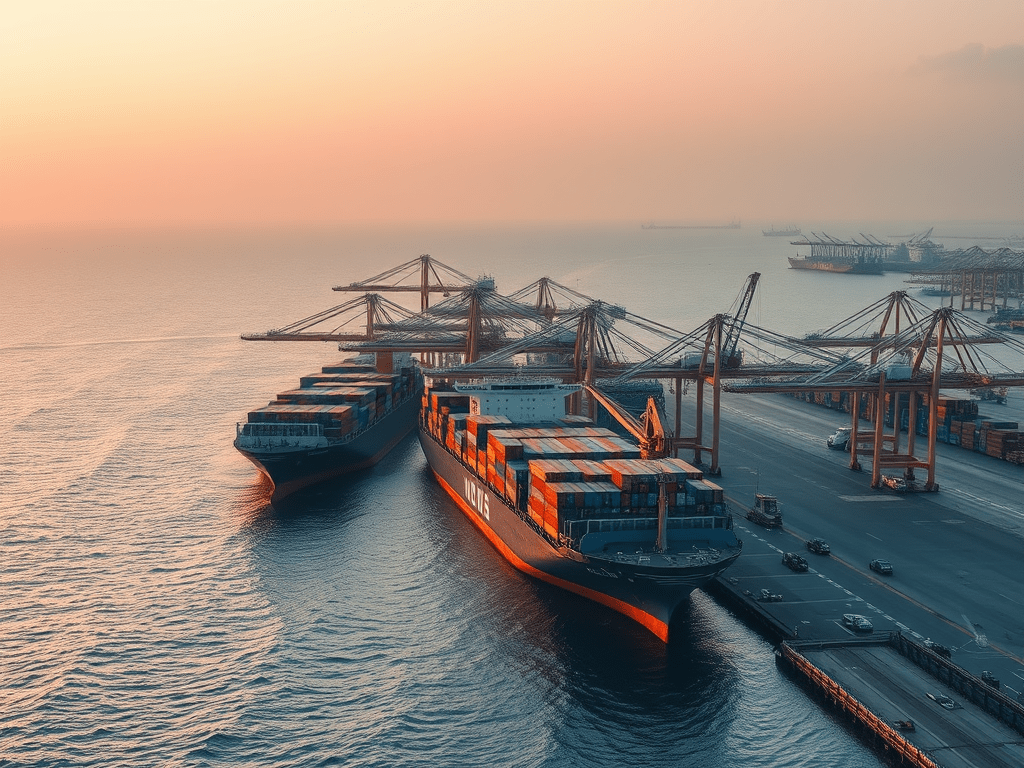
India’s maritime and logistics ecosystem is undergoing a transformative phase with major investments, policy changes, and infrastructure development. Among the most significant highlights is the upcoming Vizhinjam Port, poised to be a strategic game changer for Indian trade. Below is a comprehensive look at the current developments and what they mean for the country’s economic and logistics future.
Snapshot of Key Developments
| Category | Development |
|---|---|
| Ports and Infrastructure | Vizhinjam Port expected to cut logistics costs by 30%. Kolkata Port posted 45% growth in April cargo handling. Vadhvan Port undergoing ₹76,220 crore EIA study. |
| Shipping and Trade | India sees no entries of Pakistan-flagged vessels due to tensions. CMA CGM vessel registered with Indian Register of Shipping. MSC showed interest in Vizhinjam and Gangavaram ports, but was declined by Adani Ports. |
| Logistics Developments | Varanasi DC pushed for speedy multimodal terminal work. Karnataka to set up a logistics park near Bengaluru Airport. Adani expanding its logistics arm. |
| Warehousing Sector | 15% growth in Q1 2025. Leasing surged in Mumbai and Kolkata. |
| Coastal and Inland Shipping | Coastal Shipping Bill 2024 passed in Lok Sabha—sparking debates. India’s coastline revised to 11,098.81 km. |
| Economic Insights | 203% increase in logistics/warehousing sector investments in 2024. Adani Ports improved net debt-to-EBITDA ratio from 2.3x to 1.9x. |
Vizhinjam Port: A Strategic Asset for India
The Vizhinjam International Seaport, located in Kerala, is drawing attention as one of India’s most strategically important infrastructure projects. Designed to function as a major transshipment hub, Vizhinjam is expected to offer wide-ranging benefits across the economic and logistics spectrum.
Top Benefits of Vizhinjam Port
| Benefit | Description |
|---|---|
| Reduced Logistics Costs | Projected to slash India’s logistics costs by up to 30%, improving trade efficiency and competitiveness. |
| Trade Efficiency | Will serve as a key transshipment hub, reducing dependency on foreign ports like Colombo and Singapore. |
| Strategic Location | Located along major international shipping routes, enhancing connectivity with Europe, the Middle East, and Southeast Asia. |
| Cargo Handling Capacity | Designed to handle large container ships and volumes, improving India’s share in global maritime trade. |
| Local Economic Impact | Expected to create thousands of jobs and stimulate regional industrialization and investment in Kerala. |
| Support for Fisheries | Includes facilities and plans to protect the interests of local fishing communities, aligning with sustainability goals. |
| Kerala’s Economic Boost | The port is likely to attract tourism, trade, and long-term economic investments to the state. |
| Logistics Zone Development | Surrounding logistics and warehousing zones will benefit ancillary industries and enhance cargo distribution. |
| Environmental Compliance | EIA and other measures are being implemented to balance development with ecological sustainability. |
| Improved Connectivity | Road and rail upgrades will ensure seamless cargo movement from the port to hinterland regions across India. |
Conclusion
India’s logistics and maritime sectors are witnessing a pivotal shift, with Vizhinjam Port at the forefront of this transformation. Alongside national initiatives like multimodal logistics parks, increased foreign investment, and coastal shipping reforms, Vizhinjam underscores India’s commitment to becoming a global trade powerhouse.
As these projects mature, the collective impact will not only lower costs and boost exports but also enhance India’s strategic position in international commerce while fostering regional development and sustainability.



 Glottis Limited
Leave a comment