
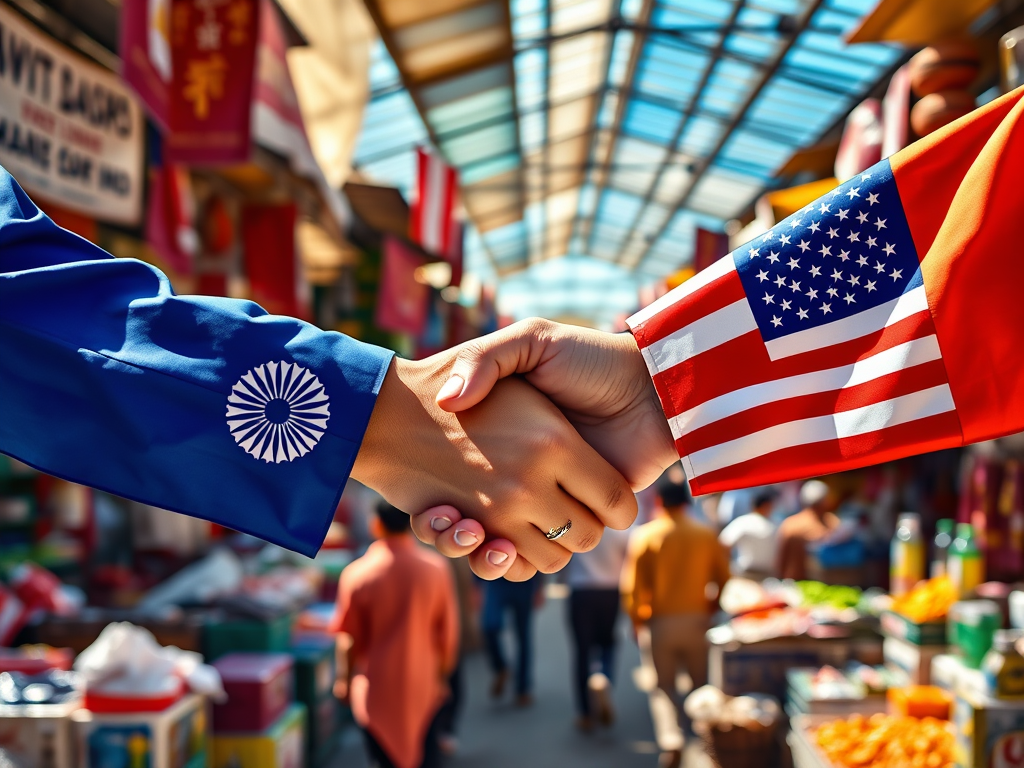
In a landmark move poised to reshape global trade dynamics, India has agreed to eliminate tariffs on imports from the United States, marking a major breakthrough in ongoing bilateral negotiations. Announced by US President Donald Trump, this development represents one of the most significant shifts in India’s trade policy and signals a deepening economic alliance between the two democracies.
🔑 Key Data Summary
| Aspect | Details |
|---|---|
| Tariff Status | India to drop tariffs on US imports to zero |
| Announcement By | US President Donald Trump |
| Stated Reason | India has some of the highest tariffs globally |
| Trade Deal Name | Proposed US-India Bilateral Trade Agreement (BTA) |
| Current Bilateral Trade | Over $190 billion |
| Target Bilateral Trade | $500 billion by 2030 |
| Announcement Timeline | Expected to be first among many trade deals under US review |
| Background Discussion | February 2025 meeting between PM Modi and President Trump in Washington |
📈 Positive Implications of the Tariff Elimination
1. Enhanced Trade Relations
India’s move sets the tone for increased bilateral trade, reinforcing ambitions to nearly triple trade volume by 2030. This opens new avenues for sectors like energy, pharmaceuticals, and defense.
2. Boost in Foreign Investment
With zero tariffs, US firms are expected to ramp up investments in India—particularly in technology, agriculture, and manufacturing—aiding economic diversification and job creation.
3. Strategic Alignment
The economic alignment is likely to spill over into strategic domains, solidifying India-US ties in the face of global challenges, especially China’s expanding influence in the Indo-Pacific.
4. Platform for Future Agreements
This milestone could serve as a gateway to broader cooperation—such as defense tech sharing, digital economy protocols, and sustainability initiatives.
⚠️ Challenges and Considerations
1. Domestic Political Pushback
Industries in India sensitive to US competition—such as dairy, agriculture, and retail—may resist the change, potentially creating internal policy pressure.
2. Trade Balance Concerns
India must ensure reciprocal access for its exports to the US to prevent a worsening trade imbalance, which could undercut domestic growth narratives.
3. Geopolitical Ripples
This alignment may impact India’s relations with traditional partners like the EU, ASEAN, or Russia, especially if market share shifts toward US players.
4. Managing Expectations
The leap from $190B to $500B in trade is ambitious. Unrealistic expectations could lead to disillusionment if not managed with transparency and phased implementation.
📝 Conclusion
India’s unprecedented decision to abolish tariffs on US imports symbolizes more than just a policy change—it is a strategic pivot with global consequences. While the move promises to inject new energy into India-US relations, careful navigation of domestic and geopolitical dynamics will be essential.
If implemented smoothly, this could herald a new era in international trade—one that prioritizes partnership, reciprocity, and shared economic growth.




 Glottis Limited
Leave a comment