
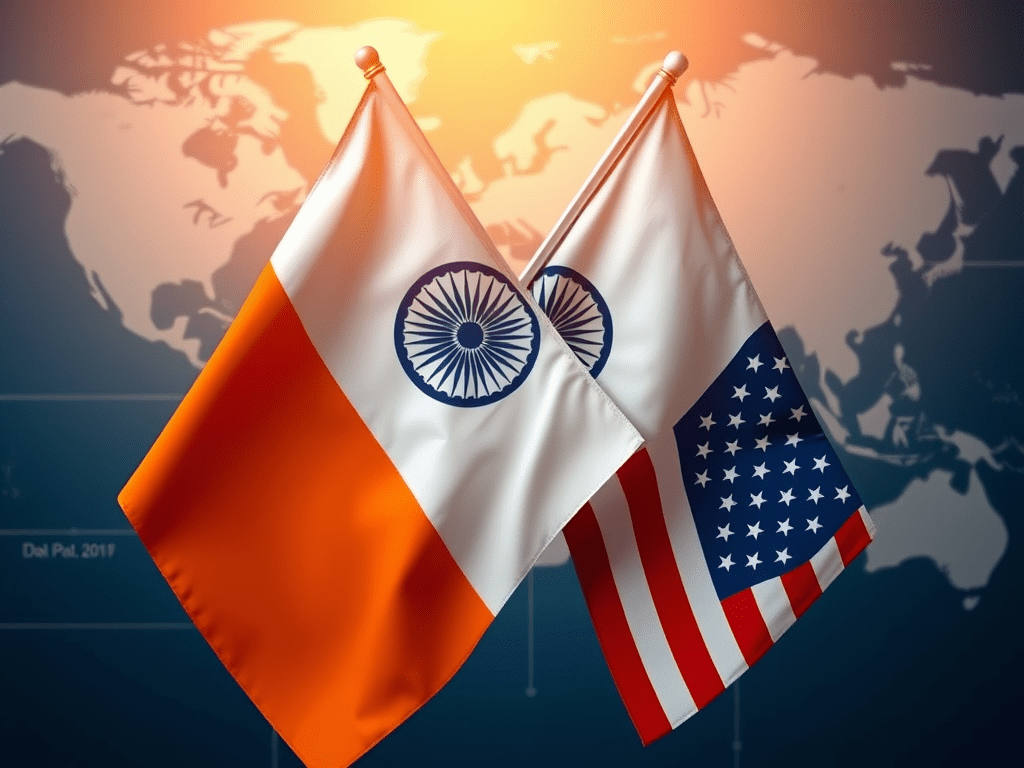
Amid ongoing global economic shifts, India and the United States are moving closer to finalizing a landmark interim trade agreement. The discussions aim to ease tariff tensions and serve as a foundation for a more comprehensive Bilateral Trade Agreement (BTA) in the future.
Overview of Current Developments
With negotiations progressing steadily, both nations are committed to resolving long-standing trade issues and enhancing cooperation. The interim deal is expected to act as a confidence-building measure that could significantly boost bilateral trade volumes.
Key Highlights of the Interim Trade Deal
| Key Point | Details |
|---|---|
| Potential Agreement Date | Agreement likely to be finalized by June 25, 2025 |
| Recent Negotiation Activity | India’s Chief Negotiator Rajesh Agrawal visited Washington for talks |
| Tariff Suspension | U.S. suspended 26% reciprocal tariff on Indian goods until July 9, 2025 |
| Baseline Tariff | Indian goods still face a 10% baseline tariff in the U.S. market |
| High-Level Engagement | Commerce Minister Piyush Goyal met U.S. Commerce Secretary Howard Lutnick twice |
| Follow-Up Meetings Planned | U.S. trade officials expected to visit India for continued discussions |
| Deal Context | Interim agreement serves as a precursor to a comprehensive BTA |
Context and Significance
1. Tariff Resolution and Market Access
The U.S. suspension of the 26% reciprocal tariff, which was imposed in early April 2025, signals a willingness to de-escalate trade tensions. However, the 10% baseline tariff remains a hurdle for Indian exporters seeking wider access to U.S. markets. Indian negotiators are advocating for long-term relief to create a level playing field for Indian manufacturers and service providers.
2. High-Level Political and Diplomatic Involvement
The involvement of top-tier officials—including Commerce Minister Piyush Goyal and his U.S. counterpart—demonstrates the strategic importance both nations place on trade as a pillar of their bilateral relationship.
3. Building Blocks for a Comprehensive Trade Deal
This interim agreement is being positioned as a stepping stone toward a full Bilateral Trade Agreement (BTA), which would encompass deeper areas such as digital trade, intellectual property rights, labor standards, and investment protection.
Implications for Future Trade
Should the interim agreement be finalized by the proposed date, both India and the U.S. are likely to benefit from:
- Improved market confidence and investor sentiment
- Increased trade volume through reduction of tariff uncertainties
- Stronger diplomatic ties and alignment on global economic policies
- A clearer roadmap toward a long-term, rules-based trade relationship
Conclusion
The India–U.S. interim trade deal reflects a renewed commitment to strategic economic partnership. With progress being made on both technical and political fronts, this agreement could reshape bilateral trade dynamics and set the stage for greater economic integration in the years ahead.
As both sides prepare for further engagement, the global trade community will be watching closely to see how these talks influence not only India–U.S. relations but also the broader Indo-Pacific economic landscape.




 Glottis Limited
Leave a comment