
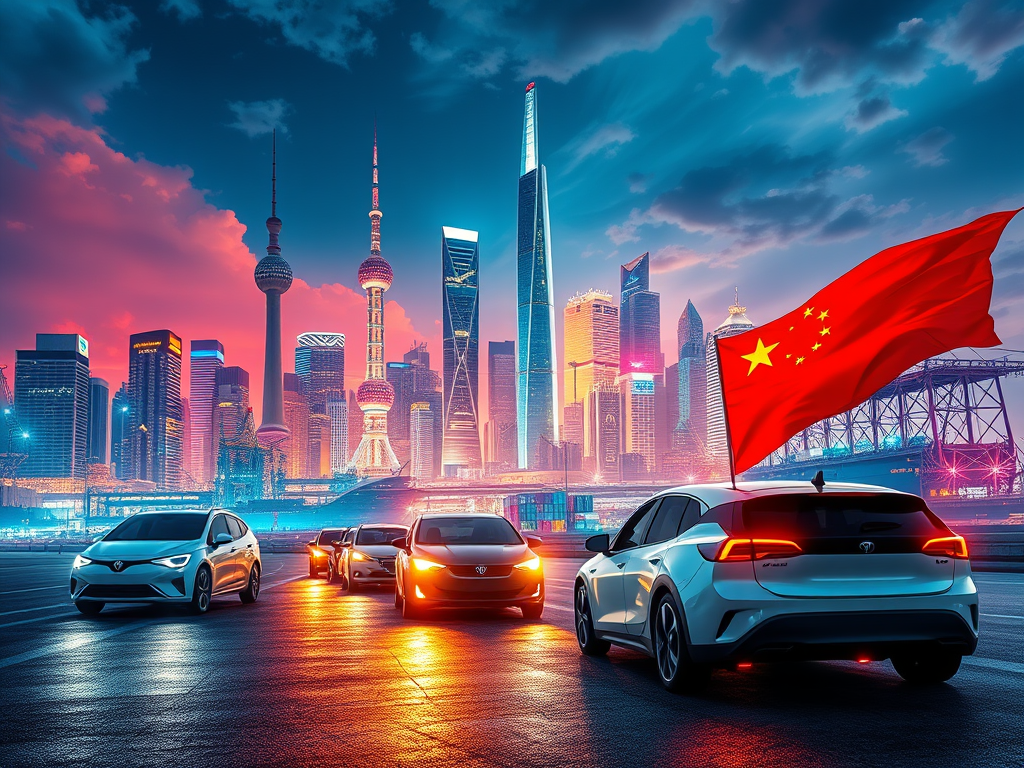
In 2025, China is once again reshaping the global economic landscape, echoing the disruptive “China shock” of the early 2000s. With a surging trade surplus, redirected exports, and booming electric vehicle (EV) shipments, the world is witnessing another round of dislocation across industries and geographies. Here’s a deep dive into the key developments:
Key Economic Indicators: China’s 2025 Trade Outlook
| Key Metric / Development | Details |
|---|---|
| Trade Surplus | ~$500 billion in 2025 (↑ 40% YoY) |
| Export Redirection | From U.S. → Southeast Asia, Latin America, and Europe |
| Global Impact | Industry disruptions in Germany, Indonesia, Brazil, Thailand |
| Manufacturing Output | Remained stable; export destinations diversified |
| Electric Vehicle (EV) Export Growth | ↑ 64% in 2025 despite domestic auto market slowdown |
Highlights and Implications
1. Trade Surplus at Historic Highs
China’s trade surplus has surged to nearly $500 billion in 2025—a massive 40% increase from 2024 levels. This signals that despite protectionist measures from the United States, China remains a dominant force in global manufacturing and exports.
2. Strategic Export Reorientation
Faced with renewed U.S. tariffs under President Donald Trump, China is pivoting its export strategy by redirecting goods to non-U.S. markets. Countries in Southeast Asia, Latin America, and Europe are becoming key destinations for Chinese exports, particularly in electronics, machinery, and vehicles.
3. Global Economic Disruption
This redirection is creating economic ripple effects worldwide. Industries in Germany, Indonesia, Brazil, and Thailand are grappling with competition from lower-cost Chinese goods, leading to price pressures and shifts in local manufacturing strategies.
4. Manufacturing Resilience
Despite geopolitical pressures, China’s manufacturing output remains strong. Rather than shrinking, it has adapted by finding new international demand pockets. This resilience demonstrates China’s deep integration in global supply chains and its agile response to external shocks.
5. Electric Vehicle (EV) Export Boom
China’s EV exports soared 64% in 2025, even as domestic demand plateaued due to saturation and price competition. With Chinese EVs becoming more cost-effective and technologically competitive, they are gaining traction in Europe and Latin America, challenging traditional automakers.
A New ‘China Shock’?
These developments are being described as a second “China shock”—a term originally coined to describe the massive disruptions to global labor markets following China’s integration into the WTO in 2001. This time, the impact is driven by:
- Technological competitiveness (esp. EVs),
- Geopolitical trade rerouting,
- Supply chain dominance.
Conclusion
China’s 2025 trade strategy underscores a pivotal shift in global commerce. While U.S. tariffs aimed to contain Chinese exports, the outcome has instead globalized their reach further, spreading economic adjustments across continents. Policymakers and industries worldwide now face the challenge of adapting to this next phase of China’s export-led growth.




 Glottis Limited
Leave a comment