
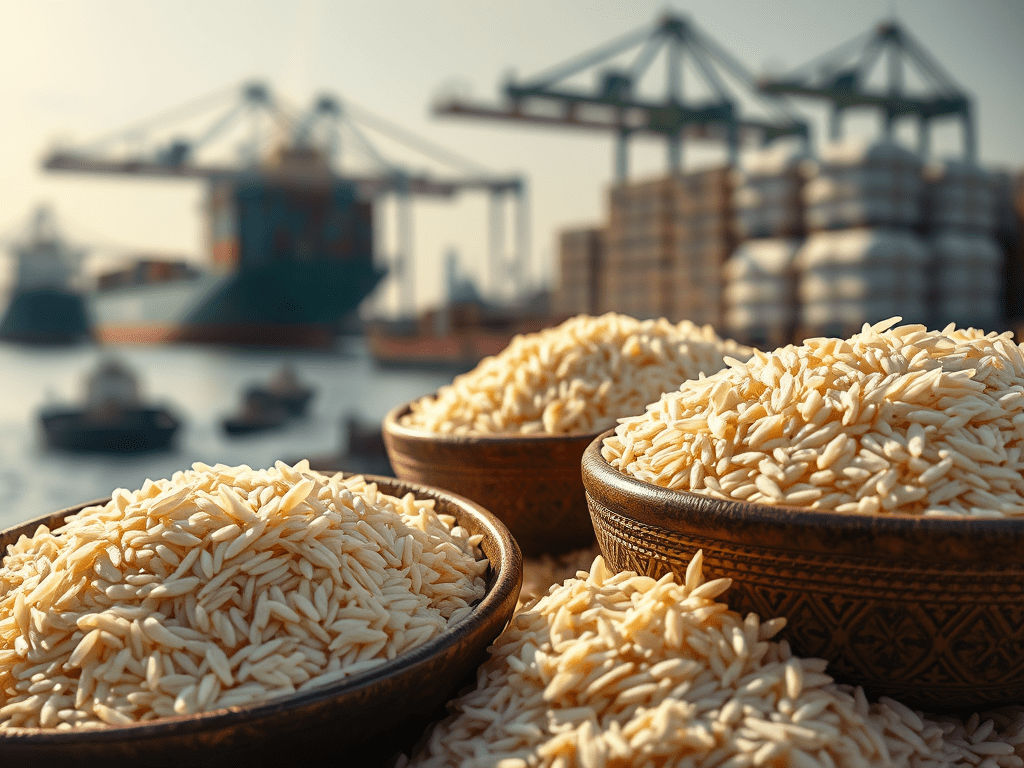
The ongoing Israel-Iran conflict has disrupted one of India’s most important agri-export sectors—basmati rice. With around 100,000 tonnes of shipments stranded at key Indian ports like Kandla and Mundra, exporters are grappling with logistical paralysis, falling prices, and frozen payments.
The disruption threatens not only revenue streams worth thousands of crores but also long-term trade relations with Iran, a key buyer of Indian basmati rice, which normally absorbs nearly one-fifth of the country’s annual exports of the premium grain.
Key Impacts of the Israel-Iran Conflict on Basmati Rice Trade
| Impact Area | Details |
|---|---|
| Export Stagnation | ~100,000 tonnes of basmati shipments stuck at Kandla and Mundra ports in Gujarat |
| Logistics Breakdown | Shortage of vessels and war-related insurance gaps halt maritime movement |
| Price Decline | Basmati prices have fallen by ₹4–₹5/kg, impacting domestic revenue and margins |
| Iran’s Market Share | Iran accounts for 18–20% of India’s total basmati exports |
| State-wise Export Volume | Haryana contributes ~30–35% of basmati shipments to Iran |
| Payment Crisis | Payments for ~200,000 MT (valued at ₹1,500–₹2,000 crore) currently frozen |
| Annual Export Volume | ~1 million tonnes of basmati exported to Iran out of India’s total 6 million tonnes (FY24) |
| Industry Response | AIREA is in talks with Indian government for intervention and policy support |
| Insurance Challenge | Standard marine policies exclude war risks, limiting exporters’ access to coverage |
Looking Ahead: Challenges and Policy Needs
The All India Rice Exporters Association (AIREA) has engaged with government authorities to seek clarity and explore options for resuming shipments. One major bottleneck remains the absence of war risk insurance, as most marine insurers exclude coverage for conflict zones.
Unless alternate shipping corridors or insurance solutions are found, Indian exporters could continue to face mounting losses and a loss of trust from international buyers.
Policy Recommendations Include:
- Government-backed war risk insurance schemes
- Facilitating diplomatic discussions with Iranian trade authorities
- Exploring alternate routes or destination markets
- Temporary financial relief packages for affected exporters
Conclusion
This disruption serves as a reminder of how geopolitical risks can deeply affect global trade in agri-commodities. India’s basmati rice sector, which has long enjoyed a dominant position in global markets, now faces the dual challenge of logistical uncertainty and financial instability. Swift action by policymakers and exporters alike will be key to mitigating long-term damage.




 Glottis Limited
Leave a comment