
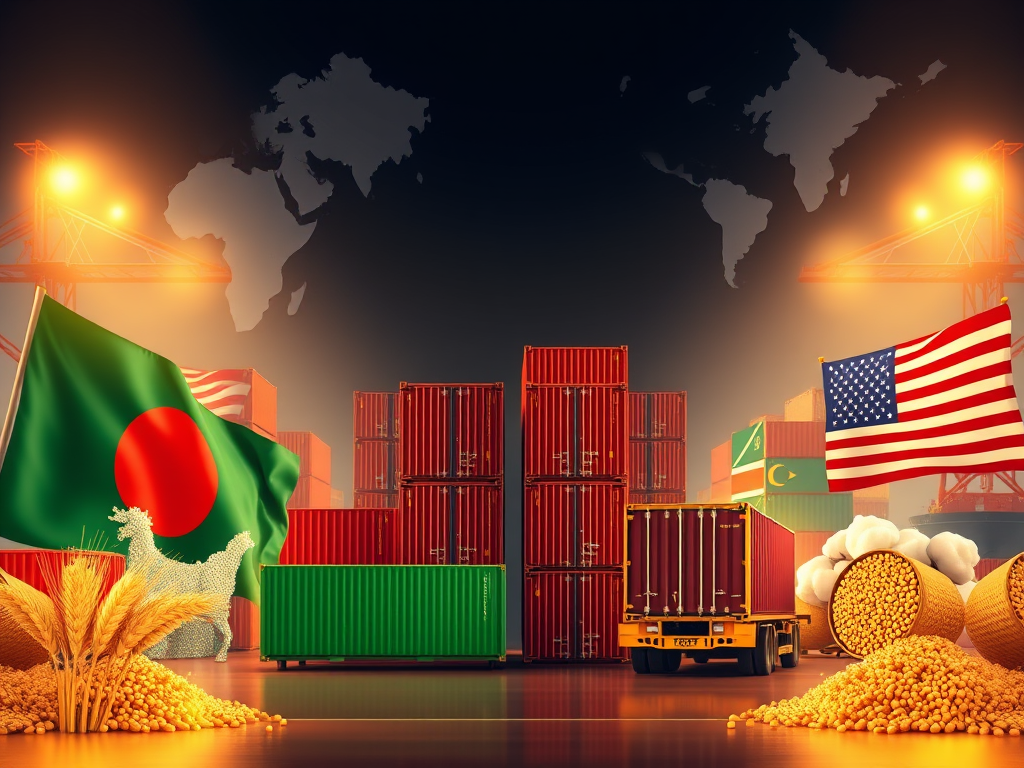
In a strategic move to rebalance trade relations and avoid the implications of new reciprocal tariffs, Bangladesh is planning to boost imports from the United States by $3 billion. This includes essential commodities such as wheat, pulses, liquefied natural gas (LNG), cotton, and soybeans.
The initiative, backed by both government and private sector players, comes amid efforts to negotiate relief from a proposed 35% tariff on Bangladeshi exports to the US, set to take effect from August 1. Here’s a detailed breakdown of the plan, its motivations, and potential impact on trade dynamics.
Summary Table: Bangladesh–US Trade Initiative
| Key Area | Details |
|---|---|
| Total Import Plan | $3 billion in imports from the US |
| Government Purchase Share | $1.5 billion worth of wheat, pulses, LNG via G2G (government-to-government) |
| Private Sector Target | $1.5–2 billion in additional imports led by private companies |
| Main Products Targeted | Wheat, pulses, LNG, cotton, soybean |
| Trade Deficit Strategy | Increase US imports to reduce trade gap and improve bilateral relations |
| Tariff Concern | 35% proposed US tariff on Bangladeshi exports (effective August 1) |
| Tariff Negotiation Goal | Seek reductions, especially for garments made with US cotton |
| Private Sector Input | Delegation of importers visiting US to finalize deals |
| Current Import Data (2023) | Cotton: $7.9B, Wheat: $1.76B, Soybean: $923M (small share from US) |
| Challenges Cited | Higher price of US goods, long shipping times, need for govt subsidies |
Strategic Objectives
The primary aim of the import plan is twofold:
- Rebalance bilateral trade by increasing imports from the US, making the trade relationship appear more reciprocal.
- Negotiate tariff relief, especially against the impending 35% duty on Bangladeshi exports, which threatens the country’s competitive edge in textiles and garments.
Private Sector Engagement
To supplement the government’s efforts, a delegation of Bangladeshi importers is traveling to the US, representing major sectors such as:
- Textiles (cotton)
- Agri-business (wheat, pulses, soybean)
- Energy (LNG)
The goal is to negotiate competitive pricing and identify new sourcing partnerships, potentially raising the overall import volume by another $1.5–2 billion.
Cost vs. Quality Debate
While US-origin goods are perceived as higher in quality, Bangladeshi importers have voiced concerns over:
- Elevated product prices
- Longer lead times
- Lack of competitive freight rates
To manage this, industry leaders have requested government intervention, including subsidies or duty concessions to make US imports viable for domestic industries.
Looking Ahead: Tariff Structure Reform
One major area under negotiation is the revision of tariffs on garments made with US-origin cotton. Bangladesh aims to restore preferential rates that would both promote imports from the US and ensure Bangladeshi exports remain price competitive in global markets.
Conclusion
Bangladesh’s ambitious import drive from the US is a calculated geopolitical and economic move. By aligning government and private sector efforts, the country hopes to:
- Strengthen trade ties with the US
- Improve supply chain reliability
- Shield key industries from tariff-related shocks
However, success will depend on price negotiations, logistics improvements, and bilateral diplomatic progress in the weeks ahead.




 Glottis Limited
Leave a comment