
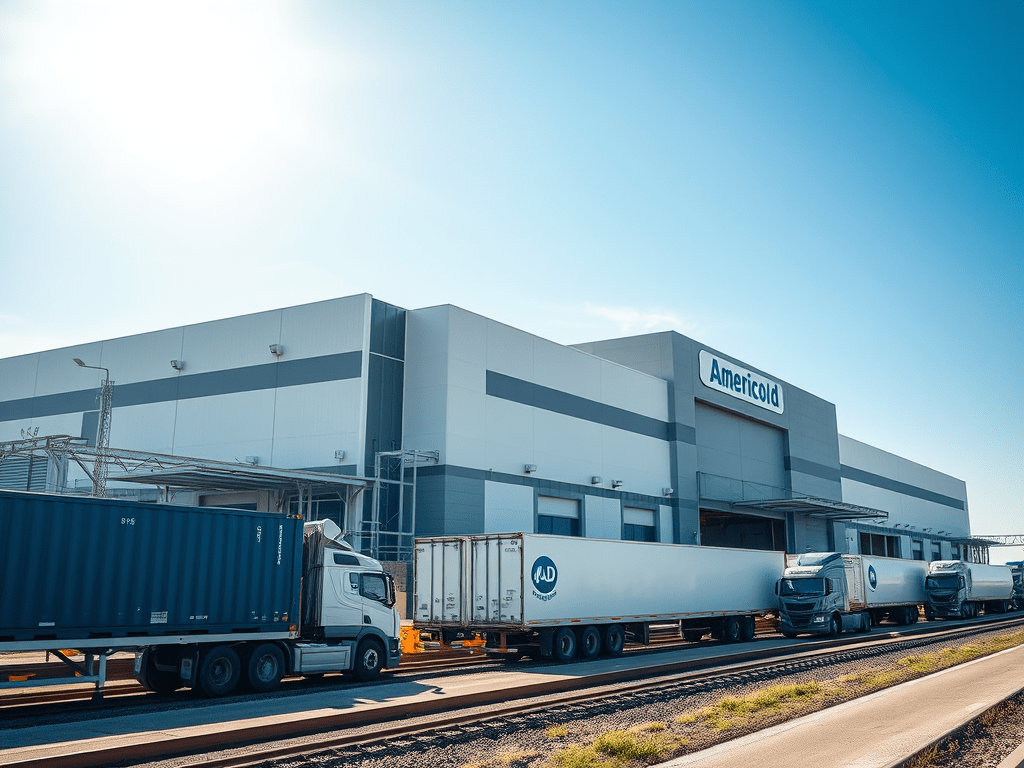
The newly inaugurated Americold cold storage Import-Export Hub at CPKC’s Kansas City intermodal terminal is set to transform cross-border temperature-controlled logistics between the U.S. Midwest and Mexico. Spanning 335,000 square feet and valued at $120 million, the facility is designed to strengthen North America’s refrigerated supply chain and enhance intermodal efficiency.
Key Facility Highlights
| Category | Details |
|---|---|
| Facility Size | 335,000 sq ft |
| Investment Value | $120 million |
| Operational Capacity | Up to 600 containers weekly |
| Container Fleet Expansion | +1,000 new refrigerated containers (2023) |
| Service Coverage | 300-mile service radius |
| On-site USDA Inspection | Yes, to speed border clearance |
| Primary Export | Midwestern pork and beef to Mexico |
| Primary Import | Mexican produce to Midwest and Canada |
| Strategic Goal | Enhance cross-border refrigerated intermodal volume |
Driving Cross-Border Efficiency
The facility integrates seamlessly with CPKC’s Mexico Midwest Express service, which benefits from the recent doubling of CPKC’s refrigerated container fleet. With on-site U.S. Department of Agriculture inspections, shipments will avoid delays at border crossings, ensuring fresher products and faster distribution.
The hub’s location allows it to serve a 300-mile radius, making it an ideal distribution point for regional food markets.
Building a North American Cold Chain Network
The Americold–CPKC partnership is more than just a facility launch—it’s the creation of a new refrigerated supply chain for temperature-sensitive products. By enabling the transloading of Midwestern meat exports to Mexico and the import of Mexican produce into the U.S. and Canada, this hub strengthens trade lanes and supports the growing demand for high-quality, fresh food across borders.
Looking Ahead
This Kansas City hub is part of a broader network of Import-Export Hubs aimed at boosting global trade lanes. The collaboration reflects a shared vision to deliver new rail service products and enhance food distribution efficiency—ensuring that perishable goods move faster, fresher, and more reliably across North America.




 Glottis Limited
Leave a comment