
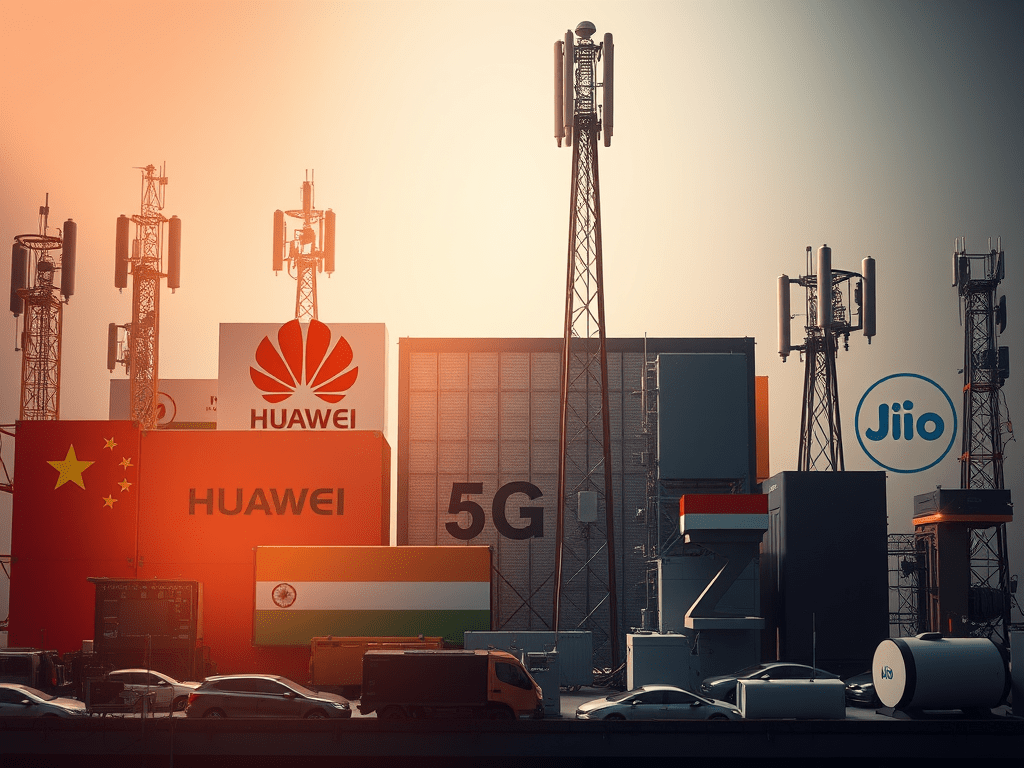
The potential lowering of trade barriers between India and China, particularly in the telecom sector, could reshape the industry in significant ways. While the move promises short-term economic benefits for telecom operators, it also raises long-term strategic and security concerns.
Key Data: Potential Effects on India’s Telecom Sector
| Aspect | Potential Impact |
|---|---|
| Re-entry of Chinese Suppliers | Huawei and ZTE may return to the Indian market, after being sidelined over security concerns. |
| Cost Benefits for Operators | Airtel, Jio, and Vodafone Idea could cut capital expenditure through access to cheaper Chinese equipment. |
| Supply Chain Improvement | Eased barriers may resolve delays in semiconductors and electronic components, boosting efficiency. |
| Impact on Domestic Manufacturing | Could weaken the “Make in India” initiative by undercutting local manufacturers’ competitiveness. |
| Security Concerns | Renewed risks over Chinese equipment in sensitive telecom infrastructure. |
| Pressure on Non-Chinese Vendors | Ericsson, Nokia, and Samsung may be forced to lower prices or enhance offerings to remain competitive. |
| Short-term vs. Long-term Outlook | Short-term: Lower costs, better supply chains. Long-term: Strategic risks to security and self-reliance. |
Telecom Operators’ Likely Reactions
- Optimism About Cost Reductions
Indian operators such as Airtel, Jio, and Vodafone Idea are likely to welcome access to cheaper Chinese telecom gear, which could significantly cut capex for 5G rollout and network upgrades. - Improved Supply Chain Efficiency
Relaxed trade restrictions could resolve delays in sourcing semiconductors and network hardware, enabling faster and more cost-efficient deployments. - Concerns Over Domestic Manufacturing
While costs may reduce, the influx of affordable Chinese technology risks undermining India’s efforts to scale up domestic telecom manufacturing under the “Make in India” initiative. - Security and Compliance Issues
Security concerns remain at the forefront. The government’s earlier bans on Huawei and ZTE were tied to national security risks, and operators may tread carefully in balancing compliance with cost benefits. - Competitive Pressure on Non-Chinese Providers
Vendors like Nokia, Ericsson, and Samsung may be forced into price wars or enhanced service offerings, creating short-term benefits for telecom companies but also straining existing partnerships. - Long-term Strategy Uncertainty
Operators face a dilemma: while short-term gains are clear, the long-term implications on self-reliance, data security, and technology independence remain uncertain.
Conclusion
The easing of trade barriers with China could provide a financial lifeline to India’s telecom operators, helping reduce the burden of 5G investment and easing supply chain challenges. However, this comes at the cost of renewed security debates and risks to domestic manufacturing ambitions.
For India, the challenge lies in striking a balance: leveraging the economic benefits of Chinese technology while safeguarding national security and fostering indigenous innovation.




 Glottis Limited
Leave a comment