The Evolution of India’s Manufacturing Sector Since Independence
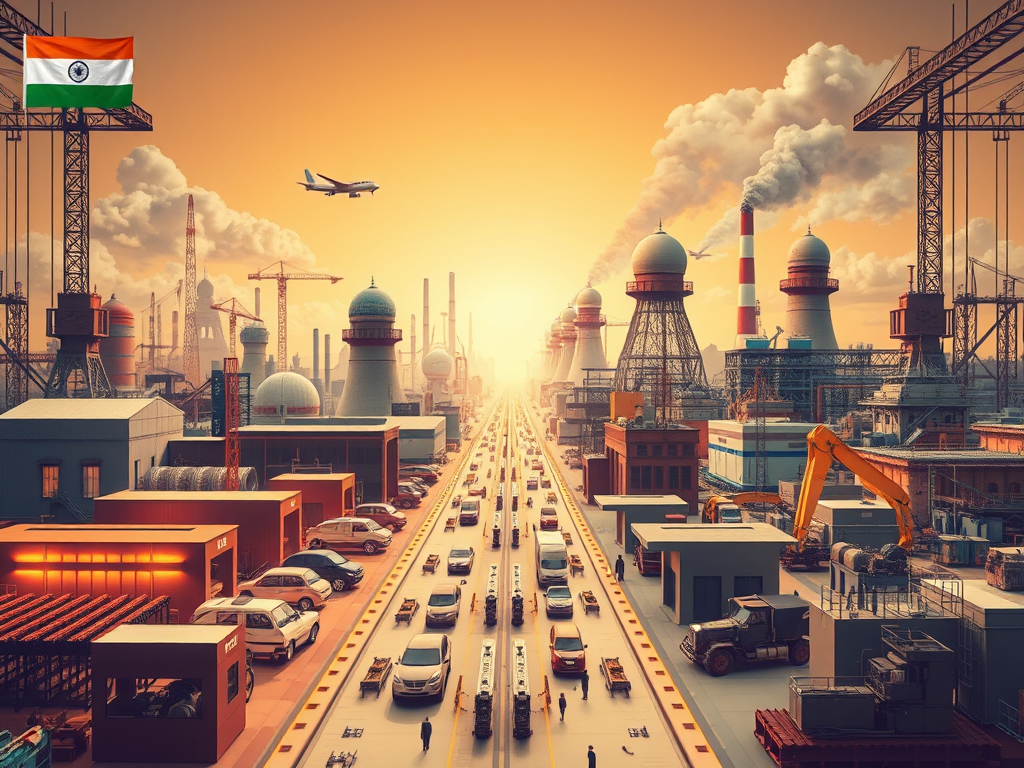
India’s manufacturing sector has undergone a remarkable transformation since independence. From a modest contribution to national income in 1947, it has evolved into a dynamic, diverse, and globally significant sector. Yet, as the country navigates global trade headwinds and domestic challenges, the sector stands at a pivotal juncture, poised to leverage opportunities for long-term growth.…
India’s manufacturing sector has undergone a remarkable transformation since independence. From a modest contribution to national income in 1947, it has evolved into a dynamic, diverse, and globally significant sector. Yet, as the country navigates global trade headwinds and domestic challenges, the sector stands at a pivotal juncture, poised to leverage opportunities for long-term growth.
Historical Evolution
Period / Policy
Key Features
Post-Independence (1947)
Manufacturing base contributed only 7% to national income.
State-Led Industrial Policy
Heavy industries, public sector dominance, Five-Year Plans focused on self-reliance.
1991 Economic Reforms
Liberalization and opening up to global competition accelerated industrial diversification.
Recent Policies (2014 onwards)
Programs like Make in India, PLI schemes, and Atmanirbhar Bharat boosted competitiveness and local production.
State-Wise Industrial Growth
India’s manufacturing strength is spread across states, each with unique industrial specializations:
State
No. of Factories
Industrial Strengths
Tamil Nadu
39,666
Automotive, textiles, electronics; known as “Detroit of Asia.”
Drive automation, digital tools, and smart factories.
Future Outlook
India’s manufacturing sector is entering a phase of strategic realignment. With global uncertainties and tariff risks, the path forward will require a dual focus on innovation and resilience. Leveraging its demographic dividend, policy reforms, and growing global relevance, India aims to transform into a self-reliant manufacturing powerhouse and secure its place as a global leader in industrial production.



 Glottis Limited
Leave a comment