
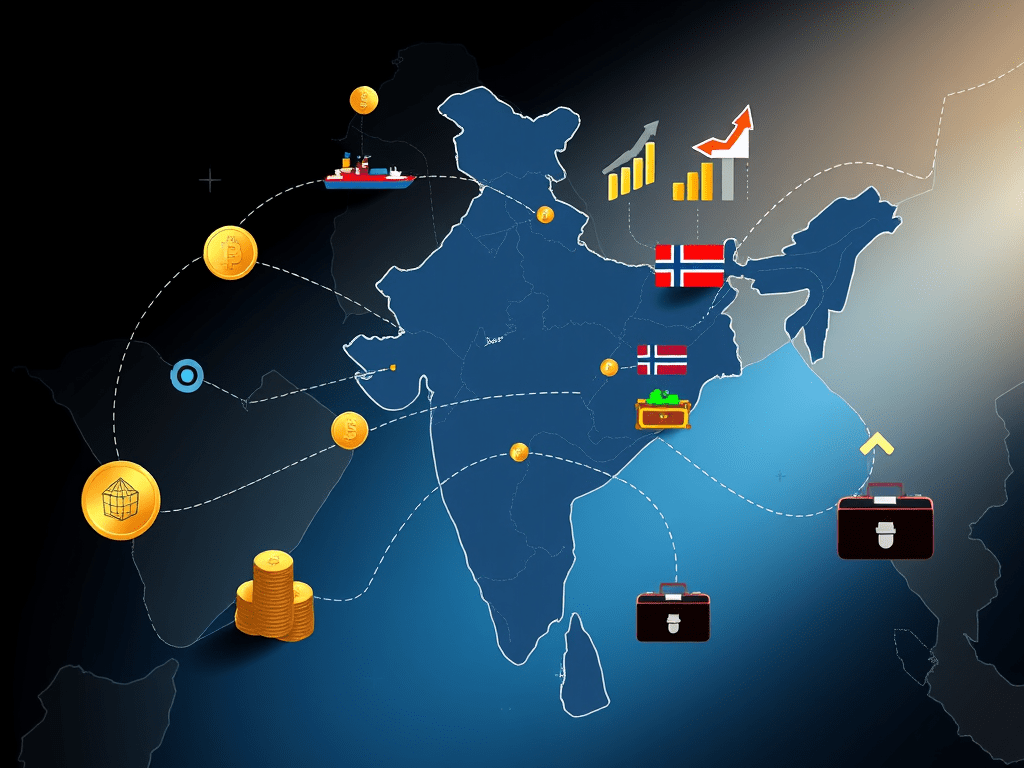
The India-EFTA trade pact is set to take effect on October 1, marking a major milestone in India’s global trade engagement. The agreement involves India and the European Free Trade Association (EFTA), comprising Iceland, Liechtenstein, Norway, and Switzerland.
This pact not only secures USD 100 billion in investments over 15 years but also promises to create one million direct jobs in India. It provides improved market access, duty reductions, and stronger legal certainty for businesses. At the same time, it embeds sustainability commitments, requiring adherence to international standards on trade, environment, social affairs, and human rights.
Key Data from the Agreement
| Aspect | Details |
|---|---|
| Effective Date | October 1 |
| Parties Involved | India & EFTA (Iceland, Liechtenstein, Norway, Switzerland) |
| Investment Commitment | USD 100 billion over 15 years (USD 50 billion in the first decade) |
| Job Creation | 1 million direct jobs in India |
| Market Access | Switzerland gains access for 94.7% of its exports, including pharmaceuticals, machinery, watches, processed agri goods |
| Duty Reductions | India to cut/eliminate duties on Swiss watches, chocolates, cut & polished diamonds, pharmaceuticals |
| Sustainability Clause | Legally binding provisions on trade & sustainable development |
| Legal Certainty | Enhanced predictability & confirmation of rights/obligations under treaties |
Expected Impacts on Indian Businesses
1. Increased Market Access
Indian exporters will benefit from expanded entry into EFTA markets, boosting trade opportunities and diversification.
2. Investment Influx
The USD 100 billion investment pledge will foster industrial growth, with one million direct jobs enhancing India’s workforce capacity.
3. Duty Reductions
Lower tariffs on imported goods like watches, chocolates, and pharmaceuticals will reduce costs for Indian consumers and businesses.
4. Technological Collaboration
EFTA’s strengths in pharmaceuticals, machinery, and precision technology could result in knowledge transfer and innovation partnerships.
5. Regulatory Compliance
Businesses will need to align with sustainability and social standards, ensuring compliance with stricter norms in environment and labor laws.
6. Competitive Landscape
With increased imports, Indian companies may face stronger competition, particularly in high-tech and machinery sectors, encouraging innovation.
7. Risk Mitigation
Diversifying trade with EFTA reduces dependency on existing partners, helping Indian businesses weather global market fluctuations.
8. Legal Certainty
The pact provides predictability and clarity in trade obligations, lowering the risk of disputes and ensuring smoother operations.
Conclusion
The India-EFTA trade pact represents a balanced mix of opportunities and challenges. While it opens doors for investment, jobs, and technology collaboration, Indian businesses must also adapt to higher compliance standards and increased competition. In the long run, the agreement strengthens India’s integration with global value chains and supports sustainable economic growth.




 Glottis Limited
Leave a comment