
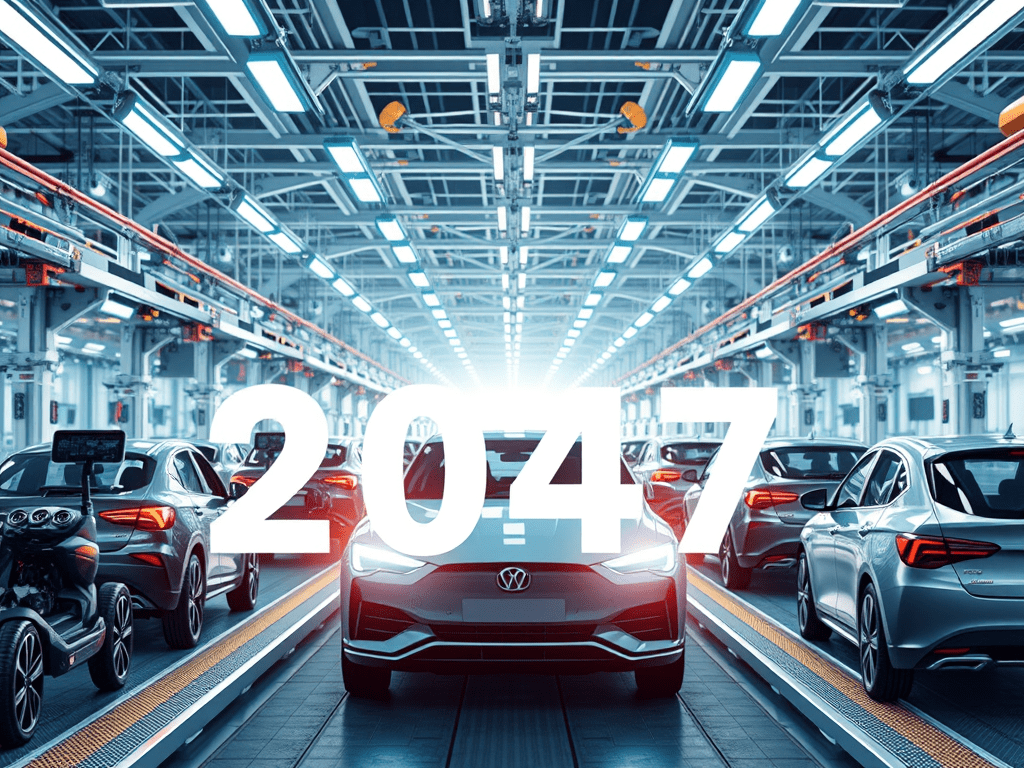
India has unveiled an ambitious Automotive Mission Plan (AMP) 2047, designed to make the country one of the world’s top automobile manufacturing hubs while transitioning towards sustainable and future-ready mobility. The plan sets aggressive production, export, and technology targets with a strong emphasis on collaboration, innovation, and sustainability.
Key Data on Automotive Mission Plan 2047
| Aspect | Details |
|---|---|
| Production Goals | 25M vehicles (2023–24) → 50M by 2030 → 200M by 2047 |
| Global Ranking Goal | Position India among the top 2 global automobile manufacturers |
| Sustainability Focus | Hydrogen, electric, CNG, and biogas vehicles; gradual reduction of ICE vehicle dominance |
| Petrol/Diesel Policy | No immediate ban, but ICE market share expected to decline |
| Export Targets | Passenger vehicle exports to rise from ~15% to 30% of production by 2030, and 40% by 2047 |
| Collaboration | Input from industry leaders, economists, and global firms for tech transfer and supply chain strengthening |
| Sub-Committees | Multiple sub-committees formed; apex-level meeting in November |
| Timeline | Final mission plan to be ready by end of FY 2024–25 |
Technological Pillars of AMP 2047
The mission emphasizes innovation in sustainable and future-ready technologies, positioning India as a leader in clean mobility and advanced automotive manufacturing.
- Electric Vehicles (EVs)
- Focus on EV car production, advanced battery development, and charging infrastructure.
- Hydrogen Fuel Cell Technology
- Development of hydrogen-powered vehicles as part of India’s clean energy roadmap.
- Compressed Natural Gas (CNG) Vehicles
- Expansion of CNG adoption as a cost-effective and cleaner fuel alternative.
- Biofuel Vehicles
- Integration of compressed biogas and biofuel-powered vehicles into the mainstream market.
- Advanced Manufacturing
- Deployment of automation, artificial intelligence (AI), and IoT to boost production efficiency.
- Safety & Autonomous Driving
- Enhancing safety standards and gradually exploring autonomous vehicle technologies.
- Technology Transfer
- Collaborations with global automakers to ensure local adoption of advanced automotive technologies.
Strategic Implications
1. Global Leadership in Production
By scaling production from 25 million vehicles today to 200 million by 2047, India seeks to be a central player in global automobile supply.
2. Export-Driven Growth
A strong focus on exports could make India a key export hub, with 40% of domestic production destined for international markets by 2047.
3. Green Mobility Transition
Hydrogen, EVs, and biofuels will gradually reduce India’s reliance on ICE vehicles while aligning with global sustainability goals.
4. Technology & Collaboration
Through partnerships with global firms, India will build advanced supply chains and enhance local R&D, bridging the technology gap with established auto economies.
Conclusion
The Automotive Mission Plan 2047 is not just about scaling up numbers—it represents a vision for India’s automotive future, blending massive production targets, export ambitions, and a green mobility transition. With the right execution, India is poised to become a global automotive powerhouse, driving both economic growth and sustainable innovation for decades to come.




 Glottis Limited
Leave a comment