
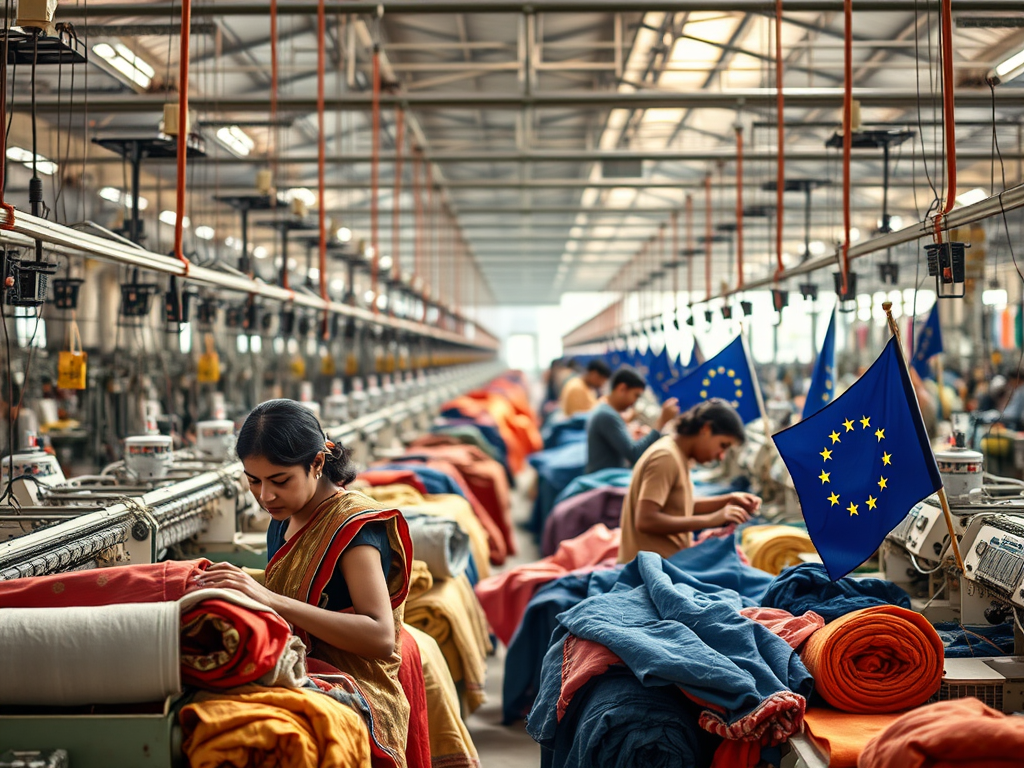
India’s textile industry, one of the nation’s largest export contributors, is undergoing a strategic shift as exporters recalibrate their market focus in response to mounting tariff pressures from the United States. With U.S. import duties on Indian goods reaching as high as 50%, textile exporters are increasingly looking toward Europe as a key growth avenue, supported by ongoing trade negotiations and investments in compliance with EU standards.
1. Shifting Focus to Europe
In light of escalating tariffs in the U.S., Indian textile exporters are diversifying toward European markets to safeguard revenues and mitigate risks. The European Union presents a promising alternative with growing consumer demand for sustainable and ethically sourced textile products.
2. Tariff Pressures and Financial Strain
The recent surge in **U.S. tariffs—up to 50% on select Indian goods—**has heavily impacted the competitiveness of Indian textiles in the American market. Exporters have been forced to offer discounts to retain long-term U.S. clients, cutting into profit margins even as they explore opportunities elsewhere.
3. India–EU Free Trade Agreement (FTA) Talks
Ongoing trade negotiations between India and the European Union are expected to culminate in a Free Trade Agreement (FTA) by year-end, which could significantly boost textile shipments. The proposed FTA aims to reduce tariffs, streamline trade processes, and open new market access for Indian exporters.
4. Upgrading for EU Market Standards
To gain a stronger foothold in Europe, Indian exporters are investing in modernizing production facilities and upgrading compliance systems to meet the EU’s rigorous standards related to:
- Chemical usage (REACH compliance)
- Sustainability certifications
- Ethical labor and sourcing practices
These efforts not only align with global environmental expectations but also enhance the reputation of Indian manufacturers as responsible and sustainable producers.
5. Employment and Production Concerns
The U.S. accounts for nearly 29% of India’s textile exports, making the industry particularly vulnerable to American policy shifts. Persistent tariff barriers could trigger job losses across key manufacturing clusters such as Tiruppur, Surat, and Ludhiana.
Some exporters are even considering relocation of production bases to tariff-friendly nations like Bangladesh or Oman to retain global competitiveness.
6. Economic and Strategic Implications
While short-term challenges persist, diversification offers a pathway toward long-term stability. The European pivot not only reduces dependency on a single market but also accelerates India’s integration into sustainable textile value chains—an essential factor for future growth.
Key Data Summary
| Aspect | Details |
|---|---|
| U.S. Tariff Rate | Up to 50% on Indian goods, including textiles. |
| Export Share (U.S.) | Accounts for 29% of India’s textile exports. |
| Primary Response | Shift in focus from U.S. to European markets. |
| Discount Strategy | Exporters offering discounts to retain U.S. clients. |
| FTA Developments | India–EU Free Trade Agreement expected by year-end. |
| Compliance Investment | Upgrades in production to meet EU chemical and ethical standards. |
| Potential Risks | Job losses and production relocation if tariffs persist. |
| Strategic Opportunity | Market diversification and entry into sustainable textile supply chains. |
7. The Strategic Power of Market Diversification
India’s textile exporters are now embracing a diversification strategy, recognizing that spreading market exposure across regions provides resilience and long-term benefits.
| Benefit Area | Strategic Advantage |
|---|---|
| Risk Mitigation | Reduces dependency on single markets like the U.S. |
| Revenue Stability | Multiple markets ensure steadier income flows. |
| New Customer Access | Exposure to diverse consumer bases with varied preferences. |
| Competitive Edge | Enhances brand visibility and global positioning. |
| Innovation Drive | Encourages product innovation through exposure to global trends. |
| Supply Chain Resilience | Access to multiple sourcing and manufacturing hubs. |
| Trade Leverage | Utilizes favorable trade agreements like the upcoming India–EU FTA. |
| Partnership Growth | Fosters collaborations with regional distributors and retailers. |
Conclusion
The redirection of India’s textile export strategy from the U.S. to Europe marks a critical moment for the industry. While U.S. tariffs present near-term hurdles, the pursuit of the European market, combined with sustainability investments and policy support, could redefine India’s global textile positioning.
By diversifying markets and enhancing compliance capabilities, Indian exporters are not only protecting themselves from policy shocks but also building a more resilient, innovative, and globally integrated textile ecosystem.




 Glottis Limited
Leave a comment