
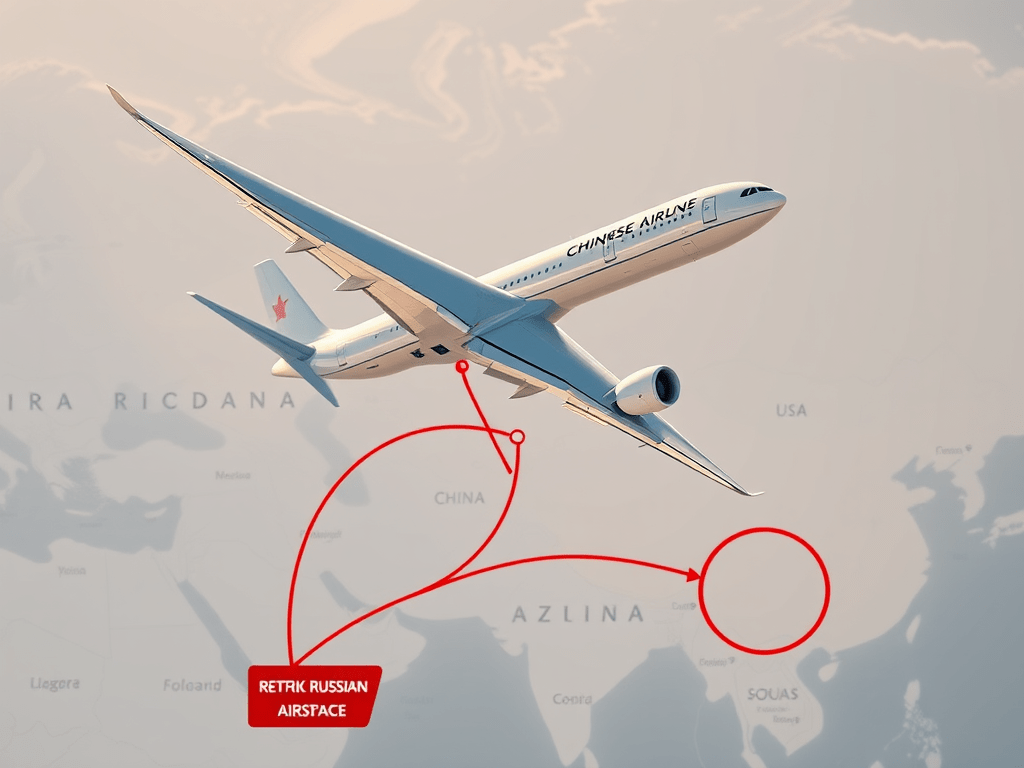
The Trump administration’s proposal to ban seven Chinese airlines from overflying Russian airspace on routes between China and the United States has sparked widespread discussion across the aviation, logistics, and geopolitical communities. While the direct operational impact may be limited in the short term, the broader implications touch on trade, diplomacy, and global supply chain dynamics.
Background: The Proposed Airspace Ban
The proposal aims to restrict Chinese airlines from using Russian airspace for transpacific routes. This move comes amid heightened tensions between the US and China, already strained by ongoing trade disputes, tariffs, and technology-related restrictions.
The administration has also received calls to extend the ban to all foreign cargo-only airlines, a move that would further complicate global freight movement.
Key Data Summary
| Category | Details / Key Data Points |
|---|---|
| Policy Proposal | US proposes a ban on seven Chinese airlines overflying Russian airspace on China–US routes |
| Extension Request | Proposal to extend ban to all foreign cargo-only airlines |
| Current Impact Level | Limited immediate impact on air traffic |
| Affected Parties | Chinese airlines operating transpacific routes; potentially foreign cargo carriers |
| Context | Part of broader US–China geopolitical and trade tensions |
| Operational Consequences | Longer flight paths, higher fuel costs, reduced cargo capacity |
| Economic Effect | Potential increase in freight rates and supply chain delays |
| Environmental Effect | Increased emissions due to rerouted flights |
| Strategic Outcome | Possible long-term realignment in air cargo markets |
| Geopolitical Implication | Heightened US–China–Russia tension and airspace diplomacy concerns |
Economic Implications
The ban could lead to higher operating costs as airlines are forced to reroute flights over longer paths, bypassing Russian airspace. Extended flight times will increase fuel consumption, impacting profitability and potentially leading to higher air freight rates.
This would ripple through global supply chains, especially for time-sensitive cargo such as electronics, pharmaceuticals, and express shipments between Asia and North America.
Geopolitical Implications
The decision underscores the deepening strategic divide between the US and China. It may further strain diplomatic ties and impact trade negotiations.
Russia’s role adds another layer of complexity — its response could influence future airspace access agreements and reshape the balance of aviation alliances.
Operational Implications
Chinese carriers could face limitations in market reach and reduced competitiveness against US or European airlines that can optimize routing more efficiently. Cargo capacity constraints may also emerge, potentially leading to delays in shipment schedules and longer lead times for logistics providers.
Strategic Implications
The proposed ban could open opportunities for non-Chinese carriers to expand their market share on transpacific cargo routes.
In the long term, this policy might set a precedent for aviation decisions based on geopolitical criteria, influencing how nations negotiate airspace rights and regulatory frameworks.
Environmental Implications
Longer flight paths translate to higher carbon emissions, adding to the environmental challenges faced by global aviation.
This poses a contradiction to ongoing international efforts to reduce aviation’s carbon footprint, such as the ICAO’s CORSIA program.
Conclusion
The proposed US airspace ban on Chinese airlines represents more than an aviation policy — it is a strategic maneuver in the broader geopolitical landscape. While the immediate operational disruption may be limited, the economic, diplomatic, and environmental consequences could be far-reaching.
As global logistics and air cargo networks remain deeply interlinked, this development serves as a reminder of how political decisions can reshape the routes of global trade.




 Glottis Limited
Leave a comment