
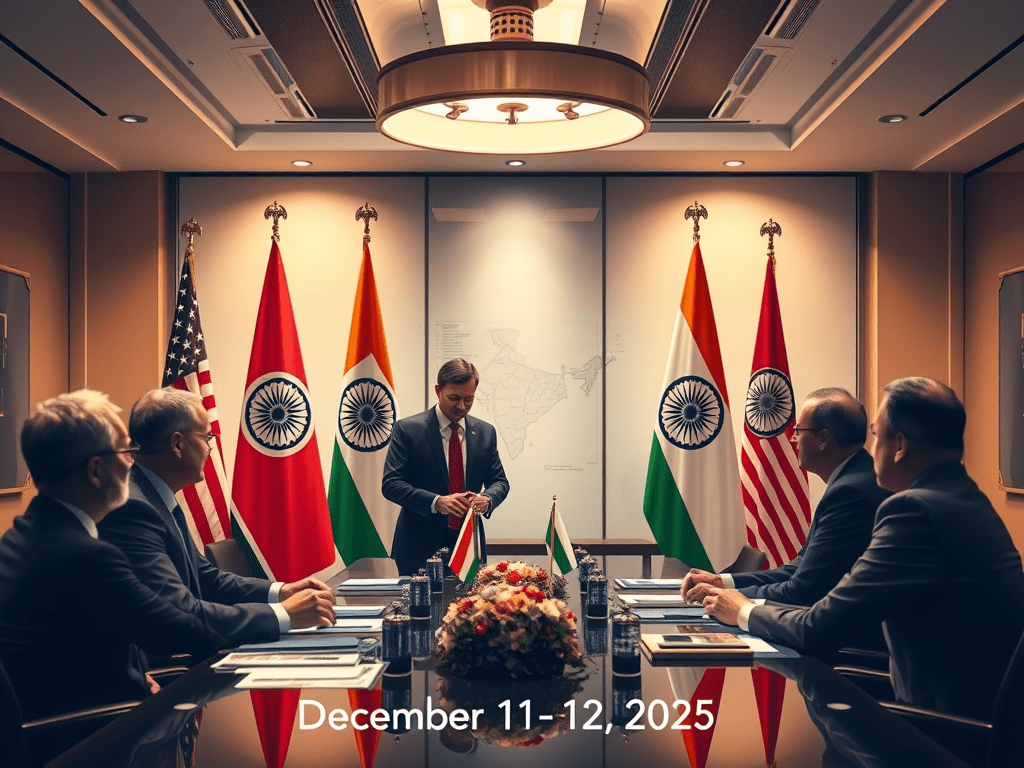
The upcoming US–India trade talks, scheduled for December 10–12, 2025, mark a pivotal moment in bilateral economic relations. A high-level delegation led by Deputy USTR Rick Switzer will arrive in New Delhi to push negotiations toward a long-awaited initial trade deal—one that could reset tariff structures and lay the foundation for a comprehensive Bilateral Trade Agreement (BTA).
Key Data Snapshot
| Parameter | Details |
|---|---|
| Delegation Visit Dates | December 10–12, 2025 |
| US Lead Negotiator | Deputy USTR Rick Switzer |
| Primary Objective | Initial trade deal to reduce Trump-era additional tariffs |
| Current US Tariffs on Indian Goods | 50% (25% for trade deficit, 25% for Russian oil purchases) |
| Impact on Indian Exports | 8.59% decline, totaling $6.30 billion |
| Stage of Negotiations | Critical stage, with only a few pending issues |
| Comprehensive BTA Plan | Initial deal will act as the base framework |
| Previous Round of Talks | October 2025 |
| Total Rounds Including December Meet | Seven |
| Interim Engagement | Weekly virtual discussions between teams |
Why These Talks Matter
The December meeting is expected to be one of the most consequential rounds yet, with negotiators close to resolving long-standing tariff disputes that have impeded India’s export momentum.
Economic Impacts: A Potential Reboot for Bilateral Trade
1. Tariff Rollback
The driving agenda is the reduction of the 50% additional duties currently imposed on Indian goods. A successful rollback would immediately increase the competitiveness of Indian products in the US market.
2. Export Revival
Indian merchandise exports to the US have fallen 8.59%, amounting to a loss of $6.30 billion. A lowered tariff environment could revive growth, especially in sectors such as:
- Textiles & apparel
- Marine products
- Engineering goods
- Auto components
3. Improved Market Access
Enhanced access to the US market is expected to stimulate India’s manufacturing base, create jobs, and elevate export earnings over the next few years.
Strategic Impacts: Strengthening a Key Global Partnership
1. Reinforcing Strategic Ties
Successful negotiations will deepen the US–India strategic partnership across technology, defense, supply chain security, and investment.
2. Road to a Comprehensive BTA
The initial deal will act as a blueprint for a full-scale Bilateral Trade Agreement, potentially covering digital trade, IPR, services, and market access for a wider basket of goods.
3. Counterbalancing China
Enhanced cooperation helps align Indo-Pacific strategies and strengthens both nations’ positions in global supply chains.
Social Impacts: Benefits Beyond Trade Metrics
1. Job Creation
Improved trade flows and manufacturing growth can generate employment across India’s export-heavy sectors.
2. Consumer Advantage
Lower tariffs also mean lower import prices, benefiting Indian consumers in categories such as electronics, kitchen equipment, and lifestyle products.
Long-Term Impacts: Setting the Stage for a New Era in Trade
1. Diversified Trade Portfolio
A structured agreement would help both countries diversify trade baskets and reduce dependence on sensitive sectors.
2. Innovation Boost
New opportunities for collaboration—especially in renewable energy, AI, supply chain tech, and advanced manufacturing—could accelerate innovation and technology transfer.
Challenges That Could Influence Outcomes
1. Outstanding Negotiation Points
While officials report “significant progress,” unresolved issues could delay the initial agreement.
2. Domestic Pressures
Industry groups in both nations may oppose sudden tariff changes that affect their competitive positions.
Conclusion
The December 2025 US–India trade talks are poised to be a turning point—one that could reopen export channels, strengthen strategic ties, and position both nations for long-term economic and geopolitical gains. The outcome of this round will not only influence bilateral trade flows but could also shape global supply-chain dynamics in the years ahead.




 Glottis Limited
Leave a comment