
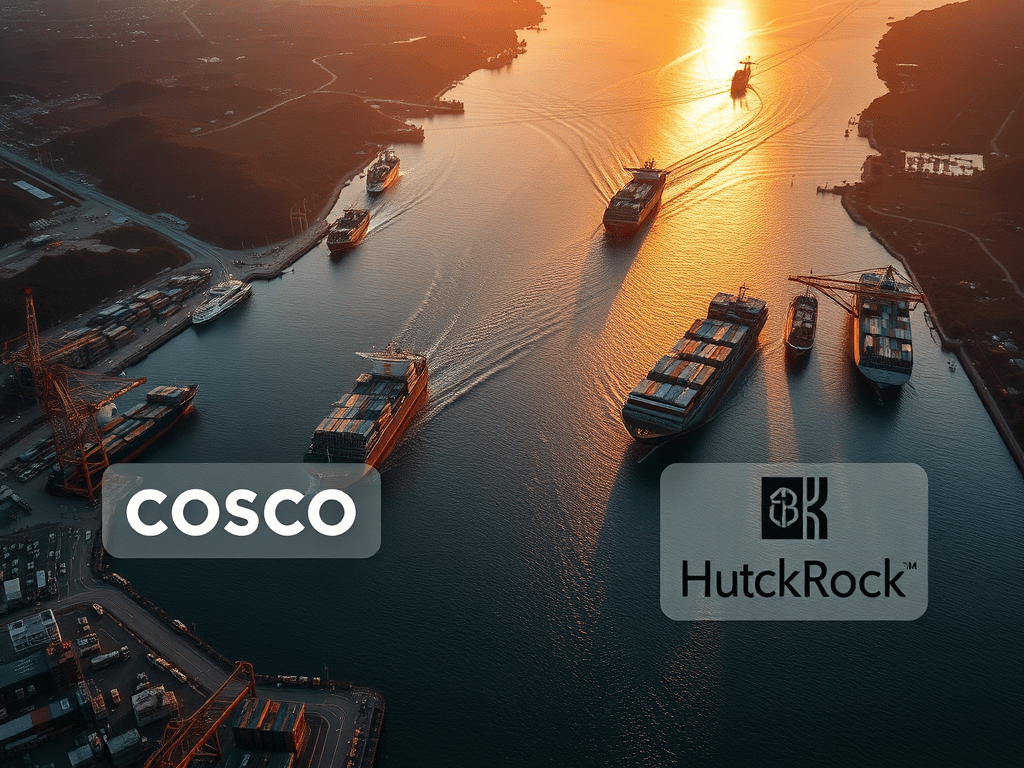
The proposed sale of a major global ports portfolio—covering more than 40 ports worldwide, including two strategically vital terminals at the Panama Canal—has reached a critical impasse. What initially appeared to be a landmark infrastructure transaction has now become a focal point of intensifying geopolitical rivalry, particularly between China and the United States.
At the center of the deadlock is China’s fresh demand that its largest state-owned shipping line, COSCO, be granted a controlling stake in the deal. This condition has complicated negotiations between the seller, CK Hutchison, and the buyer, a BlackRock-led consortium.
What the Deal Involves
The transaction, valued at approximately USD 22.8 billion, would transfer ownership of a vast global port network from CK Hutchison to the BlackRock-led group. Among these assets are two ports located along the Panama Canal, one of the most critical maritime chokepoints in global trade.
However, Beijing’s insistence on COSCO holding a majority or controlling interest has stalled progress, raising concerns among Western stakeholders about strategic dependence and security implications.
Key Facts at a Glance
| Aspect | Details |
|---|---|
| Total Deal Value | ~USD 22.8 billion |
| Number of Ports | 40+ ports globally |
| Strategic Assets | Two ports at the Panama Canal |
| Current Owner | CK Hutchison |
| Buyer | BlackRock-led consortium |
| New Demand | Controlling stake for COSCO |
| Current Status | Negotiations at a deadlock |
Why China Is Pushing for Control
China’s demand is not purely commercial; it reflects a broader strategic calculus:
1. Strategic Maritime Control
By securing a controlling stake for COSCO, China would gain influence over one of the world’s most important shipping corridors, strengthening its leverage in global maritime logistics.
2. Economic Leverage
The Panama Canal is central to East–West and North–South trade flows. Control over nearby ports would enhance China’s ability to streamline exports, reduce dependency on third-party terminals, and deepen trade ties with Latin America.
3. Belt and Road Alignment
The move fits squarely within China’s long-term infrastructure diplomacy under the Belt and Road Initiative, which aims to expand Chinese presence across key global transport and logistics hubs.
4. Countering U.S. Influence
The demand is also seen as a response to U.S. scrutiny of Chinese-linked infrastructure. Former U.S. President Donald Trump had earlier raised alarms over potential security risks stemming from Chinese influence around the Panama Canal, adding political sensitivity to the deal.
5. Long-Term SOE Positioning
Ensuring that state-owned enterprises like COSCO hold dominant positions in critical logistics assets aligns with China’s long-term planning for supply chain resilience and global trade leadership.
Why This Deal Matters Globally
The Panama ports impasse highlights a growing reality: ports are no longer just commercial assets—they are geopolitical instruments. Control over terminals, canals, and logistics corridors increasingly influences trade security, diplomatic leverage, and economic power.
As negotiations remain stalled, the outcome of this deal will likely set a precedent for how future global infrastructure transactions are evaluated—not only on financial terms, but also through the lens of national security and geopolitical balance.
For the global logistics and shipping industry, this development is a reminder that ownership, control, and access are becoming as important as capacity and cost in shaping the future of international trade.
Source : The Wall Street Journal


 Glottis Limited
Leave a comment