
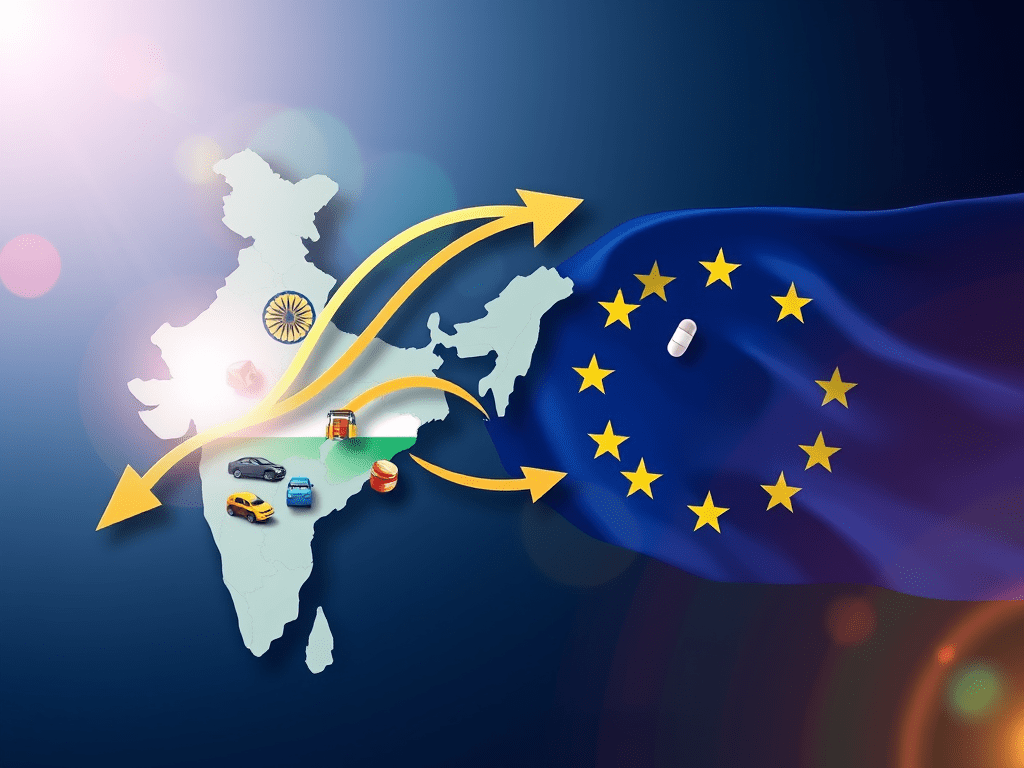
The long-awaited India–European Union Free Trade Agreement (FTA) was finalized on January 27, 2026, marking one of the most significant trade pacts in India’s economic history. Prime Minister Narendra Modi described it as the “mother of all deals,” underlining its strategic importance for trade, manufacturing, and services.
With India–EU bilateral trade touching USD 136.5 billion in the financial year ending March 2025, the agreement is poised to dramatically expand market access, lower costs, and realign global value chains across multiple sectors.
Why This Agreement Matters
The India–EU FTA is not just about tariff cuts—it represents a deeper economic integration between two major economic blocs. It opens Europe’s vast consumer market to Indian exporters while allowing European companies greater access to India’s fast-growing economy.
Key objectives of the agreement include:
- Enhancing trade competitiveness
- Promoting manufacturing and services exports
- Strengthening supply-chain resilience
- Encouraging clean technology and sustainable trade
Key Highlights of the India–EU FTA
Tariff Liberalisation at Scale
- The EU will cut tariffs on 99.5% of traded goods over a seven-year period.
- India will eliminate tariffs on several high-volume export categories including textiles, leather, marine goods, and chemicals.
- Import duties on cars, wines, and spirits will be sharply reduced, creating new competitive dynamics in India’s domestic market.
Sectoral Impact: Who Benefits Most?
Indian Export Winners
Indian industries that are labour-intensive and export-driven are expected to see strong gains:
- Textiles & Apparel
- Leather Products
- Pharmaceuticals
- Engineering Goods
- IT & Digital Services
European Industry Beneficiaries
European firms gain improved access to India’s expanding consumer and industrial base:
- Automobiles
- Luxury & Lifestyle Goods
- Machinery & Capital Equipment
- Chemicals
- Clean & Green Technologies
Tariff Reduction Snapshot
| Category | Tariff Reduction Details |
|---|---|
| EU Tariffs on Goods | Cut on 99.5% of goods over seven years |
| Indian Tariffs on Marine Goods | Reduced to zero |
| Indian Tariffs on Leather & Textiles | Reduced to zero |
| Indian Tariffs on Chemicals & Rubber | Reduced to zero |
| Indian Tariffs on Base Metals & Gems | Reduced to zero |
| Indian Car Tariffs | Reduced from up to 110% to 10% over five years |
| Wine Tariffs | Reduced from 150% → 75% initially → 20% gradually |
| Spirit Tariffs | Reduced to 40% |
Market Watch: Stocks in Focus
Likely Beneficiaries
- Auto Ancillaries: Motherson, Bharat Forge, Sona BLW
- Textiles & Apparel: Welspun Living, Gokaldas Exports
- Watches & Luxury Retail: Timex, Ethos, KDDL
Sectors Under Pressure
- Tata Motors: Heightened competition from European auto imports could impact margins.
- Sula Vineyards: Pricing pressure expected due to cheaper European wine imports.
Challenges & Watchpoints
While the agreement offers substantial upside, certain challenges remain:
- Increased Competition: Indian auto, dairy, and select MSME segments may face pressure from lower-cost European imports.
- Non-Tariff Barriers: EU’s stringent carbon norms, sustainability requirements, and compliance regulations could limit benefits for some exporters.
What Happens Next?
Although negotiations are complete, the agreement now enters a legal review phase, expected to take five to six months, before formal signing and phased implementation.
Conclusion
The India–EU Free Trade Agreement is a transformational trade pact that strengthens economic ties between two global powerhouses. By significantly reducing tariffs, expanding market access, and encouraging cross-border investments, the agreement is set to reshape manufacturing, services, and supply chains over the next decade.
For Indian exporters, European manufacturers, logistics players, and global supply-chain stakeholders, this deal opens a new era of opportunity—and competition.


 Glottis Limited
Leave a comment