
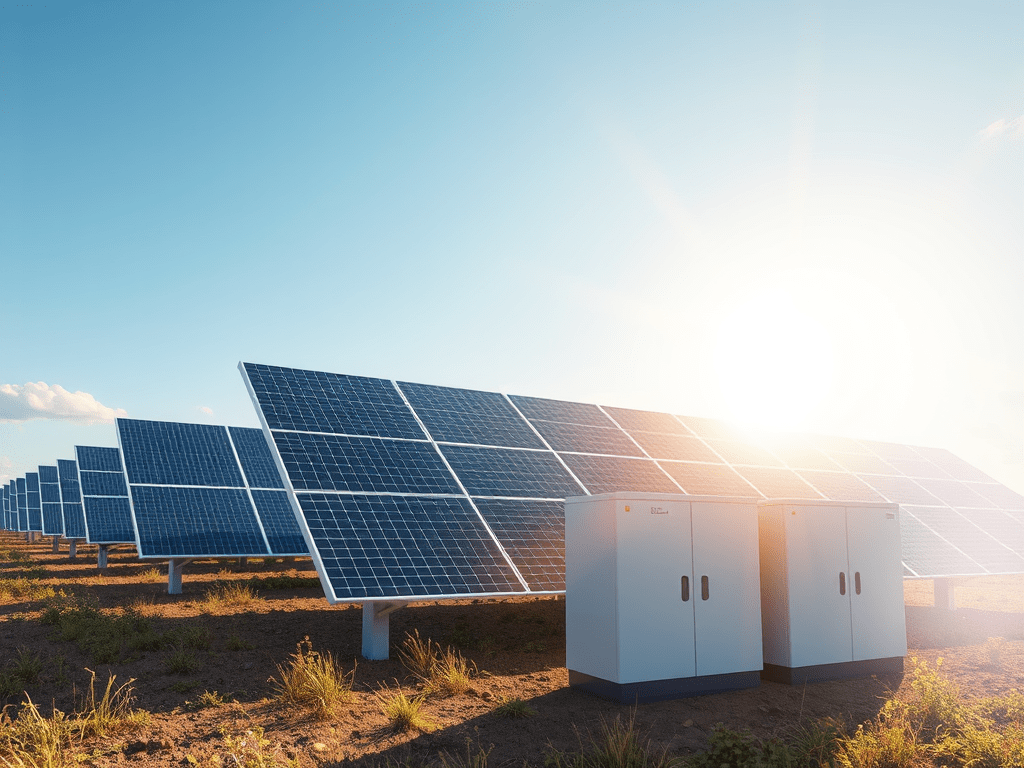
ReNew Energy Global Plc has announced a significant strategic shift in its latest Q3 results—moving away from wind energy and doubling down on solar and Battery Energy Storage Systems (BESS).
This move is more than a portfolio adjustment. It reflects broader structural changes in India’s renewable energy market—where cost dynamics, grid realities, and execution challenges are reshaping capital allocation decisions.
The Big Strategic Shift
ReNew has reduced its wind capacity commitments and rebalanced its portfolio toward solar and storage, signalling confidence in hybrid and dispatchable renewable solutions.
Portfolio Realignment Snapshot
| Metric | Previous Plan | Revised Plan |
|---|---|---|
| Wind capacity commitment | 2.5 GW | ~850 MW |
| Total portfolio | Higher wind mix | 19.2 GW total |
| BESS component | Limited | ~1.5 GW included |
This recalibration indicates a structural preference for solar + storage combinations over standalone wind assets.
Why the Shift Away from Wind?
ReNew’s repositioning is driven by practical, financial, and operational considerations.
Key Strategic Drivers
| Factor | Impact on Decision |
|---|---|
| Falling BESS costs | Improves storage economics vs wind |
| Weather unpredictability | Increases wind variability risk |
| Execution complexity | Wind faces higher regulatory & land challenges |
| Solar scalability | Faster implementation and commissioning |
Leadership Insight:
Solar projects offer shorter development cycles, clearer land frameworks, and stronger bankability when paired with storage—making them attractive in a capital-disciplined environment.
Q3 Highlights: Manufacturing Momentum
ReNew reported strong performance in solar manufacturing, with improved profitability and an ambitious scale-up plan.
Q3 Performance Highlights
| Area | Update |
|---|---|
| Solar manufacturing | Strong profitability growth |
| Manufacturing capacity target | 13 GW projection |
| BESS manufacturing | No entry planned |
Interestingly, ReNew has clarified it will not enter BESS manufacturing, citing:
- Low-cost imports from China
- Rapid technological evolution in battery chemistry
- Risk of obsolescence in capital-intensive battery plants
This indicates a strategic focus on project development rather than manufacturing exposure in storage.
Curtailment & Grid Realities
The company also reported systemic losses due to power curtailment, with only 30–35% compensated through permanent GNA (Grid Network Access).
This highlights a structural issue in renewable deployment:
Generation capacity is rising faster than grid absorption capability—further strengthening the case for BESS integration.
Why BESS Is Becoming the Backbone of Renewable Growth
Battery Energy Storage Systems are no longer optional—they are emerging as the core enabler of renewable scalability.
Key Benefits of BESS
| Advantage | Impact |
|---|---|
| Grid stability | Frequency & voltage regulation |
| Load shifting | Store off-peak, dispatch at peak |
| Renewable integration | Smooth solar & wind intermittency |
| Backup power | Enhances reliability & resilience |
| Cost optimisation | Peak shaving & energy arbitrage |
| Environmental benefit | Enables deeper decarbonisation |
| Scalability | Modular and adaptable across segments |
Market Implications
ReNew’s pivot could influence broader industry behaviour:
- Wind project viability may face reassessment
- Solar + BESS hybrids may dominate future tenders
- Investors may favour dispatchable renewable portfolios
- Grid-connected storage could accelerate nationally
In essence, the market is transitioning from “capacity addition” to “quality and reliability of supply.”
Conclusion: A Structural, Not Tactical, Shift
ReNew’s strategy reflects a maturing renewable market.
The move from wind-heavy commitments to solar + BESS integration signals that the next phase of India’s energy transition will prioritise:
- Grid reliability
- Cost competitiveness
- Execution efficiency
- Dispatchable clean power
As storage economics improve and grid complexity increases, BESS is evolving from a supporting technology to a central pillar of renewable infrastructure.



 Glottis Limited
Leave a comment