
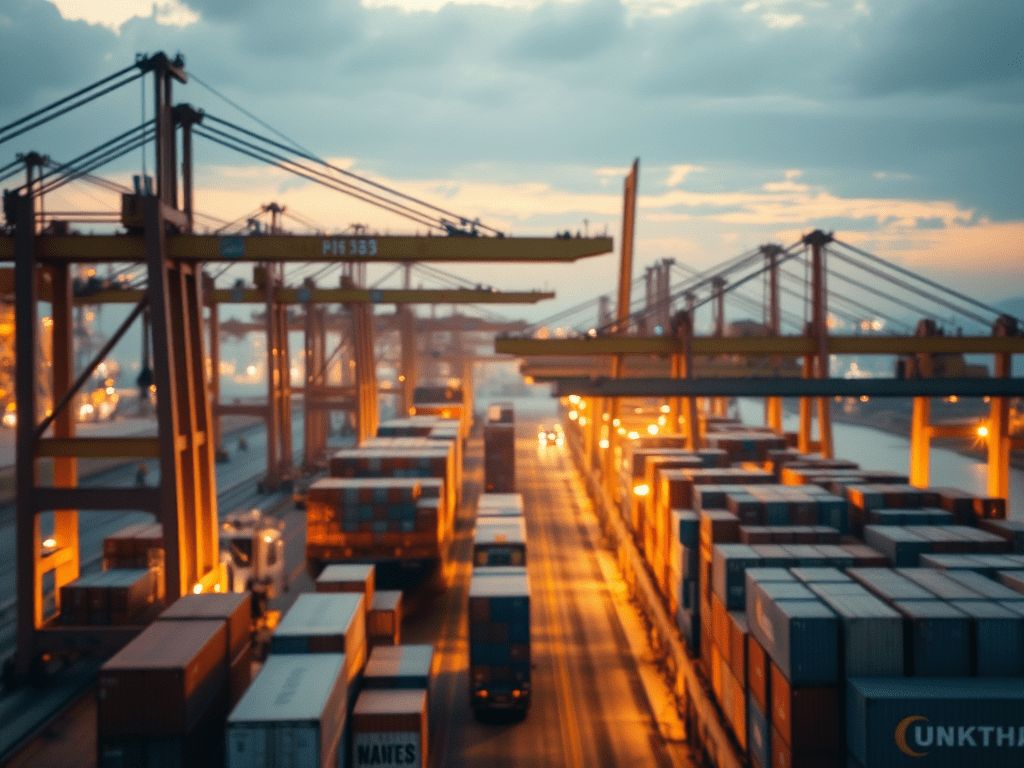
The competitive landscape among Southeast Asia’s major transshipment ports—Singapore, Port Klang, and Tanjung Pelepas—has changed recently. This is due to heightened demand and the impacts of the Red Sea crisis. These three hubs were traditionally rivals. They are now embracing a collaborative approach. This change helps manage the unprecedented volume of transshipment traffic due to geopolitical disruptions and an early peak season.
Key Points at a Glance
| Aspect | Details |
|---|---|
| Shift from Competition to Cooperation | Traditionally, Singapore, Port Klang, and Tanjung Pelepas competed for transshipment traffic. However, high cargo volumes and delays have turned competition into cooperation. |
| Combined Annual TEU | Collectively, the three ports handle approximately 65 million TEU annually, necessitating close cooperation to manage the immense cargo volumes. |
| Port Statistics (2023) | – Singapore offers 392 container services. It handles 39 million TEU annually. – Port Klang has 227 services and deals with 14 million TEU. – Tanjung Pelepas provides 91 services and manages 10.5 million TEU. |
| Impact of Red Sea Crisis | The crisis has led to liner schedule disruptions and delays. Ports work closely together. They help carriers stay on schedule. Port Klang is often the first Southeast Asian port of call eastbound from Europe. |
| Operational Strain | Carriers expect ports to accommodate high traffic. They need to adjust schedules to offset delays. The Red Sea crisis has strained operational capacities. |
| Port Utilization Levels Pre-Crisis | – Singapore: 63% – Port Klang: 72% – Tanjung Pelepas: 82% The activity rates are already high. This indicates limited flexibility to absorb additional disruptions. |
Overview: Increased Traffic and Shared Challenges
The geopolitical turbulence in the Red Sea region has intensified delays. This situation has forced carriers to turn to Singapore, Port Klang, and Tanjung Pelepas. These ports provide support in maintaining schedule consistency. These ports are pooling resources. They coordinate closely to meet the demand. This marks a significant shift in port dynamics across Southeast Asia.
This collaborative approach is unplanned. It may set a new standard for transshipment logistics. The approach emphasizes adaptability and shared resources to mitigate operational risks in volatile times.
#RedSeaCrisis#TransshipmentTraffic#PortCooperation#LogisticsAlliance#SEAPorts#SupplyChainChallenges#AsiaShipping#TradeResilience#ShippingNews#PortTraffic #Glottislimited #Glottisganesha




 Glottis Limited
Leave a comment