
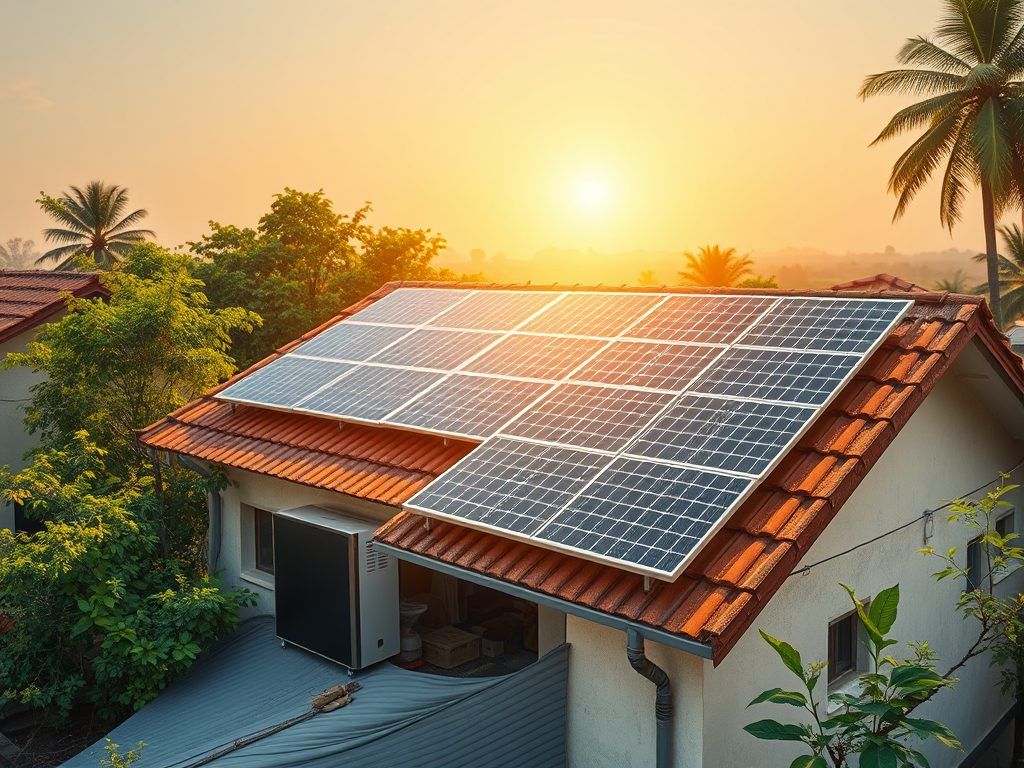
The Union Budget 2026–27 signals a decisive push towards strengthening India’s renewable energy ecosystem. With substantial increases in budgetary allocations, focused support for solar adoption, and a major boost to energy storage infrastructure, the government has reinforced its commitment to clean, reliable, and scalable power generation.
At the centre of this push is a 30% increase in funding for the Ministry of New and Renewable Energy (MNRE), alongside targeted incentives for rooftop solar, battery energy storage systems, and domestic clean-energy manufacturing.
Stronger Budgetary Support for Renewable Energy
The MNRE budget has seen a sharp rise, reflecting the government’s intent to accelerate India’s transition to non-fossil fuel energy sources and meet long-term climate and energy security goals.
Budget Allocation Snapshot
| Year | MNRE Allocation |
|---|---|
| 2024–25 | ₹25,301.22 crore |
| 2025–26 | Similar level (assumed) |
| 2026–27 | ₹32,914.67 crore (~30% increase) |
This increase enables faster rollout of solar, wind, storage, and green-energy infrastructure across the country.
PM Surya Ghar Scheme: Rooftop Solar in Focus
The PM Surya Ghar Scheme has emerged as a flagship programme, receiving one of the largest allocation increases in the renewable energy budget.
PM Surya Ghar Allocation Trend
| Year | Allocation |
|---|---|
| 2024–25 | ₹7,818 crore |
| 2025–26 | ₹17,000 crore |
| 2026–27 | ₹22,000 crore (29% increase) |
The sustained rise in funding highlights a strong policy push to expand rooftop solar adoption, reduce household electricity costs, and decentralise power generation.
PM-KUSUM Scheme: Flat Allocation Raises Questions
In contrast, the PM-KUSUM scheme, aimed at solarising agriculture and rural feeders, has seen no increase in allocation, remaining stagnant at ₹5,000 crore.
| Scheme | Allocation (2024–25 to 2026–27) |
|---|---|
| PM-KUSUM | ₹5,000 crore (unchanged) |
This stagnation suggests either a consolidation phase or the need for future policy recalibration to revive momentum in the agri-solar segment.
Battery Energy Storage: A Game Changer in the Budget
One of the most impactful announcements in Budget 2026–27 is the massive enhancement of Viability Gap Funding (VGF) for Battery Energy Storage Systems (BESS).
BESS Viability Gap Funding
| Year | VGF Allocation |
|---|---|
| 2024–25 | ₹100 crore |
| 2026–27 | ₹1,000 crore (9× increase) |
This nine-fold increase underscores the government’s recognition that energy storage is critical for integrating renewable power into the grid and ensuring round-the-clock energy reliability.
Customs Duty Relief for Clean-Energy Manufacturing
To reduce cost pressures and strengthen domestic manufacturing, the budget extends and introduces key customs duty exemptions:
- Battery Manufacturing:
Continued exemption on basic customs duty for capital goods used in lithium-ion cell manufacturing for energy storage systems. - Solar Glass Manufacturing:
Basic customs duty exemption on imports of sodium antimonate, a key input for solar glass production.
These measures directly support Make-in-India goals in clean-energy manufacturing.
Additional Support Measures
Beyond headline allocations, the budget also focuses on:
- Reducing input cost pressures in clean-energy manufacturing
- Supporting access to rare-earth materials
- Easing taxation and compliance norms for biogas projects
Together, these initiatives aim to create a more competitive and resilient renewable energy value chain.
Key Takeaways at a Glance
| Area | Budget Signal |
|---|---|
| MNRE Funding | Strong growth focus |
| Rooftop Solar | High priority |
| Energy Storage | Strategic acceleration |
| Domestic Manufacturing | Cost and duty relief |
| Agricultural Solar | Needs renewed push |
Conclusion
The Union Budget 2026–27 marks a clear shift towards solar-led growth and energy storage-driven grid stability. While rooftop solar and battery storage receive decisive support, the unchanged PM-KUSUM allocation highlights an area that may require renewed attention.
Overall, the budget reinforces India’s ambition to build a clean, scalable, and self-reliant renewable energy ecosystem, positioning the country strongly for its energy transition goals.




Leave a Reply