

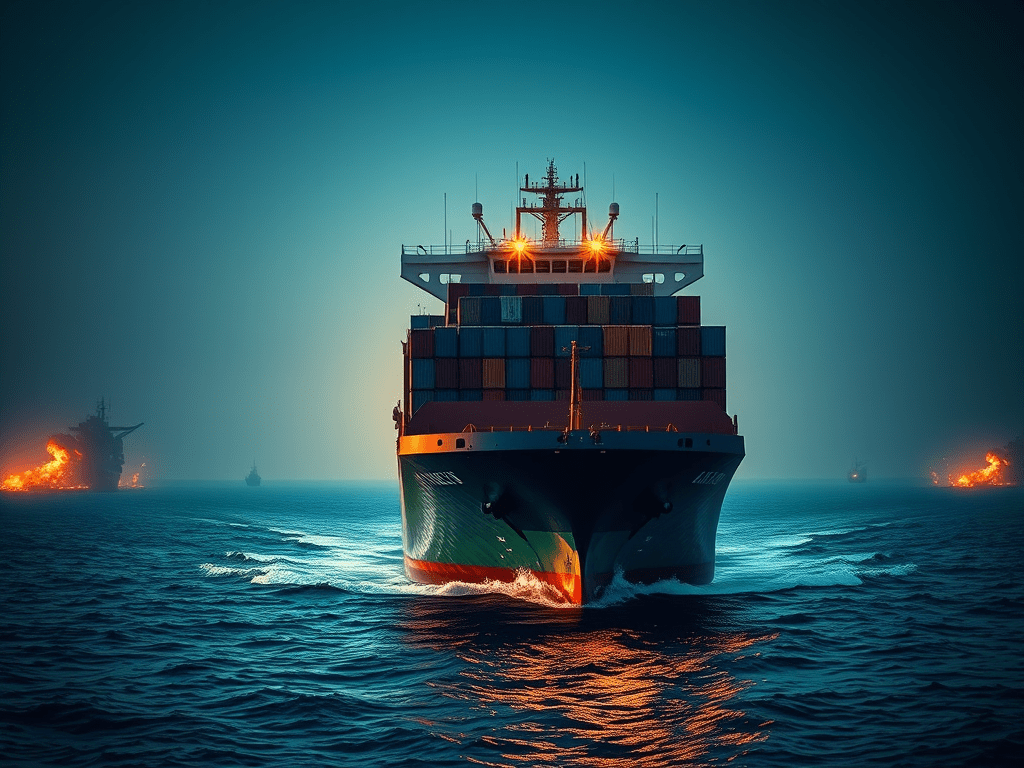
The shipping industry has once again been jolted by a geopolitical incident, as the Maersk-chartered container ship, Megalopolis, faced an attack in the Arabian Sea. This alarming event underscores the growing risks that shipping lines must navigate amid the volatile geopolitical climate in the Middle East. The vessel, a 4,957 TEU container ship chartered by Maersk from Greek shipping company Costamare, was targeted by Houthi forces using drones, escalating concerns for maritime security in the region.
The Attack and Its Roots
The Houthi spokesperson, Yahya Saree, claimed responsibility for the attack, alleging that the ship’s owner violated a ban on entry to the ports of occupied Palestine. This assertion has fueled speculation about the broader implications of the conflict for international shipping routes. The Megalopolis, part of Maersk’s ME8 service connecting the Middle East with Europe, was on its way from Spain’s port of Valencia to the UAE’s Jebel Ali port when it came under attack. Despite the alarming nature of the event, reports from S&P Global indicate that the vessel was not seriously damaged, and there are no signs of it undergoing repairs. As of the latest updates, the ship is safely positioned off Salalah, Oman, though Maersk has yet to officially confirm the attack.
A Pattern of Escalation
This incident is part of a disturbing pattern of Houthi attacks on Maersk-operated vessels. Since late 2023, there have been six reported attacks, the most recent before this being in July 2024. These attacks have raised significant concerns within the maritime industry, with shipping lines becoming increasingly wary of navigating the Red Sea and surrounding regions.
Notably, U.S. Central Command (CENTCOM) has been actively involved in mitigating such threats. In the past week alone, CENTCOM forces destroyed 20 uncrewed aerial systems and cruise missiles targeting vessels in the region, a testament to the growing frequency of these attacks.
Impact on Shipping Routes: The Cape of Good Hope Reroute
The continued instability in the Arabian Sea and Red Sea is pushing shipping lines to take drastic measures to ensure safety. Increasingly, vessels are opting for the Cape of Good Hope route, despite its longer transit time, as a safer alternative to the Suez Canal. This rerouting adds thousands of nautical miles to voyages, increasing both operational costs and fuel consumption. For companies like Maersk, which operate on tight schedules and high-volume routes, this is a significant shift, impacting both timelines and profits.
Broader Implications for the Shipping Industry
While the reroute ensures greater security, it brings up crucial questions about the sustainability of such operations in the long term. The shipping industry is already grappling with challenges such as supply chain delays, rising fuel costs, and the push for decarbonization. A reroute around Africa exacerbates these issues, particularly as the industry tries to meet its sustainability goals.
The increasing threats in the Arabian Sea and Red Sea, combined with geopolitical tensions, may force shipping companies to reassess their reliance on the region’s key chokepoints, such as the Suez Canal. Alternative shipping routes, more resilient supply chains, and possibly even innovations in maritime security may be the need of the hour.
Conclusion
The attack on the Megalopolis serves as a stark reminder of the fragile state of global shipping, where geopolitical incidents can have far-reaching consequences. With growing concerns over security, the shipping industry faces tough choices in balancing operational efficiency with the safety of crews and cargo. For now, the Cape of Good Hope may offer a safer passage, but at a higher cost—both financially and in terms of time. In this rapidly evolving landscape, shipping companies must remain agile, proactive, and prepared for the unexpected.
What’s Next?
The ripple effects of the Megalopolis incident could drive further industry collaboration on maritime security and accelerate discussions on alternative, safer shipping routes. While the world watches and waits for more concrete responses from Maersk and other key players, it’s clear that the incident has highlighted the pressing need for robust solutions to navigate an increasingly unstable global trade environment.



 Glottis Limited
Leave a comment