
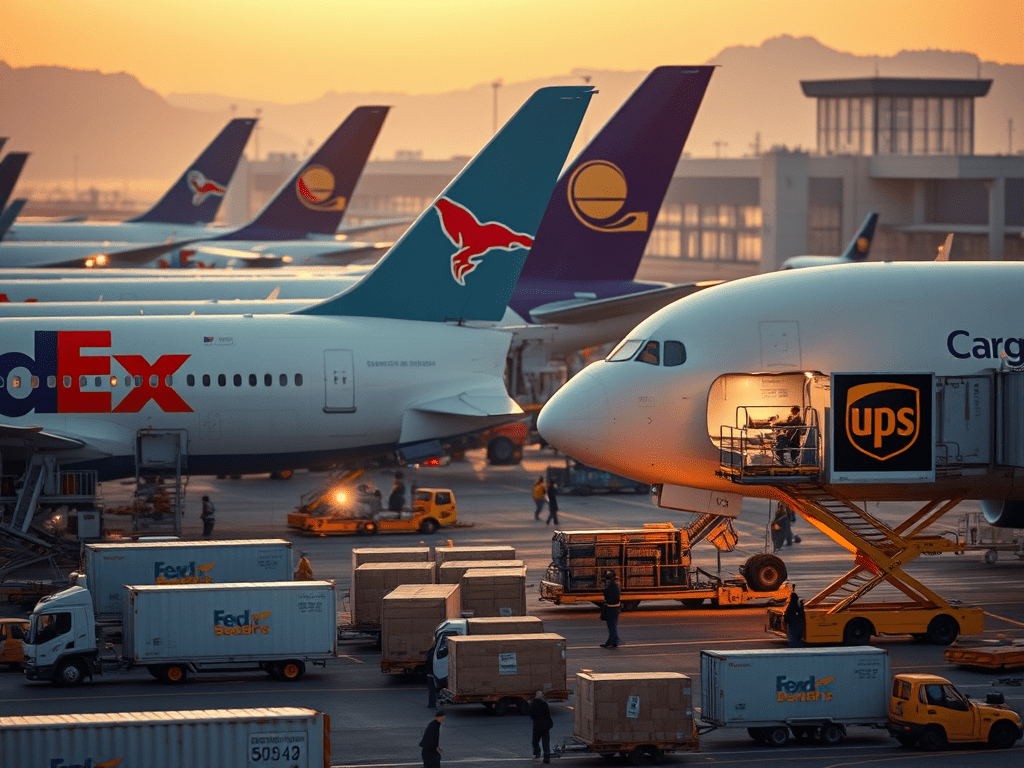
The air cargo industry is crucial for global logistics. It provides fast and reliable solutions for moving goods over long distances. Cargo airlines in the United States operate under diverse frameworks. They have varied operational models, pricing structures, and service offerings. These factors significantly impact the options available to freight forwarders. Here, we’ll delve into the primary air cargo models. We will explain how freight forwarders can make informed choices. They select airlines based on specific routes and cargo requirements.
Key Air Cargo Models
Understanding each model’s distinct features can guide a freight forwarder in choosing an airline that aligns with their business needs. Below is a breakdown of the main operational models:
| Model | Characteristics | Examples |
|---|---|---|
| Dedicated Cargo Airlines | Operate exclusively for cargo, often with extensive global networks and specialized fleets. These carriers maintain rigid schedules and pricing models based on volume. | FedEx Express, UPS Airlines |
| Hybrid Cargo-Passenger Airlines | Split between two approaches: – “Carpet Sellers” use available space in passenger flights. – “Cargo Stars” maintain dedicated cargo fleets in addition to passenger services. | Delta Air Lines, United Airlines |
| Hub-and-Spoke Model | Cargo is funneled through large hubs (e.g., Memphis, Louisville) for efficient overnight transfers, enhancing reach across the network. | FedEx Express, UPS Airlines |
| US Legacy Airlines | Offer scheduled cargo services as part of passenger operations, without dedicated cargo fleets, providing some flexibility but limited capacity. | American Airlines, United Airlines |
Understanding the Operational Models
- Diverse Cargo Airline Operations
Cargo airlines have developed models tailored to their specific operational needs and target markets. Dedicated cargo carriers like FedEx and UPS maintain fleets focused solely on cargo, optimizing their resources entirely for freight needs. In contrast, airlines with passenger services, such as Delta, also carry cargo in the belly space of passenger aircraft. This fundamental difference dictates the type and amount of cargo that can be accommodated on each flight. - Variability in Business Models and Pricing
Different carriers adopt unique business models. Some carriers have strict pricing and scheduling. These are usually dedicated cargo carriers. Others provide more flexible cargo space allocation on passenger flights. Dedicated cargo airlines offer specialized services with predictable pricing but may have stricter requirements. Hybrid and legacy carriers provide more variable options. These options are potentially advantageous for flexible cargo. The cargo can adapt to available passenger flight schedules. - Overnight Hub-and-Spoke Model
FedEx and UPS have extensive networks. They are centered around large hub airports, particularly in Memphis (FedEx) and Louisville (UPS). They use the hub-and-spoke model. Cargo is collected from multiple origins, funneled to a central hub, and then redistributed overnight. This approach ensures timely delivery. However, it may impose route constraints based on the hub’s geographic position. It also affects the airline’s network design. - Extensive Global Operations
Airlines like FedEx and UPS cover vast regions within the United States. They also connect to major international destinations. For instance, FedEx’s Memphis hub links to 197 global destinations, while UPS’s Louisville hub reaches 93 destinations. This extensive coverage supports freight forwarders managing cross-border shipments, particularly when reliable international connectivity is essential. - Night-time Operational Patterns
FedEx and UPS hubs at Memphis and Louisville primarily operate overnight. This optimizes their services for next-day delivery. This schedule can be advantageous for shipments with tight delivery windows, but it requires planning around night-time operations. - Hybrid Cargo-Passenger Airlines
Hybrid airlines offer flexibility, leveraging the cargo hold capacity of passenger flights. Within this model, airlines split into two categories:- “Carpet Sellers”: Airlines like Delta and American utilize spare capacity on passenger flights to transport cargo. This approach is ideal for ad-hoc shipments that don’t require dedicated cargo planes.
- “Cargo Stars”: These airlines include some legacy carriers. They maintain both dedicated cargo fleets and passenger services. This offers a hybrid option with increased capacity and flexibility.
- US Legacy Airlines
Legacy carriers like United, Delta, and American Airlines sit between the “Carpet Seller” and “Cargo Star” models. While they don’t operate cargo-only flights or dedicated cargo fleets, they provide scheduled cargo capacity as part of passenger operations. This model suits freight forwarders seeking flexible options for standard cargo without the need for specialized capacity.
Choosing the Right Airline for Each Lane: Considerations for Freight Forwarders
As a freight forwarder, you need to select the right airline for a specific lane. This requires a thorough understanding of each model’s strengths. It also requires knowing their limitations. Here’s a quick guide to how each model can meet different needs:
| Freight Requirement | Best Model Choice | Reasoning |
|---|---|---|
| Urgent Domestic Shipments | Overnight Hub-and-Spoke | FedEx and UPS’s overnight operations support next-day delivery across the U.S. |
| High-Volume International Cargo | Dedicated Cargo Airlines | Extensive global networks by dedicated cargo airlines facilitate reliable international shipments |
| Flexible, Low-Priority Cargo | Hybrid Cargo-Passenger Airlines | Hybrid airlines can utilize extra space on passenger flights, making it cost-effective for flexible cargo |
| Cross-Border Shipments with Tight Budgets | US Legacy Airlines | Provides scheduled cargo space without dedicated fleets, often at a lower cost than dedicated cargo-only |
| Large, Heavy, or Oversized Shipments | Dedicated Cargo Airlines | Specialized fleets and extensive hub networks make them ideal for bulky or specialized cargo |
Final Thoughts
The diverse air cargo industry offers various options. Freight forwarders can leverage these options based on their cargo’s specific requirements. They also consider delivery schedules. Understanding the unique operational models of airlines helps freight forwarders optimize their choices. This ensures efficient and cost-effective solutions for their clients. Knowledge of each airline’s operational model is crucial. Understanding network coverage is also invaluable in meeting logistics challenges head-on, whether for overnight shipping or managing international deliveries.




 Glottis Limited
Leave a comment