
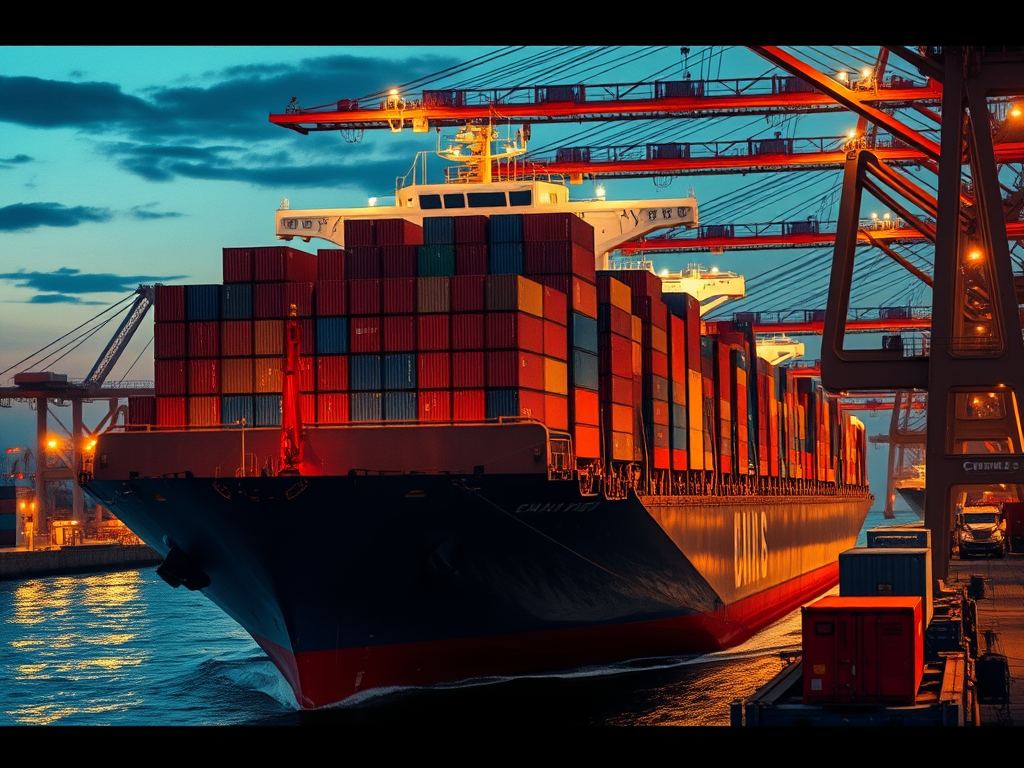
Spot freight rates declined for 15 weeks. Container shipping lines on the main east-west trade routes managed to reverse the trend this week. Carriers implemented a general rate increase (GRI) on exports from Asia. This temporarily boosted rates on major lanes. They specifically targeted shipments from Shanghai to European ports like Rotterdam and Genoa. Yet, experts suggest this hike is temporary, aimed more at stabilizing declining rates than establishing long-term pricing trends.
Summary of Recent Developments in Container Shipping Rates
- Temporary Rate Increase
The latest Drewry World Container Index (WCI) shows an increase. The Shanghai-Rotterdam rate rose by 8% to $3,396 per 40ft container. The Shanghai-Genoa route increased by 11% to $3,648 per 40ft. This spike is linked to the 1 November GRI. Carriers implemented it in a bid to keep rates. Demand remains sluggish post-Golden Week. - Variable New Rates by Carriers
Different shipping lines have set varied rates for upcoming shipments, further indicating a fragmented approach. MSC, for example, set its new Freight All Kinds (FAK) rate at $5,000 per 40ft from Asia to North Europe. This rate starts on 1 November. Further hikes are expected mid-month. Hapag-Lloyd, MSC, and CMA CGM have also announced new rates, ranging from $3,500 to $5,700 per 40ft for specific lanes. - Challenges in Demand
Despite the GRIs, customer demand remains low. European importers report adequate stock levels, and future demand over the next three months is expected to be limited. This diminished demand is largely due to economic challenges in Europe and inflated inventory levels. - Blank Sailings and Capacity Adjustments
Capacity adjustments by carriers also contributed to the temporary rate increase. An analysis by eeSea showed that 168 liner services were scheduled for Asia-North Europe and Asia-Mediterranean in October. Out of these, 21 sailings were blanked. This reduced overall capacity by about 300,000 TEU, from a scheduled 1.88 million TEU to 1.57 million TEU, providing slight upward pressure on spot rates. - Market Strategy and Contract Negotiations
The timing of these rate increases aligns with contract negotiations for 2025. Shipping lines are reportedly trying to strengthen their bargaining position. They show elevated spot rates. This strategy influences long-term contracts typically finalized by December. Peter Sand, chief analyst at Xeneta, suggests this “desperate” move shows carriers’ efforts. They aim to strengthen their negotiation stance as the tender season begins for new long-term contracts.
Key Data on East-West Shipping Rates and Developments
| Route | Rate per 40ft | Change (Week on Week) | Reason for Rate Change |
|---|---|---|---|
| Shanghai to Rotterdam | $3,396 | +8% | 1 November GRI implemented |
| Shanghai to Genoa | $3,648 | +11% | Increased GRI on ex-Asia loadings |
| Asia to North Europe (MSC) | $5,000 | – | MSC’s new FAK rate, effective 1 Nov |
| Asia to North Europe (MSC, 15 Nov) | $5,500 | – | Planned GRI for mid-November |
| Asia to North Europe (Hapag-Lloyd, 15 Nov) | $3,500 | – | Hapag-Lloyd’s planned GRI |
| Asia to West Mediterranean (CMA CGM, 15 Nov) | $5,700 | – | CMA CGM’s targeted GRI rate |
Future Outlook and Considerations
The recent rate hikes are to be temporary, and analysts predict a continued downward trend as demand remains weak. European importers experience some pressure during November due to spot rate increases. Nonetheless, the broader market dynamics suggest that rates will stabilize or decline in the coming months. This development underscores the need for shippers to stay vigilant as they negotiate long-term rates for 2025 contracts. Spot rate fluctuations occur due to temporary capacity adjustments. Carriers engage in strategic pricing. These fluctuations should be closely monitored to guarantee favorable terms in long-term contracts.




 Glottis Limited
Leave a comment