
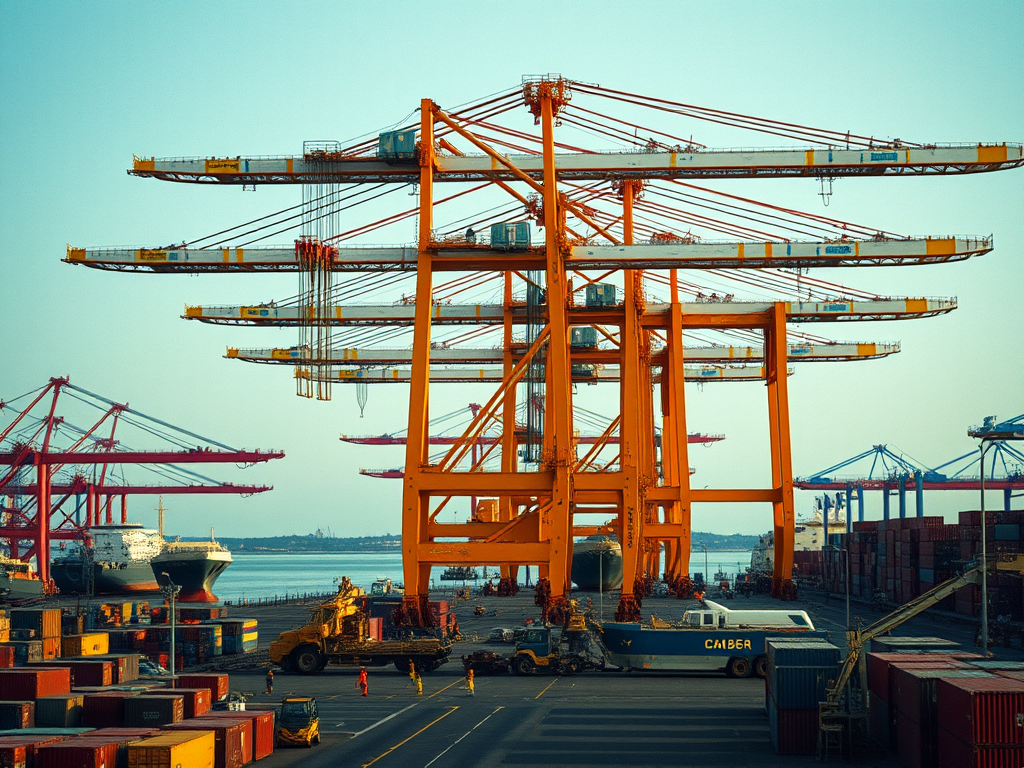
Hamburg’s flagship Container Terminal Altenwerder (CTA), managed by HHLA, is now experiencing significant congestion due to ongoing modernization efforts. These upgrades are part of a long-term investment to improve automation and operational efficiency. Yet, they have also led to some unintended disruptions. As a result, several shipping lines, including Hapag-Lloyd, have had to reroute their services to avoid delays at the port.
Overview of the Situation: The modernization project at CTA involves replacing its 14-ship-to-shore cranes. These cranes have been in operation since 2002. These cranes are being replaced with remotely operated units to improve efficiency and reduce reliance on on-site crane operators. Yet, this transition, coupled with other logistical challenges, is impacting operations at CTA.
Key Reasons for Congestion
- Modernisation Program: The upgrade of 14 cranes at CTA has reduced the terminal’s operational capacity.
- Global Shipping Delays: Strikes on the U.S. East Coast and the Red Sea crisis are also impacting container flows.
- Overcapacity: The current export volume has pushed CTA’s storage capacity to 80-85%, straining yard resources.
Measures Taken
HHLA and Hapag-Lloyd have implemented several measures to manage the backlog:
- Temporary Export Restrictions: Export container deliveries are now managed on a vessel-specific basis.
- Reallocation of Vessels: Hapag-Lloyd has redirected some sailings from Hamburg to Wilhelmshaven.
- Use of External Storage: Additional storage facilities are being utilized to help ease the burden at CTA.
Hapag-Lloyd has rerouted its India/Middle East-Europe IOS service to Wilhelmshaven, a port in which the carrier holds a 30% stake. The shift is in cooperation with CMA CGM, ONE, and OOCL. The first call for this service is scheduled for the Frankfurt Express. It is due to arrive on September 13.
CTA Terminal Data and Current Utilization
Here is a table summarizing the key data and operational changes at CTA:
| Factor | Details |
|---|---|
| CTA Modernisation Efforts | Replacement of 14 ship-to-shore cranes with remotely operated units to enhance automation |
| Operational Challenges | Crane replacement causing temporary reductions in operational capacity |
| Current Yard Utilisation | 80-85% |
| Export Container Restrictions | Temporary restrictions on export container deliveries, regulated on a vessel-specific basis |
| External Storage Facilities | Used to maintain cargo flow and manage excess volume |
| Reallocation of Services | India/Middle East-Europe IOS service rerouted to Wilhelmshaven due to congestion at CTA |
| Wilhelmshaven Service Stakeholders | Hapag-Lloyd (30% stake), CMA CGM, ONE, and OOCL |
| Hub for Key Services | Four THE Alliance transatlantic services, additional Asia-Europe, Europe-South America, Baltic/Scandinavia feeder services |
| First Rerouted Call to Wilhelmshaven | Frankfurt Express on September 13 |
Impact on Services and Strategic Implications
CTA plays a critical role in facilitating international and regional services, including:
- THE Alliance transatlantic routes
- Asia-Europe and Asia-Europe-North America services
- Europe-South America routes
- 23 feeder services from 8 carriers connecting the Baltic and Scandinavian regions
With these services affected, there is a temporary shift in routing and an increased reliance on Wilhelmshaven as a choice. The ongoing modernization at CTA may bring major long-term improvements. Nonetheless, operational bottlenecks are now creating significant challenges for shippers and shipping lines.




 Glottis Limited
Leave a comment