
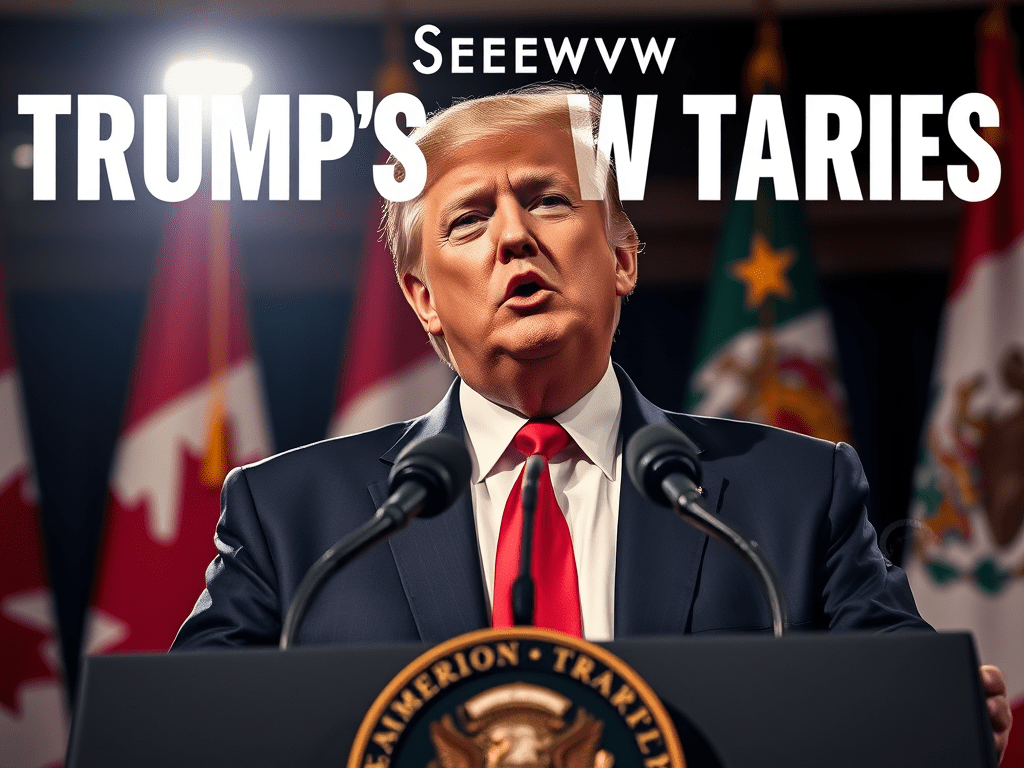
President-elect Donald Trump has announced a series of tariff measures. They are set to take effect on the first day of his new term next year. These proposed tariffs aim to tackle economic, security, and trade-related concerns with major trading partners like Canada, Mexico, and China. Below, we explore the key aspects of this policy shift, its potential economic impact, and its broader trade strategy implications.
Key Features of the Proposed Tariffs
| Key Aspect | Details |
|---|---|
| Imposition of Tariffs | Scheduled to start on the first day of Trump’s upcoming term in office. |
| Tariff Rates | – 25% on all goods imported from Canada and Mexico. – 10% on all goods imported from China. |
| Reasoning Behind Tariffs | Designed to encourage Canada, Mexico, and China to bolster border security and reduce fentanyl exports to the U.S. |
| Historical Context | Builds on Trump’s first-term tariffs, including those targeting steel and aluminum imports. |
| Key Personnel | Scott Bessent, the nominated Treasury Secretary, will play a pivotal role in enacting the policy. |
| Economic Impact | Previous tariffs led to market instability and strained relations with key trading partners. |
| Trade Strategy | Part of a broader effort to renegotiate trade deals (e.g., NAFTA) and recalibrate relations with China. |
Reasoning and Rationale
The central goal of these tariffs is not merely economic but also strategic. Trump seeks to:
- Tackle border security concerns, particularly with Canada and Mexico.
- Dissuade the export of fentanyl and related substances, which have exacerbated the opioid crisis in the U.S.
This dual focus on security and trade continues. It extends Trump’s first-term approach. He leveraged tariffs as tools for achieving broader policy objectives.
Economic and Political Ramifications
- Market Reaction
Financial markets are expected to respond with volatility, as seen during Trump’s earlier tariff impositions. The impact will extend to consumer prices, corporate supply chains, and GDP growth. - Global Relations
- With Canada and Mexico: The proposed 25% tariff risks undermining the recently renegotiated USMCA agreement, reigniting trade disputes.
- With China: A 10% tariff will further strain an already contentious economic relationship, complicating negotiations over tech and intellectual property.
- Domestic Impacts
Industries reliant on imported goods, like manufacturing and retail, face increased costs. They will pass these costs onto consumers.
Key Role of Scott Bessent
The nomination of Scott Bessent as Treasury Secretary underscores the administration’s focus on economic policy and trade. Bessent has extensive experience in financial markets. He will be instrumental in shaping and executing the trade agenda. This includes effectively implementing these new tariffs.
Broader Trade Strategy
The tariffs are part of Trump’s larger strategy to redefine the U.S.’s economic relationships globally. By leveraging tariffs, Trump aims to renegotiate trade agreements, such as:
- Revising NAFTA (now USMCA) for fairer trade terms with Canada and Mexico.
- Addressing trade imbalances and intellectual property disputes with China.



 Glottis Limited
Leave a comment