

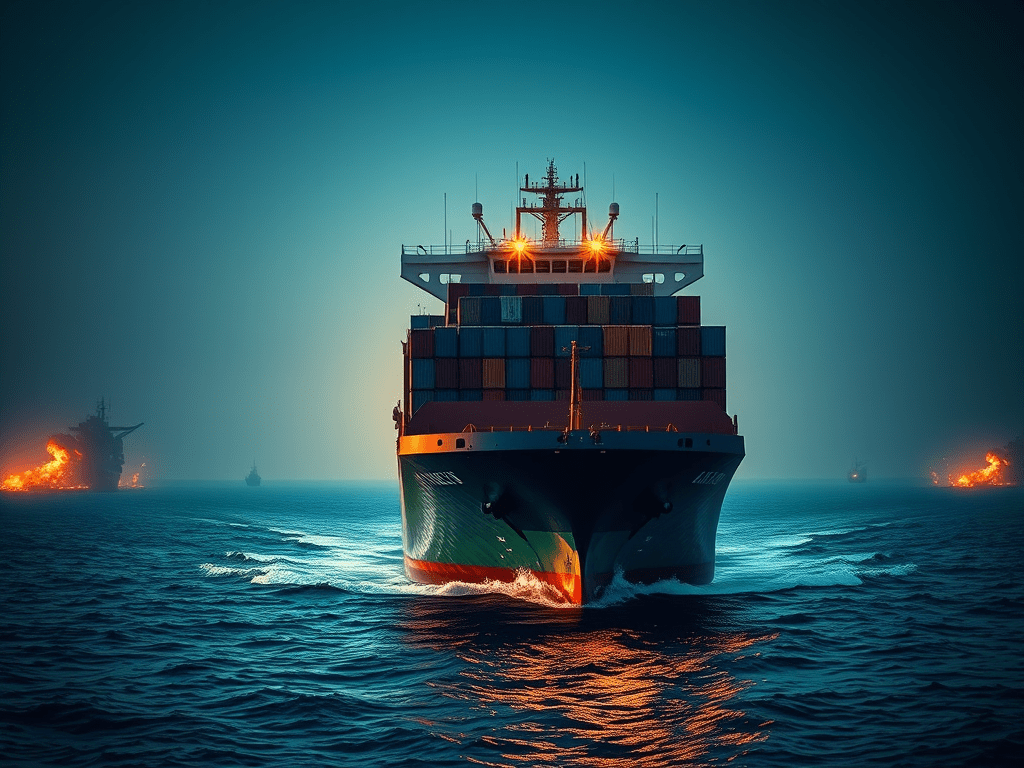
The ongoing Red Sea crisis has significantly impacted global container shipping routes and deployment strategies. A combination of geopolitical tensions and capacity growth has driven notable shifts in the deployment of containerships, particularly across major trade lanes. Here’s a detailed look at the trends and their implications.
Key Trends in Containership Deployment
- Cascading Smaller Vessels
The deployment of containerships under 17,000 TEU on Asia-Europe lanes has surged to 42%, an 11% increase year-on-year. This shift indicates a preference for smaller, more versatile vessels on this high-demand route. - Transpacific Resilience
On transpacific lanes, 12,000-17,000 TEU vessels now account for 46% of the capacity. Despite operational challenges, this steady deployment highlights the importance of these mid-sized vessels for maintaining trade flow. - Capacity Growth Pressure
The influx of new vessels added 2.3 million TEU in 2023, growing global capacity by 8%. The 12,000-17,000 TEU segment witnessed the most significant jump, with an 18% capacity increase fueled by 850,000 TEU of new deliveries. - Rerouting via Cape of Good Hope
The Red Sea crisis has led to the rerouting of vessels around the Cape of Good Hope to avoid potential Houthi attacks. This extended route requires more vessels to maintain delivery schedules, adding strain on global capacity. - Diversification in Far East-South America Routes
The use of 12,000-17,000 TEU vessels on Far East-South America routes has increased substantially, growing from 19% to 39% in the past year. - Market Stability Compared to COVID-19
While the Red Sea crisis has introduced new challenges, its overall impact on the market remains less severe than the disruptions caused by the COVID-19 pandemic. - Industry Insights
Thomas Grant, an analyst at Clarksons, remarked, “The Red Sea disruption has notably influenced deployment trends in 2024 for larger container sizes.”
Key Numbers in the Containership Market
| Metric | Details |
|---|---|
| Asia-Europe Small Vessel Share | 42% (up 11% YoY). |
| Transpacific 12,000-17,000 TEU | 46% capacity share (steady). |
| Global Capacity Growth (2023) | 2.3 million TEU (8% growth). |
| 12,000-17,000 TEU Capacity Growth | 18% (850,000 TEU new deliveries). |
| Far East-South America Deployment | 39% share, up from 19% YoY. |
Implications and Outlook
The rerouting caused by the Red Sea crisis underscores the container shipping industry’s resilience and adaptability. Smaller vessels’ increasing role in Asia-Europe and larger ships’ diversified deployment on transpacific and South American routes highlight a dynamic response to capacity growth and geopolitical challenges.
While the crisis’s impact is not as disruptive as the pandemic, its influence on routing and capacity management will likely shape shipping strategies for years to come.



 Glottis Limited
Leave a comment