
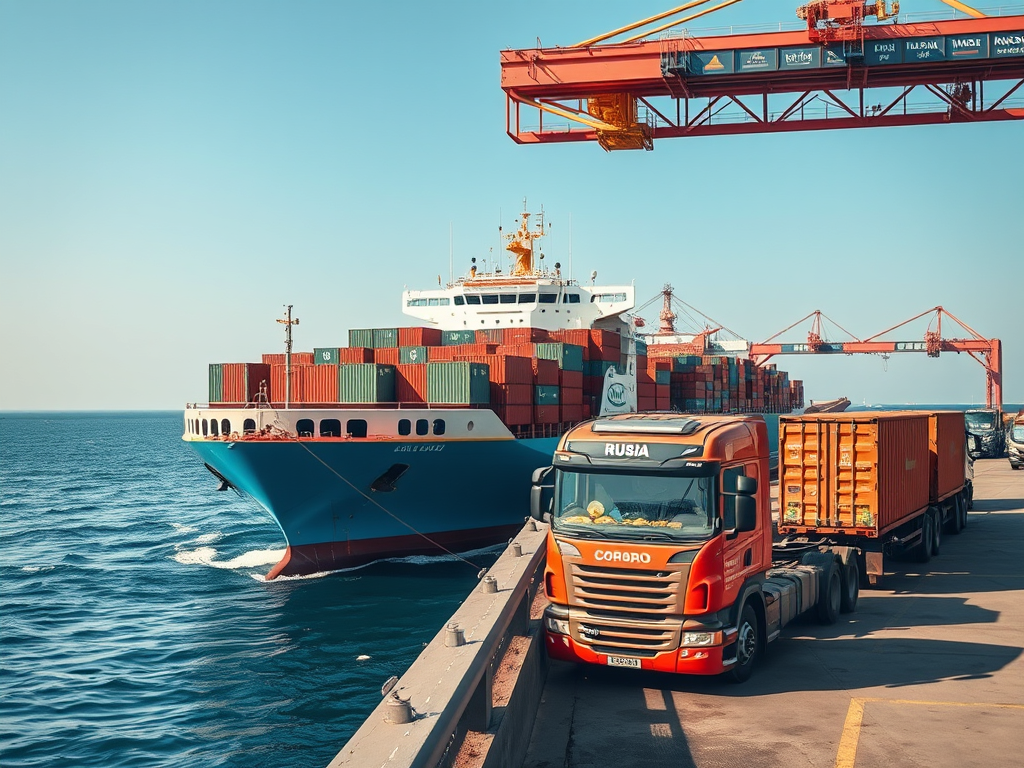
India has taken a significant step in enhancing its trade ties with Russia by successfully transporting its first shipment via the Trans-Caspian route under the International North-South Transportation Corridor (INSTC). This development underscores India’s growing focus on leveraging alternative trade routes to strengthen economic ties amidst shifting global dynamics.
First Shipment Marks a Milestone
The pilot shipment, carrying agricultural goods and food items, arrived at the Makhachkala sea checkpoint in Russia’s Dagestan region. This marks the first use of the Trans-Caspian route, an essential segment of the INSTC network, for Indo-Russian trade. The shipment primarily aimed to assess the feasibility of establishing a regular supply chain for agricultural products between the two nations.
Multi-Modal Transportation Model
The success of this shipment was made possible through a multi-modal transportation system that integrated sea, land, and potentially rail services. This model is seen as a robust approach to ensuring efficiency and cost-effectiveness for goods movement along the INSTC.
Increasing Trade Volume through INSTC
The INSTC has played a pivotal role in boosting trade between India and Russia, which has seen significant growth over the past two years. The corridor provides multiple trade routes:
- Trans-Caspian Route: Using Russian and Iranian ports.
- Eastern Route: Leveraging existing rail lines through Kazakhstan and Turkmenistan.
- Western Route: Extending through Azerbaijan.
Russia’s Growing Interest in Indian Agricultural Products
Amidst global shifts in agricultural supply chains, Russia is exploring diversification of its imports and views India as a promising partner. This pilot shipment could pave the way for regular agricultural trade between the two nations, aligning with Russia’s objectives to secure stable supply chains.
Infrastructure Upgrades for Enhanced Connectivity
Ongoing infrastructure projects in Azerbaijan and Iran, such as the construction of new rail lines and improved port facilities, are expected to enhance the efficiency of the INSTC. These developments demonstrate a commitment to making the corridor a reliable trade conduit.
Regional Momentum
The INSTC is garnering attention beyond India and Russia. Countries like Uzbekistan and Armenia have shown interest in joining the network, signaling a regional push for connectivity independent of China’s Belt and Road Initiative.
A Promising Future for Indo-Russian Trade
The successful activation of this route is a landmark achievement in the evolving Indo-Russian trade relationship. As the INSTC network expands and matures, it promises to offer businesses faster and more cost-effective trade solutions, fostering stronger economic ties across the region.
This achievement is a testament to India’s proactive approach to creating resilient trade networks while diversifying its logistics strategies. With regional and global stakeholders showing interest, the INSTC is poised to become a key pillar of Eurasian connectivity in the coming years.


 Glottis Limited
Leave a comment