
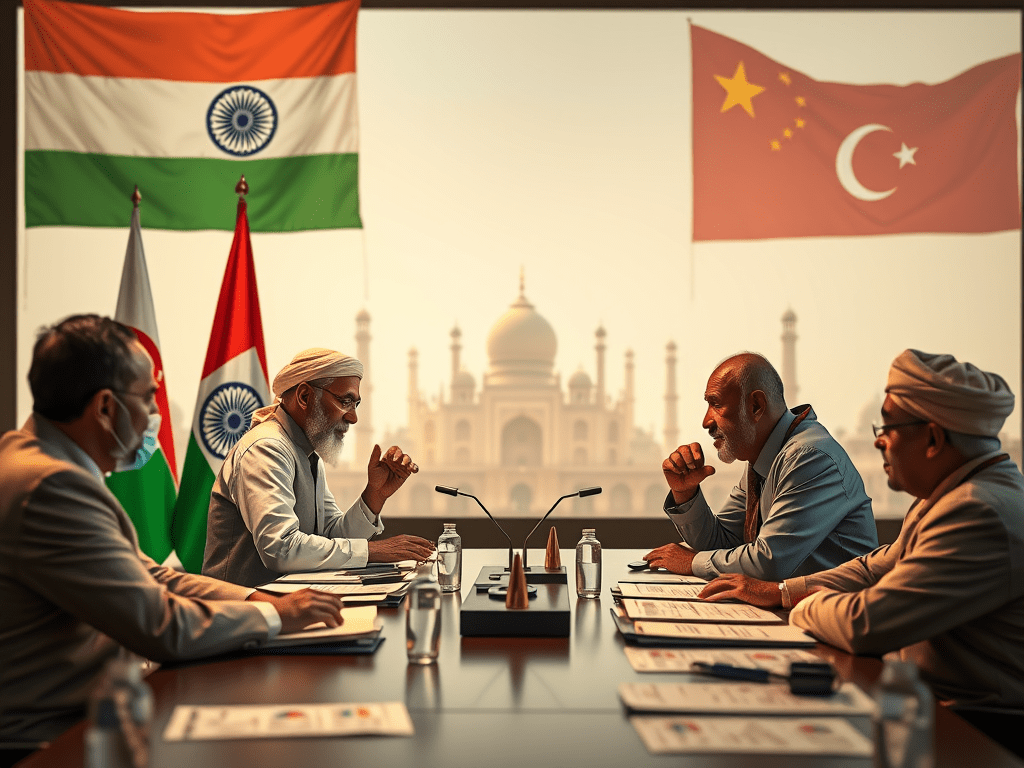
Negotiations for a Free Trade Agreement (FTA) between India and Oman have hit a deadlock, with significant concerns arising over market access and potential implications involving China. The impasse highlights the complexities of modern trade dynamics and the strategic maneuvering required to safeguard national interests.
The Current Standstill
Oman has requested a substantial revision to India’s market access offer, proposing an expansion from 200 to approximately 500 trade lines. This demand has delayed the progress of the FTA, which aims to eliminate tariffs on key products, including petroleum, textiles, electronics, pharmaceuticals, machinery, and iron and steel.
Indian Concerns Over Chinese Goods
A major sticking point for Indian officials is the potential for China to exploit the agreement as a backdoor route to dump its goods into the Indian market. With the EU and US imposing high tariffs on Chinese products, India is wary of becoming an unintended target for rerouted Chinese exports via Oman.
Impact of Oman’s Tariff Structure
Currently, over 80% of Indian exports to Oman face an average import duty of 5%. Tariffs on Omani imports range from 0% to 100%, with high duties on specific goods like exotic foods and certain meats. Reducing these tariffs under the FTA could provide a significant boost to Indian exporters, particularly in sectors like green products and those affected by the EU’s Carbon Border Adjustment Mechanism (CBAM).
Oman’s Push for Agricultural and Processed Foods
Oman is advocating for the inclusion of more products in the FTA, particularly in agriculture, processed foods, chemicals, and plastics. These additions could open new opportunities for Omani exporters but require careful consideration from India to balance trade benefits and protect domestic industries.
Global Trade Implications
The negotiations underscore a broader issue in global trade—high tariffs on Chinese products by major economies have pushed China to seek alternative routes to penetrate key markets. This shifting landscape adds a layer of complexity to India’s trade strategy with Oman and other nations.
What Lies Ahead?
While the FTA holds the potential to strengthen India-Oman trade ties and benefit sectors like green manufacturing, the risks associated with market access for Chinese goods require a measured approach. Policymakers will need to navigate these challenges carefully to secure a mutually beneficial agreement.
Stay tuned as developments unfold in this critical trade partnership, shaping the future of India’s economic engagements in the Gulf region.




 Glottis Limited
Leave a comment