
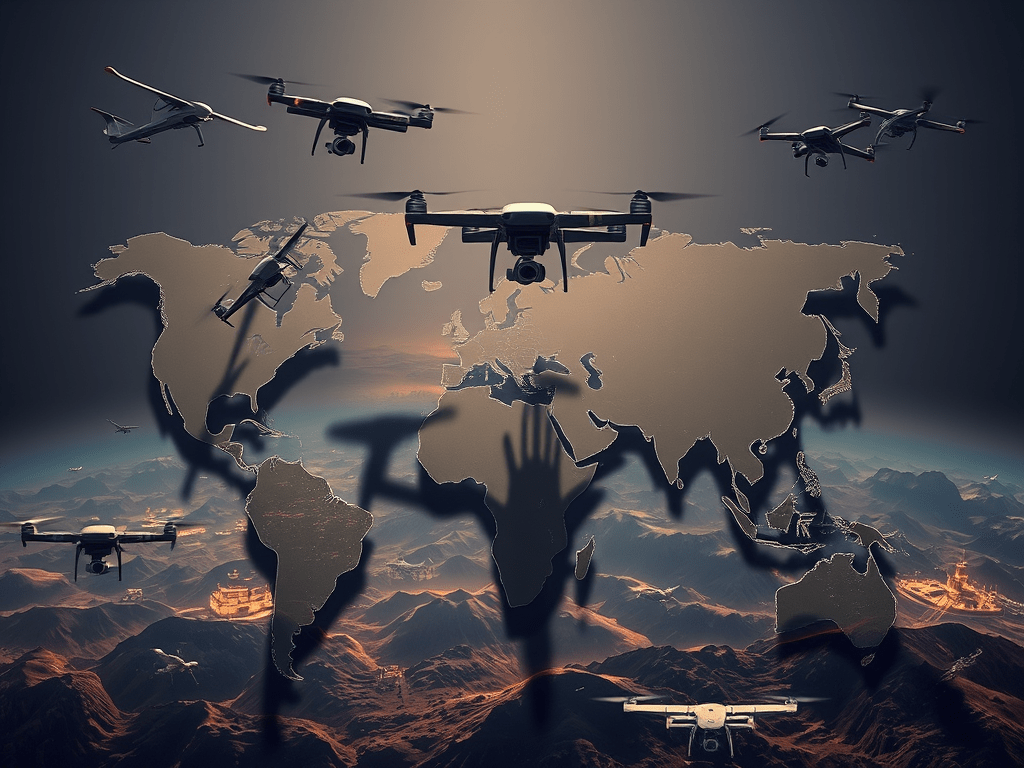
The global drone industry is entering a new phase as China prepares to enforce stricter controls on drone parts exports starting in early 2025. With China holding a commanding 80% share of the global drone market, the move has far-reaching implications for supply chains, military strategies, and geopolitical dynamics.
China’s Export Restrictions
Chinese companies have already begun reducing or halting sales of critical drone components—including batteries, motors, and flight controllers—to markets in the U.S., Europe, and Ukraine. These restrictions, officially taking effect next year, mark a significant shift in the global drone supply chain.
Impact on Global Supply Chains
The restrictions are likely to disrupt the operations of manufacturers worldwide, particularly in U.S., Europe, and Japan, which rely heavily on Chinese-made drone components. To address the shortfall, these regions will need to diversify supply chains and ramp up local production capabilities. This challenge presents both a risk and an opportunity for emerging players in the global drone market.
Military Implications
The military applications of drones bring additional urgency to the issue. Ukraine, which relies on drones as a key part of its defense strategy against Russia, faces significant concerns. However, the country is proactively scaling up its domestic drone production, aiming to meet ambitious targets by 2025.
At the same time, there are reports of Chinese dual-use goods—products that have both civilian and military applications—potentially supporting Russia’s defense capabilities, further fueling geopolitical tensions.
Broader Geopolitical Context
These export restrictions come against the backdrop of escalating U.S.-China geopolitical tensions. The U.S. recently banned the sale of advanced technologies to China, and this reciprocal action underscores the growing divide between the two powers. The restrictions will likely force Ukraine, Russia, and other nations to re-evaluate their drone supply chains and seek alternative sources.
Diverse Manufacturing Needs
The shifting landscape emphasizes the importance of diverse manufacturing ecosystems. Countries are increasingly exploring local production to reduce reliance on any single nation for critical technologies. This diversification is expected to play a pivotal role in the future resilience of the drone industry.
Future Outlook
China’s export restrictions highlight the evolving role of drones in modern warfare and international markets. As nations navigate these new challenges, drone technology will remain at the forefront of both military innovation and geopolitical strategy. The industry’s ability to adapt and innovate will shape the next phase of drone technology development on a global scale.
The ripple effects of China’s policy changes are only beginning to emerge. From supply chain adjustments to military strategies, the evolving dynamics will undoubtedly influence the future of drone technology. Stay tuned for more insights into this critical global issue.


 Glottis Limited
Leave a comment