
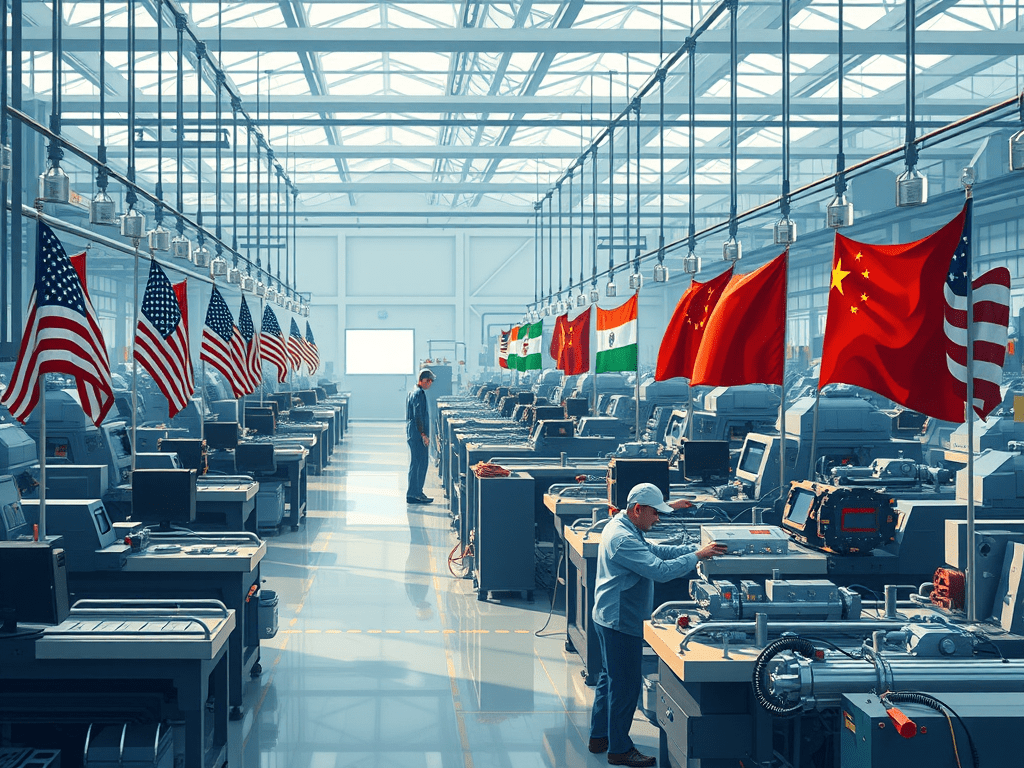
The complexities of global supply chains, geopolitical tensions, and economic dependencies make it challenging for U.S. manufacturers to reduce reliance on China. While significant efforts have been made to diversify and localize manufacturing, several factors continue to bind manufacturers to the Chinese economy.
Inability to Fully Decouple
Despite attempts to shift production away from China, U.S. manufacturers face hurdles stemming from decades of integration. The well-established manufacturing ecosystem in China offers cost advantages that alternative locations often cannot match.
Trends in Manufacturing
Between 2018 and 2022, U.S. imports from China decreased by 10%, signaling progress in diversification. Concurrently, imports from other nations such as Mexico (up 18%) and India (up 44%) saw significant increases.
Driving Factors for the Shift
- Wage Inflation: Rising labor costs in China have diminished its appeal for labor-intensive industries.
- COVID-19 Impact: Pandemic-induced supply chain disruptions and increased shipping costs exposed vulnerabilities in over-reliance on Chinese manufacturing.
Geopolitical and Security Concerns
- U.S.-China tensions, tariffs introduced in 2018, and global events like the Russia-Ukraine conflict have destabilized trade relations.
- Concerns about cybersecurity and espionage further prompt manufacturers to consider diversification.
Manufacturer Strategies
To reduce dependency, companies are embracing strategies such as:
- Nearshoring: Moving production to nearby countries like Mexico and Central America to maintain cost-effectiveness.
- Reshoring: Bringing critical industries like automotive and semiconductors back to the U.S., driven by national security needs.
Challenges of Decoupling
- China’s Competitive Edge: Special economic zones (SEZs) in China provide cost-efficient production, posing a challenge for competing regions.
- Raw Material Dependency: Many critical raw materials are sourced predominantly from China, creating barriers to relocation.
Nearshoring and “China’s Backdoor”
While nearshoring offers proximity advantages, Chinese companies have adapted by setting up operations in nearshore regions like Mexico, effectively maintaining their influence in supply chains.
U.S. Manufacturing Initiatives
The U.S. government has pledged substantial investments through policies aimed at incentivizing domestic production and innovation. These efforts aim to bolster a competitive manufacturing ecosystem.
Future Outlook
Achieving a manufacturing ecosystem akin to China’s SEZ model will require significant time and investment. While progress is being made, the path to full decoupling remains fraught with challenges.
Key Data in Table Format
| Aspect | Details |
|---|---|
| Reduction in Imports | U.S. imports from China decreased by 10% (2018-2022). |
| Alternative Sources | Imports from Mexico increased by 18%, and from India by 44%. |
| Key Challenges | Established Chinese SEZs; dependence on raw materials from China. |
| Driving Factors for Shift | Wage inflation in China, supply chain vulnerabilities exposed by COVID-19. |
| Geopolitical Tensions | U.S.-China tariffs (2018), Russia-Ukraine conflict, cybersecurity concerns. |
| Strategies Adopted | Nearshoring to Southeast Asia and Central America; reshoring critical industries to the U.S. |
| Nearshoring Realities | Chinese companies operating in Mexico to retain cost advantages. |
| U.S. Investments | Trillions committed to boosting domestic manufacturing capabilities. |
| Future Challenges | Developing a competitive SEZ-like ecosystem in the U.S. will require time and investment. |



 Glottis Limited
Leave a comment