
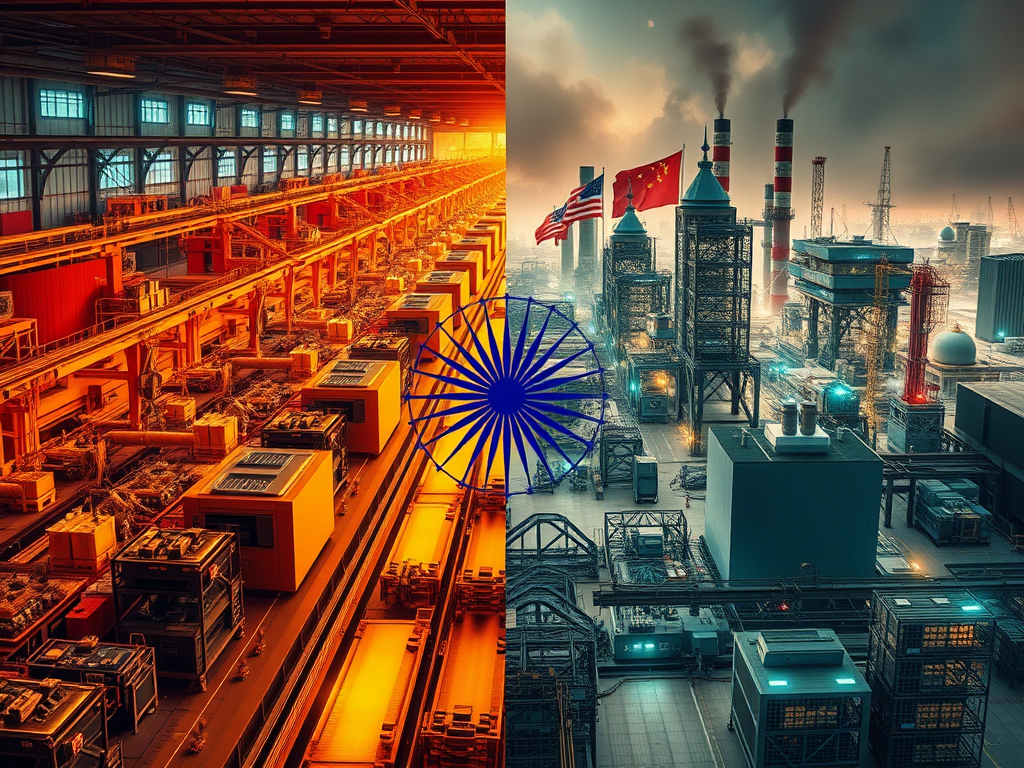
India’s journey towards economic parity with China reveals the complexities of balancing industrial growth, policy adaptation, and inclusive development. The following analysis delves into the historical context, current challenges, and potential strategies to strengthen India’s economic position.
Historical Context and Industrial Evolution
- Industrialization Pre-1991
Before 1991, India prioritized joint ventures and phased manufacturing programs to industrialize. These policies were instrumental in establishing a robust domestic automotive sector, showcasing the benefits of focused industrial strategies. - Premature Liberalization
Post-1991 liberalization marked a shift towards software and services, inadvertently sidelining manufacturing. The premature abandonment of industrial policies curtailed India’s ability to build a competitive manufacturing base.
Challenges and Comparisons
- Lagging Behind China
By 2010, China’s manufacturing sector had outstripped India’s, underscoring the need for stronger industrial development. While China embraced robust industrial policies, India’s manufacturing growth lagged, creating a significant economic disparity. - Underemployment and Insufficient Incomes
Persistent challenges such as underemployment and low incomes reflect the inadequacy of current policies to support the broader populace effectively.
Strategic Recommendations
- Focus on Hardware Manufacturing
India must develop a robust hardware manufacturing ecosystem to complement its thriving software industry, ensuring economic security and a balanced growth trajectory. - Reforming Industrial Policies
Revisiting and reforming post-liberalization policies is crucial for fostering productive employment and laying a stronger industrial foundation. - Global Competition and Learning Enterprises
Economic growth requires a competitive environment where industries grow collectively, supported by enterprises that adapt and acquire new skills. - Policymakers’ Role
Policymakers must prioritize adaptability and proactive learning to enhance industrial capabilities and outpace global competitors. - Inclusive and Sustainable Growth
Policies should focus on environmentally sustainable development and inclusivity, aligning economic growth with broader social benefits rather than solely GDP metrics.
Data Table Summary
| Key Area | Details |
|---|---|
| Pre-1991 Industrialization | Focus on joint ventures and phased manufacturing to establish the automotive sector. |
| Post-1991 Shift | Premature liberalization prioritized software/services over manufacturing. |
| Comparison with China | By 2010, China’s manufacturing sector had far outpaced India’s. |
| Challenges | Underemployment and low incomes persist, reflecting ineffective policies. |
| Hardware Manufacturing Need | A strong hardware manufacturing sector is essential for economic security. |
| Policy Reform | Reassessing industrial policies to foster employment and industrial growth. |
| Global Competition | Growth depends on creating competitive environments for collective industry progress. |
| Inclusive Growth Focus | Policies should ensure environmentally sustainable and inclusive economic growth. |
Conclusion
To bridge the gap with China, India must recalibrate its economic strategies, emphasizing industrial policy reform, manufacturing growth, and inclusive development. Policymakers and enterprises must embrace adaptability and learning, driving a resilient economy capable of competing on the global stage.




 Glottis Limited
Leave a comment