
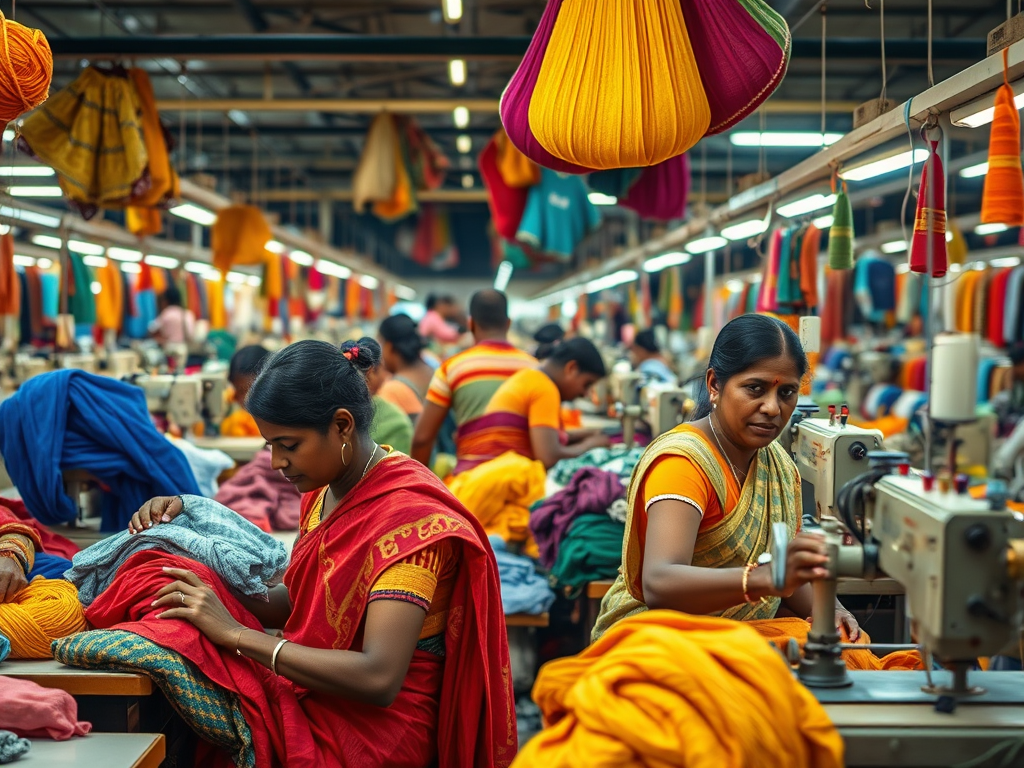
Tiruppur, often hailed as the knitwear capital of India, is experiencing a remarkable surge in textile exports amid the depreciating Indian Rupee. This development showcases the region’s resilience and its ability to adapt to changing global market conditions.
The Indian Rupee’s depreciation of nearly 3% against the US Dollar in 2024 has played a pivotal role in enhancing the competitiveness of Indian exports. Tiruppur, which accounts for 55% of India’s knitwear exports, has leveraged this opportunity to achieve record-breaking export figures.
Summary
Tiruppur’s textile industry is thriving, with exports from April to December 2024 reaching ₹26,000 crore, nearly equaling the previous financial year’s total. Conservative projections for 2024-25 indicate exports could rise to ₹35,000–₹40,000 crore. Despite global economic uncertainties, Tiruppur has turned currency fluctuations into an advantage, bolstering India’s position in the global textile market.
Key Points
| Aspect | Details |
|---|---|
| Rupee Depreciation | Rupee fell nearly 3% against the US Dollar in 2024, enhancing export appeal. |
| Export Performance | ₹26,000 crore exported from April to December 2024, nearing last year’s total of ₹30,690 crore. |
| Future Projections | Expected total exports for 2024-25: ₹35,000–₹40,000 crore. |
| Market Share | Tiruppur accounts for 55% of India’s knitwear exports. |
| Economic Impact | Tiruppur has turned currency challenges into growth opportunities, showcasing resilience. |
Conclusion
Tiruppur’s thriving textile export industry exemplifies its ability to adapt and excel in fluctuating economic conditions. By capitalizing on the depreciating Rupee, the region has not only boosted its own economy but also reinforced India’s standing in the global textile market. As projections for the current financial year suggest record-breaking figures, Tiruppur stands as a model of resilience and innovation in the face of global challenges.




 Glottis Limited
Leave a comment