
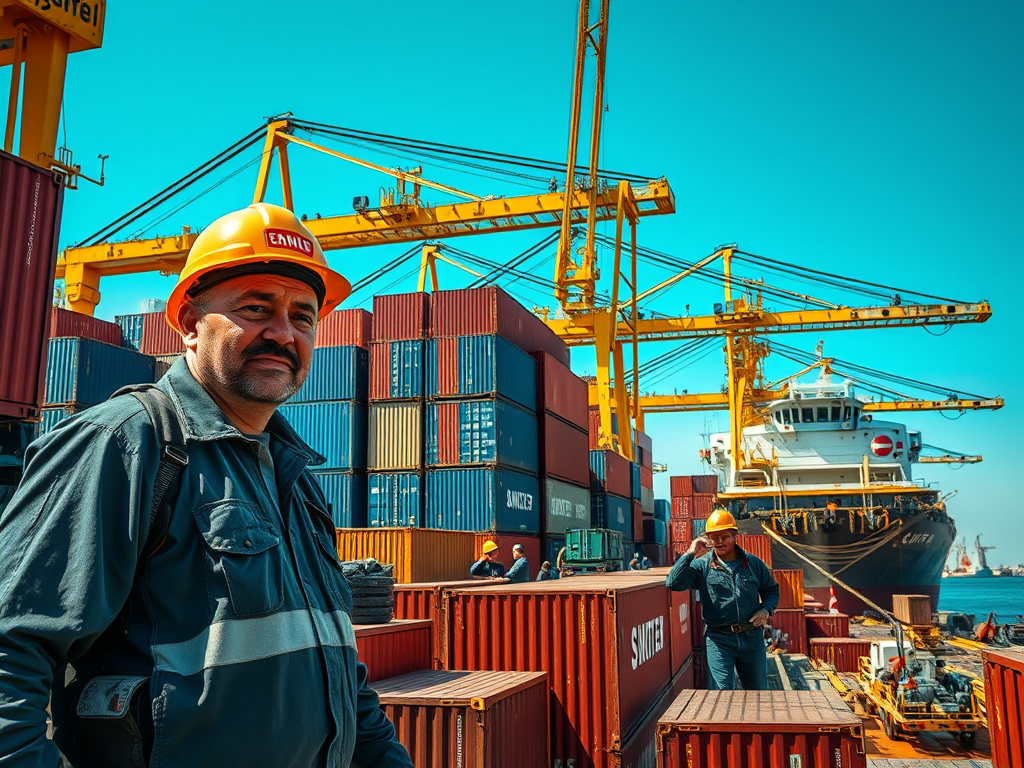
The maritime industry in the United States faces a critical juncture as labor negotiations involving 45,000 dockworkers from the International Longshoremen’s Association (ILA) and the U.S. Maritime Alliance (USMX) resume. This dispute, centered on the role of automation in port operations, has the potential to reshape the future of cargo handling across major U.S. ports from Maine to Texas. Below is a detailed breakdown of the situation, highlighting the positions of key stakeholders, potential impacts, and the broader implications for the maritime sector.
Key Issues and Stakeholders
Contract Negotiations
Negotiations are underway to address issues critical to both labor and employers, including the future of automation in port operations. The deadline for reaching an agreement is set for January 15, with significant repercussions if talks fail.
Union’s Position
The ILA has taken a firm stance against automation, particularly the use of semi-automated cranes, which they argue pose a direct threat to dockworker jobs. The union is pushing to eliminate past concessions that allowed limited automation, reflecting concerns over job security and the broader impact on the workforce.
Employers’ Argument
The USMX, representing port employers, emphasizes the necessity of automation to remain competitive against international counterparts. Ports in countries like China, which heavily invest in automation, serve as benchmarks for modern efficiency and productivity.
Potential Outcomes and Risks
Strike Risk
If negotiations fail by January 15, a strike could disrupt operations at major container ports. The timing is especially sensitive, coinciding with the inauguration of President-elect Donald Trump.
Economic Impact
A previous three-day strike in October caused significant disruptions, including increased shipping costs and backlogs at 36 ports. A longer strike could lead to even greater economic and logistical challenges.
Automation Debate
The core disagreement revolves around automation’s role in port modernization:
- Union Concerns: The ILA argues that automation endangers jobs and seeks to include language in the contract prohibiting its implementation.
- Employers’ Perspective: The USMX maintains that modernization is critical for economic growth and long-term stability.
Despite these arguments, studies indicate that fully automated ports are not always significantly more productive than traditional ones, particularly when dealing with fluctuating cargo volumes.
Proposed Solutions and Considerations
Pay Raise Contingency
To incentivize agreement, employers have proposed a 62% wage increase over six years, contingent on resolving automation-related disputes.
Alternative Approaches to Efficiency
Rather than relying solely on automation, stakeholders are exploring other methods to improve port efficiency, such as:
- Enhanced data sharing among supply chain participants.
- Upgrading existing infrastructure to streamline operations.
Global Context and Trends
The U.S. lags behind many international ports in automation. Only 4% of global port capacity is automated, and U.S. ports remain predominantly manual in comparison to highly automated counterparts in China. This underscores the limited implementation of automation domestically and its potential for growth.
Key Data Summary
| Category | Details |
|---|---|
| Number of Dockworkers | 45,000 (represented by ILA) |
| Employers’ Group | U.S. Maritime Alliance (USMX) |
| Negotiation Deadline | January 15 |
| Automation Usage | 4% of global port capacity automated |
| Proposed Pay Raise | 62% wage increase over six years, contingent on resolving automation disputes |
| Strike Risk | Likely if no agreement is reached, with potential to disrupt major container ports from Maine to Texas |
| Previous Strike Impact | Three-day strike in October caused shipping cost spikes and backlogs at 36 ports |
| Union’s Position | Opposes automation; seeks contract language to prohibit semi-automated cranes |
| Employers’ Argument | Automation essential for competitiveness against ports in countries like China |
| Alternative Solutions | Better data sharing, infrastructure upgrades, and modernizing operations without relying heavily on automation |
Conclusion
The outcome of these negotiations will have significant implications for the future of U.S. port operations. Striking a balance between modernization and job preservation is crucial for ensuring both economic competitiveness and workforce stability. With the January 15 deadline looming, stakeholders must navigate these complex issues carefully to avoid further disruption to the nation’s supply chains.




 Glottis Limited
Leave a comment