
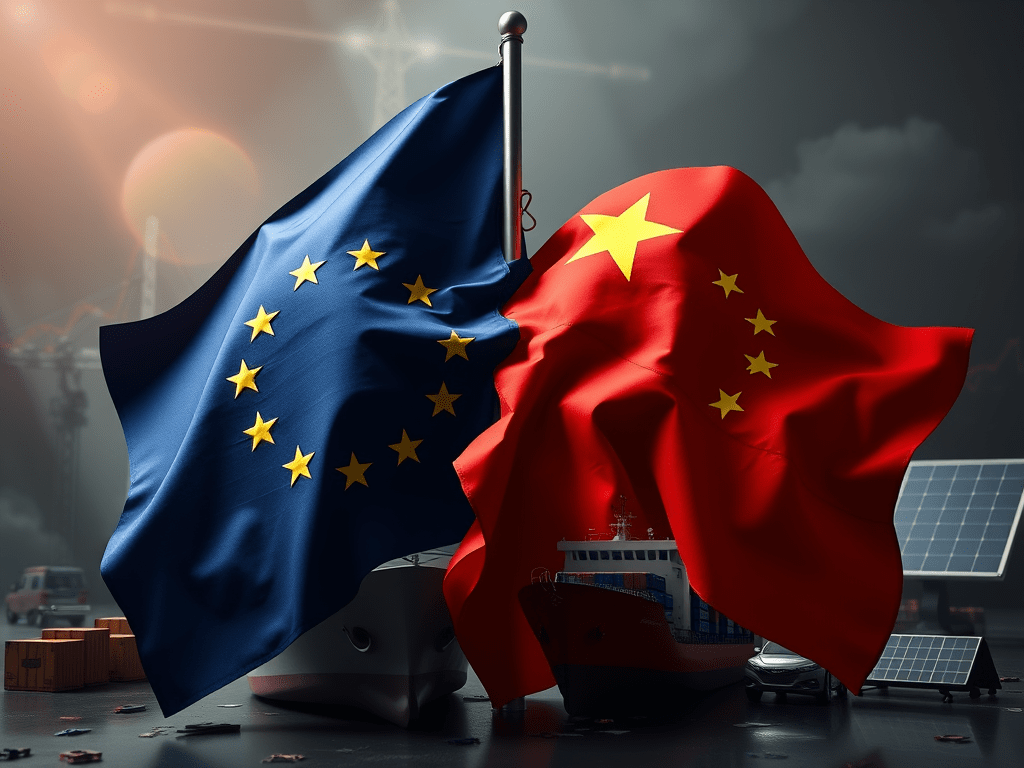
The trade relationship between China and the European Union (EU), two of the world’s largest economic players, has reached a critical juncture. The EU’s Foreign Subsidies Regulation (FSR) and its broader trade policies have triggered a heated response from Beijing, highlighting escalating tensions that could reshape global trade dynamics.
1. Unveiling the Investigation Findings
China asserts that the EU’s trade practices, particularly the FSR, constitute unfair barriers to Chinese firms. The regulation aims to curb the competitive advantages allegedly gained through state subsidies by requiring companies to disclose foreign financial contributions. According to Beijing, these measures unfairly target Chinese firms, creating significant hurdles for their operations in Europe.
2. Background of the Trade Probe
The EU’s investigation into Chinese subsidies was initiated amidst growing concerns that state-backed financial support for Chinese companies was distorting European markets. This includes allegations that subsidies enable Chinese products, such as electric cars and solar panels, to undercut local businesses, prompting calls for countermeasures from the EU.
3. Chinese Government’s Firm Stance
Beijing has categorically denied any unfairness in its industrial policies, emphasizing that its support for domestic industries is consistent with international norms. In response to the EU’s measures, China has vowed to protect its companies’ interests, asserting that the FSR discriminates against Chinese businesses and disrupts fair competition.
4. Allegations of Discrimination
China’s Ministry of Commerce has labeled the FSR as discriminatory, arguing that it subjects Chinese firms to stricter scrutiny compared to competitors from other regions. This, the ministry claims, has led to unfavorable treatment and significant financial losses for Chinese companies operating in the EU.
5. Impact on Chinese Companies
The ramifications of the FSR are already being felt by Chinese businesses. Reports indicate that some companies have been forced to scale back or abandon projects in Europe, resulting in cumulative losses exceeding 15 billion yuan (approximately US$2.05 billion). This financial strain underscores the broader economic fallout of these trade tensions.
6. EU’s Broader Trade Context
The EU’s trade policies reflect its strategic goal of reducing reliance on Chinese technology due to perceived national security risks. In tandem, the EU seeks to bolster its renewable energy sector and local production capacities, further limiting the opportunities for Chinese businesses in the European market.
7. Recent EU Actions
The EU has recently intensified its scrutiny of Chinese products, launching investigations and imposing tariffs on items like electric vehicles and solar panels. These actions are part of a broader effort to address what the EU perceives as unfair state support that undermines local industries.
8. China’s Response and Retaliation
While Beijing has expressed its intent to safeguard the legal rights of Chinese firms, it has yet to outline specific retaliatory measures against the FSR. However, the growing tensions signal a potential escalation that could impact not only trade but also investment flows between the two economies.
9. Concerns Over Economic Relations
The deteriorating trade relationship is prompting multinational companies to reconsider their operations in both regions. Rising costs, regulatory hurdles, and uncertainty are causing businesses to reassess their strategies, which could have long-term implications for global economic stability.
Key Data Table: China’s Response to EU Trade Practices
| Aspect | Details |
|---|---|
| Investigation Findings | EU’s Foreign Subsidies Regulation (FSR) seen as an unfair barrier for Chinese companies. |
| Impact on Chinese Companies | Losses exceeding 15 billion yuan (US$2.05 billion) due to project cutbacks or abandonment. |
| EU’s Goals | Reduce reliance on Chinese technology, enhance local renewable energy production. |
| EU Actions | Investigations and tariffs on Chinese products, including electric cars and solar panels. |
| China’s Stance | Denies unfair policies, criticizes FSR as discriminatory, vows to protect its firms’ rights. |
| Economic Impact | Increased costs and uncertainty for multinational firms operating in both regions. |
Conclusion
The escalating trade tensions between China and the EU represent a critical moment for global economic relations. As both sides continue to pursue divergent goals, the risk of further economic fragmentation grows. For businesses and policymakers alike, the situation underscores the importance of finding a balanced approach that promotes fair trade without exacerbating geopolitical divides.




 Glottis Limited
Leave a comment