
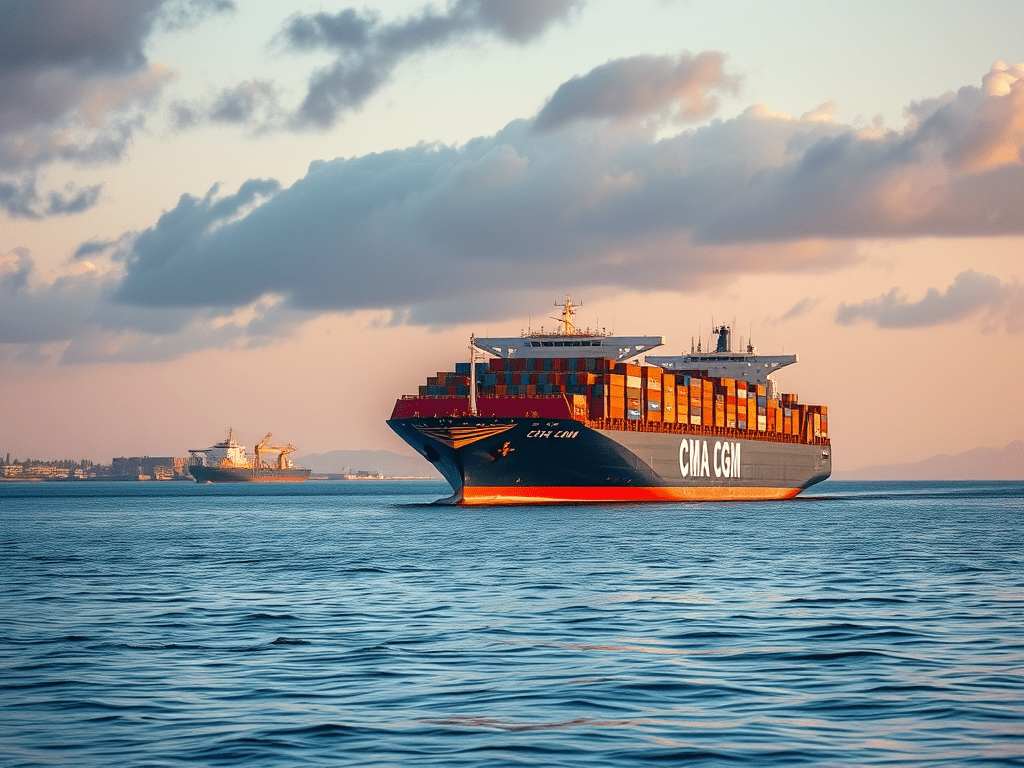
CMA CGM, the French shipping giant, has adopted a cautious stance toward operations in the Red Sea, even in light of a ceasefire agreement between Israel and Hamas. The company’s approach underscores the challenges faced by global shipping lines when navigating high-risk regions and highlights the divergent strategies among major maritime players.
CMA CGM’s Red Sea Strategy
Despite the ceasefire, CMA CGM has refrained from resuming operations in the Red Sea, citing the region’s ongoing instability. The company identifies risks associated with Iran-backed Houthi forces, which have reportedly conducted over 100 vessel attacks since November 2023. To mitigate these risks, CMA CGM has rerouted its shipments via the Cape of Good Hope, prioritizing safety over operational efficiency.
This strategic shift aligns with the company’s broader policy of making routing adjustments on a case-by-case basis, depending on security conditions and operational needs. CMA CGM’s emphasis on safety reflects its commitment to safeguarding crew, cargo, and assets in volatile regions.
Comparison with Other Major Shipping Lines
Other leading shipping companies, including Maersk, MSC, and Hapag-Lloyd, have adopted varying approaches to the challenges in the Red Sea:
- Maersk: Unlike CMA CGM, Maersk has cautiously resumed operations in the Red Sea, implementing heightened security measures and relying on naval escorts when necessary. The company emphasizes agility, using real-time threat assessments to make route adjustments.
- MSC: Mediterranean Shipping Company (MSC) has adopted a dual approach, maintaining limited Red Sea operations while also utilizing alternative routes to minimize exposure to risk. The company has invested heavily in insurance and risk management to support this balanced strategy.
- Hapag-Lloyd: Hapag-Lloyd has largely maintained Red Sea operations, leveraging partnerships with regional authorities to ensure safety. However, the company has scaled back its frequency of shipments in the region, focusing on high-priority trade lanes.
Strategic Implications
CMA CGM’s avoidance of the Red Sea reflects a long-term, conservative approach, prioritizing security over short-term gains. In contrast, competitors like Maersk and MSC exhibit more flexible strategies, balancing operational continuity with risk mitigation.
As the geopolitical landscape evolves, shipping lines are expected to continually reassess their strategies, balancing security concerns with trade demands. CMA CGM’s decision to bypass the Red Sea serves as a case study in prioritizing safety, even at the cost of operational efficiency, and highlights the complex decision-making required in global maritime logistics.




 Glottis Limited
Leave a comment