
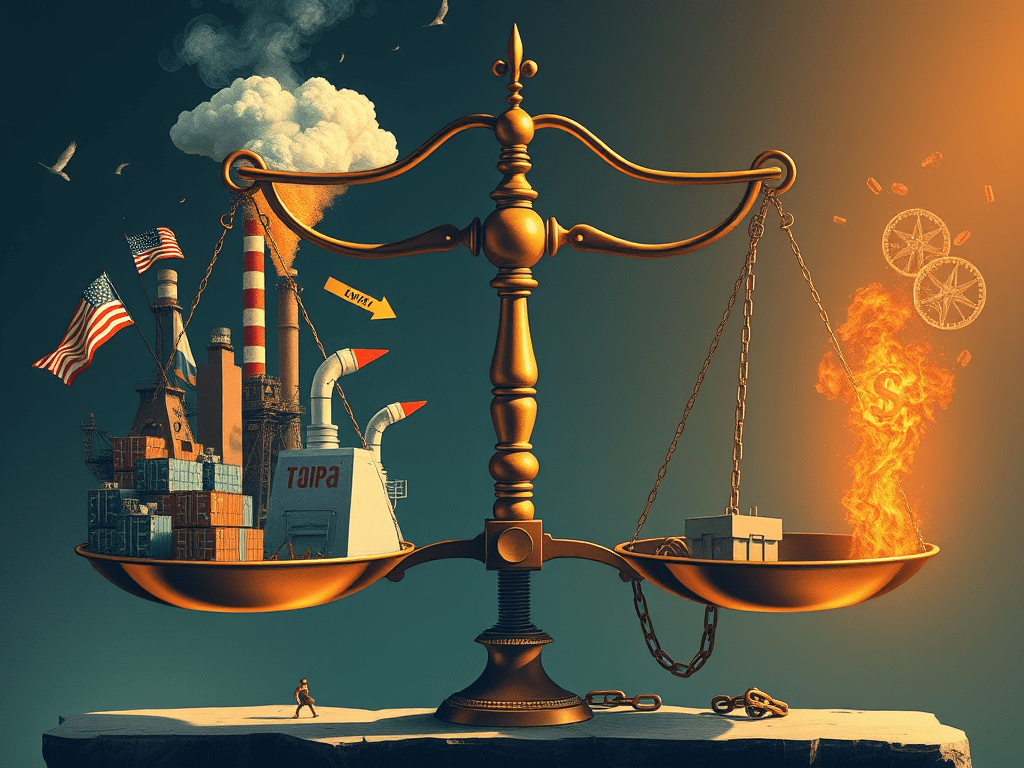
While President Trump’s tariffs and immigration restrictions aim to shield American industries and jobs, their unintended consequences could derail economic progress. Here’s a breakdown of how these policies impact the U.S. economy and lessons from India’s similar strategies.
Key Impacts of Trump’s Policies
| Aspect | Key Issue | Impact |
|---|---|---|
| Tariffs on Imports | Import duties raise costs for businesses and consumers. | Higher prices for goods, disproportionately impacting lower-income households. Consumption, which drives 66% of U.S. GDP, slows down. |
| Disruption of Supply Chains | Tariffs disrupt global supply chains, forcing trade diversions. | Businesses face increased input costs, leading to reduced competitiveness and inflationary pressures. |
| Labor Market Restrictions | Immigration curbs reduce the available workforce in an already tight labor market. | Wage inflation as employers compete for fewer workers. Reduced consumer spending and tax contributions from immigrants hinder economic growth. |
| Fiscal Deficit Expansion | Proposed tax cuts combined with a 6.5% GDP fiscal deficit worsen public finances. | Larger deficits add inflationary pressure, forcing the Federal Reserve to maintain higher interest rates, raising borrowing costs for businesses and consumers. |
| Steel Tariff Outcomes | Previous tariffs failed to revitalize U.S. manufacturing or restore jobs. | Despite protectionist policies, the U.S. steel industry struggled due to global competition and automation. |
| Policy Lessons from India | India raised tariffs on over 3,500 goods and implemented non-tariff barriers, such as quality norms. | Indian manufacturing remains stagnant, unable to compete with cheaper imports domestically or globally. Increasing import barriers has not significantly boosted manufacturing’s share in GDP, exports, or job creation. |
| Regulatory Reforms | Trump’s deregulation efforts offer a better alternative to protectionist measures. | Simplifying compliance, cutting red tape, and encouraging innovation create long-term economic benefits, boosting entrepreneurship and reducing operational costs. |
Strategic Insights and Policy Lessons
- Protectionism’s Pitfalls: Both the U.S. and India demonstrate that raising import barriers doesn’t necessarily lead to industrial revival. Competitiveness depends on innovation, efficiency, and global integration.
- The Role of Consumption: Import duties act as a tax on consumption. With consumption driving most of the U.S. economy, policies that strain household budgets risk slowing growth further.
- Alternative Strategies: Deregulation and structural reforms, such as reducing compliance burdens and fostering entrepreneurship, are more effective tools for sustainable economic growth.
Conclusion
Trump’s tariff and immigration policies exacerbate inflation and slow GDP growth by raising costs for businesses and consumers while constraining labor supply. The results of similar policies in India further highlight the limitations of protectionism. A shift toward smarter strategies like regulatory reform and innovation-driven growth is essential for long-term economic health in a globalized world.



 Glottis Limited
Leave a comment